
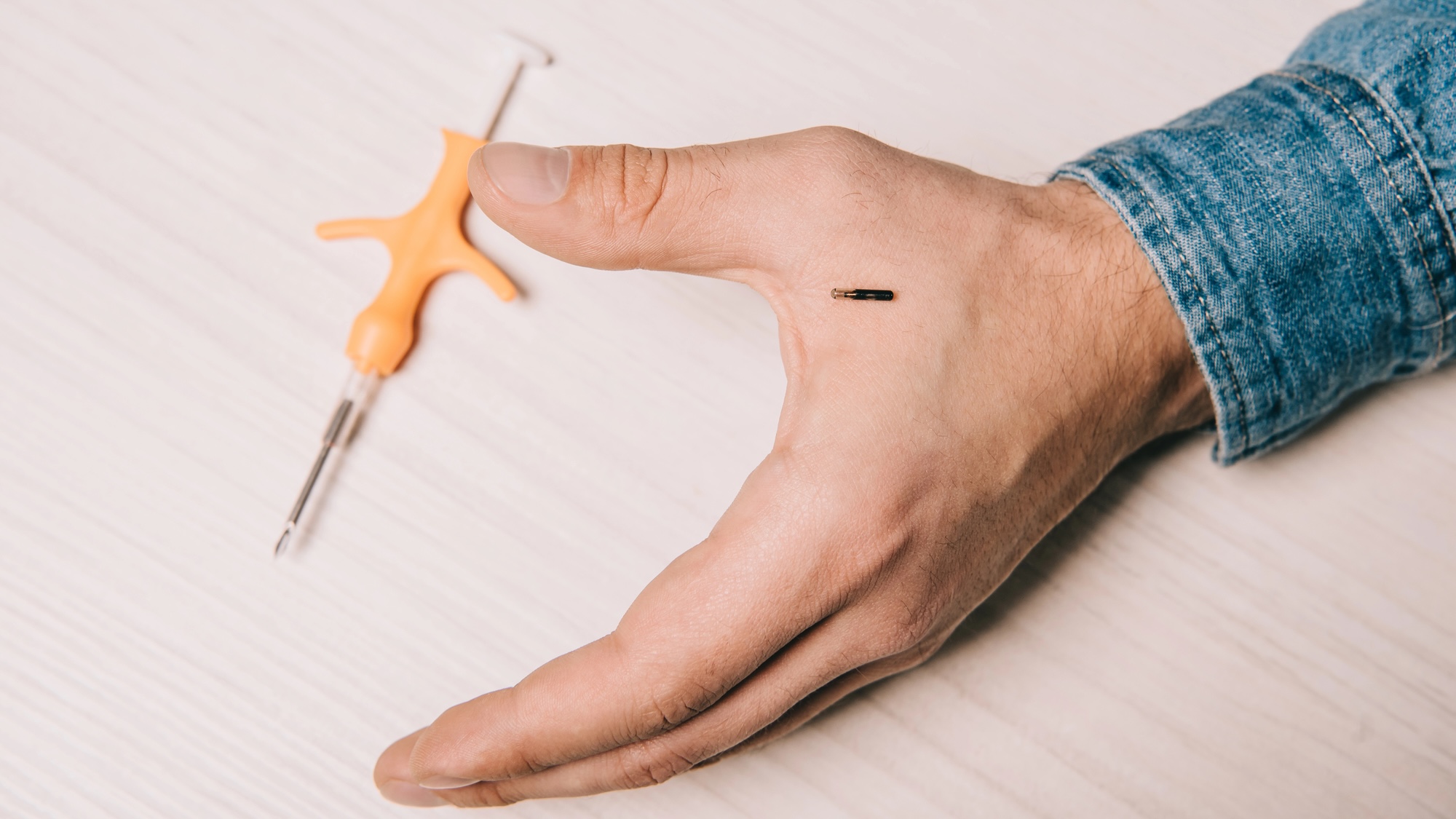
It’s a common trope in dystopian sci-fi stories: an evil corporation requires its employees to receive microchip implants in order to constantly monitor their whereabouts. While there aren’t any known instances of the scenario (so far), a pair of lawmakers in Washington state hope to ensure it stays that way.
Introduced earlier in the year by Dem. Reps. Brianna Thomas and Lisa Parshley, HB 2303 explicitly states that businesses “may not request, require, or coerce any employee to have a microchip implanted in the employee for any reason.” The bill has officially passed through the House and a Senate committee with bipartisan support, and is now on its way to becoming a law.
“The Senate Labor and Commerce Committee voted to advance the measure to the next step after laughing about it briefly before passing it,” local news outlet Fox 13 recently reported.
Subdermal microchips certainly have their uses. They have helped track lost pets for years, and can provide critical patient information in certain medical situations—neither instance is affected by the law. And although pressuring workers to get chipped is likely illegal on numerous grounds, it never hurts to formally get something on the books.
“There are reports of voluntary microchipping. It would be extraordinarily difficult—if not impossible—to mitigate the civil rights and workers’ rights issues that would come if and when companies start requiring these,” Rep. Thomas said in a statement, arguing that workplace power dynamics make “true employee consent…impossible.”
“We don’t want to have to try to clean up an impossible mess after it’s too late. So we are getting ahead of the problem,” she added.
HB 2303 currently states hypothetical corporate violators will receive a minimum fine of $10,000 for the first offense, followed by $20,000 charges for each additional infraction.
