
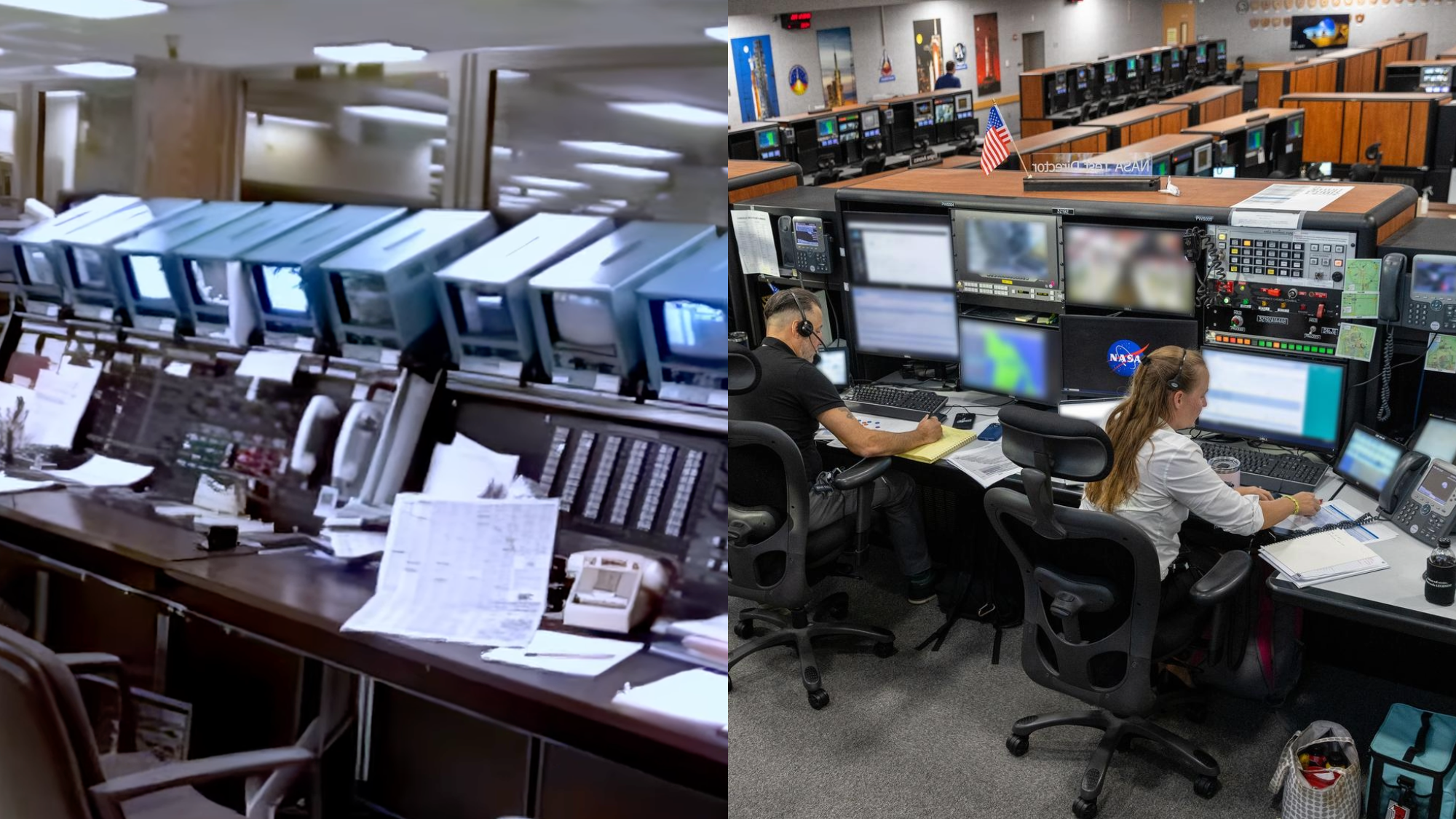
As millions around the world watched on smartphones, T.V.s, or in person, Artemis II and its four-person crew burst from the ground on April 1 and successfully began its 10-day journey to the moon. While all eyes were focused on the Orion spacecraft, it’s worth remembering that it takes a small army of humans—and computers—to make these kinds of awe-inspiring journeys possible. And just like everyday tech users, NASA also has to upgrade its systems from time to time, and the one powering Artemis looks nothing like their relic ancestors. That doesn’t necessarily mean those older versions did not work.
Resurfaced footage released by YouTuber Gary Friedman shows some of the sturdy computing hardware that powered Voyager 1 and 2, a pair of spacecraft first launched in 1977 and tasked with taking a trip through our solar system. Incredibly, both of these spacecraft are still functional in deep space, despite relying on vintage hardware older than many of NASA’s engineers today.

NASA Computing in the '80's – JPL Building 230
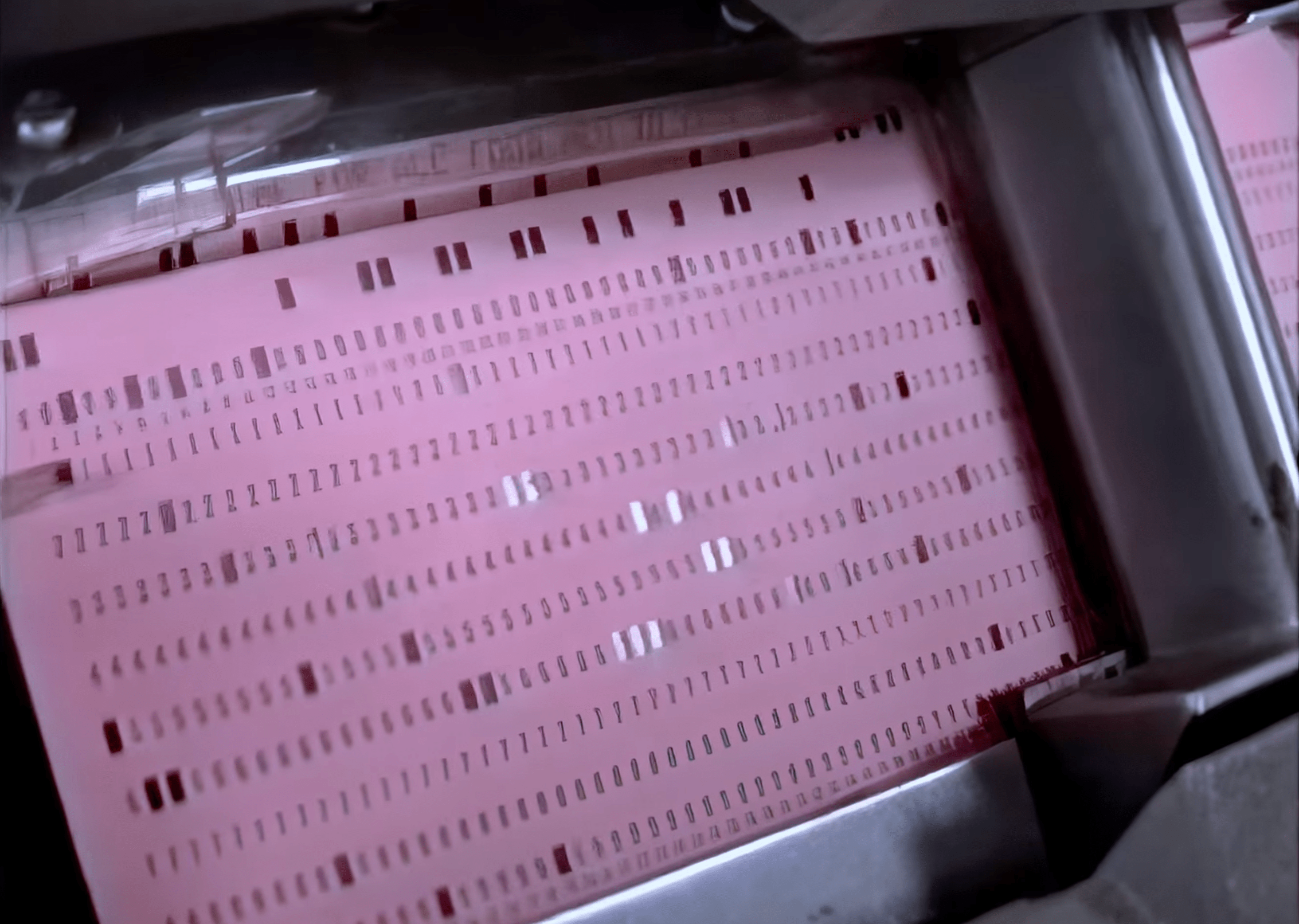
The roughly 14-minute video shows a NASA engineer taking viewers on a tour of Building 230 at the Jet Propulsion Laboratory in southern California. As he walks through the room, he passes an assortment of refrigerator-sized computers made by Univac and IBM. He also stops to acknowledge punch cards used to communicate with the spacecraft, old tape drives, and a communication hub lined with phones and small monitors that one engineer calls “the heartbeat of the enterprise,” The voice behind the camera says he is documenting these historic devices, “before they replace it all with mainframes.”
All of this ancient-looking hardware was tasked with overseeing the operational safety of the Voyager craft, which are currently well over 16 billion miles from Earth in interstellar space. On board both spacecraft is a suite of custom-made computers and electronics built prior to 1977. Each of the Voyager craft has three computer systems onboard, with a total memory capacity of just 69.63 kilobytes—that’s less than a standard JPEG file. Scientific data collected by the spacecraft is encoded onto a digital 8-track machine before being transmitted back to Earth. Since memory is in such short supply, the spacecraft constantly write over old data once it’s transmitted.
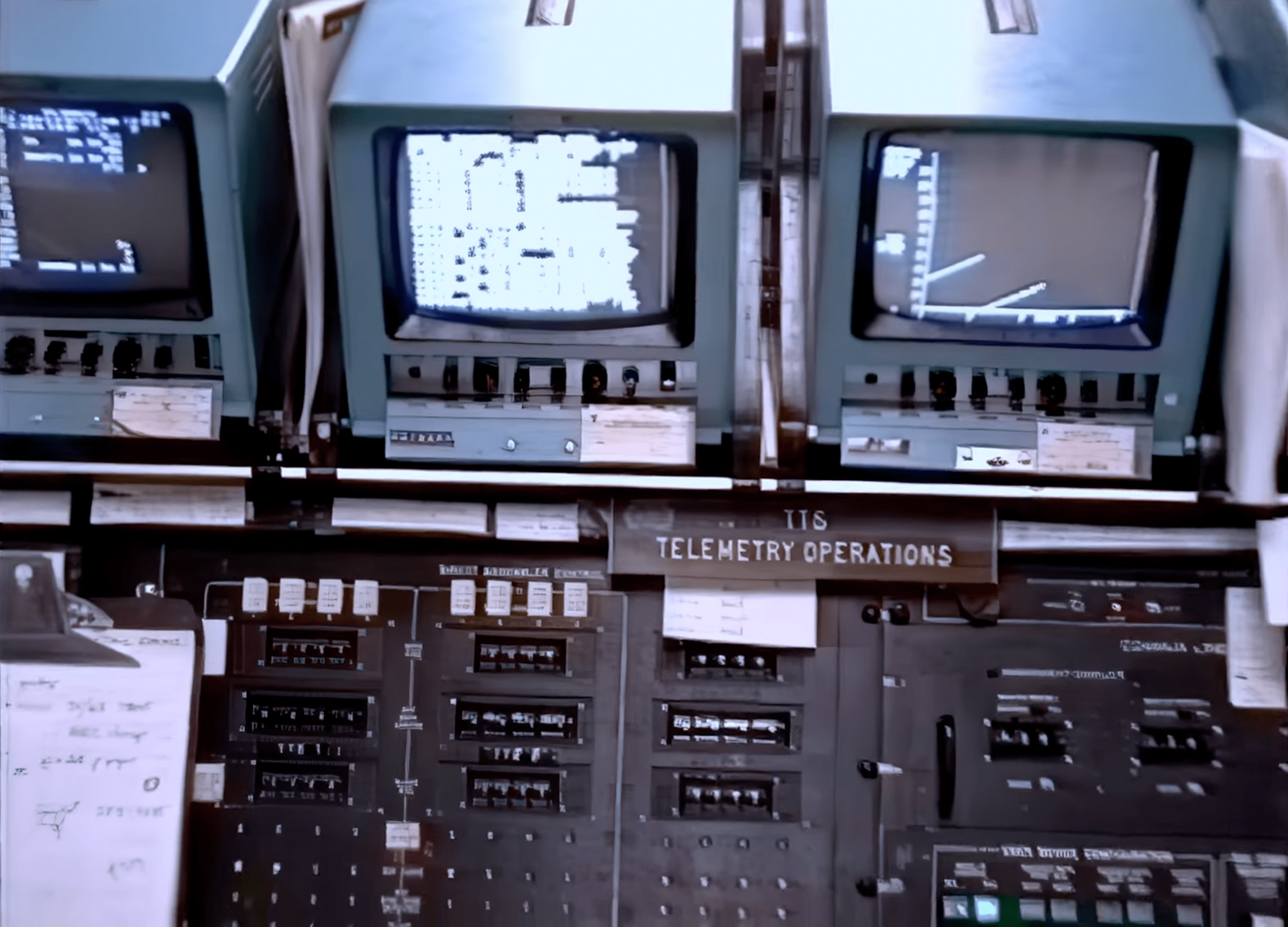
The data is then transmitted back to Earth at just 160 bits per second. For comparison, Wired notes that dial-up connections operate at a minimum of 20,000 bits per second. Back on Earth, NASA has to use the largest antennas in operation just to hear Voyager’s increasingly faint signal. The fact that any of this is still working is a testament both to the engineering prowess of the time and NASA’s emphasis on including redundant components. Even so, many of those redundant components have either broken down or been turned off to conserve power. The Voyagers’ journeys are likely coming to an end sooner rather than later.
By comparison, the systems powering the Orion spacecraft for the Artemis II mission can seem like something from another universe entirely. Lockheed Martin says Orion’s computing power is 20,000 times faster than what was on Apollo and even 25 times faster than what’s on the International Space Station. Its main computers communicate with other avionics equipment via gigabit ethernet.
All of the systems onboard are triple-redundant, which should give the astronaut crew at least some reassurance. And if there’s any doubt as to whether the electronics withstand the dangers of space, just take some solace in knowing that even tech built more than 50 years ago can be up to the task.
