
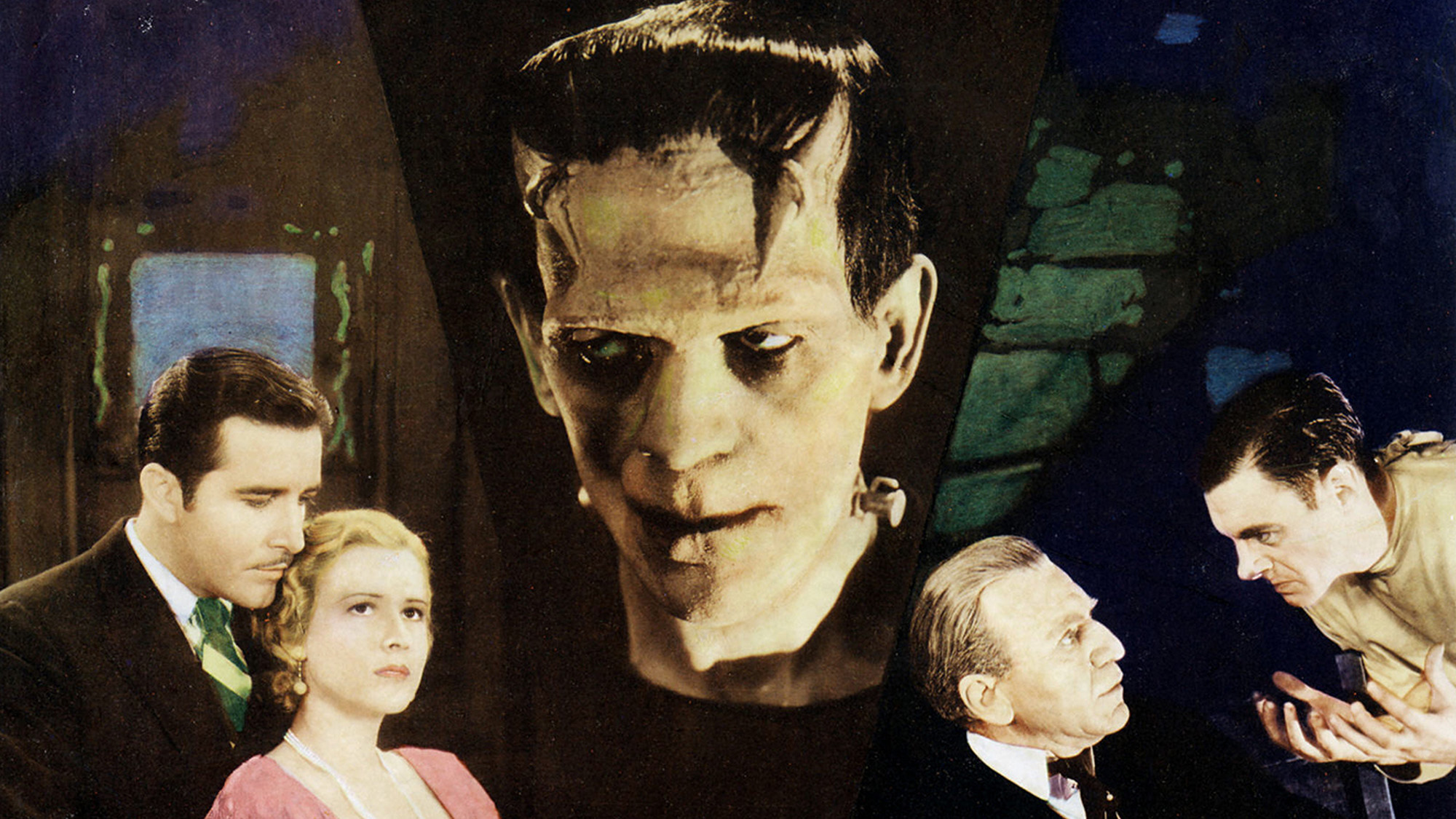
In Mary Shelley’s Frankenstein, a mad scientist creates a monstrous creature with severed body parts. In certain film adaptations, a dismembered head is tacked onto the malformed body. Then, with the help of a lightning storm, a new life is born.
From the first successful kidney transplant in 1954, modern organ transplantation has often been linked to the horrors of Frankenstein. While people have grown to accept kidney and liver transplants as life-saving surgeries, the notion of a head transplant still invokes Frankenstein-like revulsion in the medical community and beyond.
In 2015, Italian neurosurgeon Sergio Canavero came under fire for his plan to perform the first human head transplant on a volunteer patient with severe muscular atrophy, in an effort to restore his mobility.
Canavero planned to sever the heads from the living patient and a brain-dead donor body, under extremely cold temperatures, and connect the patient’s dismembered head and brain onto the donor body—first joining the head-to-body arteries to recirculate blood flow to the patient’s brain, then tackling the neck and spine connections.
Though Canavero’s patient ultimately backed out of the planned surgery, the surgeon’s claims sparked a debate on the validity of head transplants: Is it possible to remove and transfer human heads with their brains? And if it is possible, is it ethical?
For Arthur Kaplan, a renowned bioethicist and professor at New York University’s Grossman School of Medicine, the procedure would be neither ethical nor possible.
The ethics and logistics of human head transplants
The term head transplant refers to the experimental transfer of the brain, along with the skull, face, and parts of the neck and spine onto a different body. Today, scientists view head transplants as theoretically more feasible than extracting and transferring isolated brains, because of a brain’s complex neural connections.
Kaplan tells Popular Science that head transplants are impossible for many reasons: Mainly, there’s no medical procedure for fusing together spinal cords, and as long as that’s true, transplanting a patient’s head onto another human body is out of the question. Any recipient of a head transplant, without appropriate spinal cord fusion, would likely be paralyzed.
On the ethical side, Kaplan says, he presumes the recipient of a head transplant would be overwhelmed and potentially deranged by an influx of memories and visual, hearing, and sensory pathways coming from the new body.
“Moving a head to a different body gives this false notion that our personal identity sits all in our head,” Kaplan says. “But we’re, in fact, brains that are riding around in our bodies that fill us up with inputs. The idea is nice for science fiction or the comics.”
“Physiologically, your brain is deeply embedded inside a perception system,” he says. “If you change the location of the brain and put it somewhere else, whether it’s a robot or a new body, you have to redo all the inputs.”
Kaplan and Canavero are part of a growing conversation about the reach of medicine. For many medical professionals, the concept of transferring a human brain to a new body represents an uncomfortable line: between keeping patients healthy and using science to redefine human mortality. But how did we get to this point in modern medicine?
The earliest attempts at head transplantation
Since the early 20th century, the concept of experimental head transplants has captured public and scientific interest.
In 1908, French surgeon Alexis Carrel and American physiologist Charles Guthrie performed what is often described as the first documented canine head transplant. In their experiment, the two scientists attached a severed dog head to another dog’s body, successfully connecting the arteries and preserving blood flow. The dog retained visual and involuntary muscle reflexes after the procedure, but its condition deteriorated rapidly and it was euthanized within a few hours.
Almost fifty years later, Soviet scientist and surgeon Vladimir Demikhov made another attempt at canine head transplantation, grafting a small dog’s head onto the body of a donor dog to create a two-headed creature. Among several dogs, one lived for almost a month, though most died within a few days as their bodies rejected the transplanted heads.

Demikhov’s experiment was more successful than Guthrie and Carrel’s, but it also faced heavy criticism. Demikhov, who had left a small Russian village for academia, ultimately passed away largely unrecognized and in relative poverty.
In the 1950s and 60s, strides in immunosuppressants marked a new chapter in the field of organ transplants. These medicines helped prevent outright transplant rejection. In 1954, doctors successfully transplanted the first human kidney, followed by liver, heart, and pancreas transplants in the late 1960s.
Immunosuppressants also opened the door for more viable attempts at head transplants, though this experimentation came at the cost of what some called unnecessary, and even cruel, sacrifice.
Animal lives at the cost of progress
Robert White, an American neurosurgeon, built his reputation studying the impacts of hypothermia on the central nervous system at Case Western Reserve University in Cleveland. White studied groups of rhesus monkeys under hypothermic conditions, documenting their memory and cognitive function.
During a trip to the Soviet Union, White met Demikhov and was inspired by his work on dog head transplantation.
In 1970, White performed one of the most well-known primate head transplant experiments—one step closer to human head transplants. His experiments involved attaching the heads of several rhesus monkeys onto the bodies of the same species. White used his earlier work on hypothermia to preserve the brains in extreme cold during transplantation.
Several of White’s monkeys survived: Post-surgery, they could still see, bite, and eat, but they were paralyzed from the neck down because their spines could not be fused. The longest surviving monkey lived nine days, flooded with heavy levels of immunosuppressants that experts say may have contributed to its eventual death.
White’s experiments unleashed a wave of condemnation from animal rights activists. In 1995, an activist with the People for the Ethical Treatment of Animals (PETA), wrote a letter to the editor published in The New York Times, calling the experiments “unspeakably cruel.”
However, White, who was a deeply religious man, was a defender of animal experimentation for the sake of human progress—once reportedly asking: “Would you deny me one rat to cure cancer?”
Related 'That Time When' Stories
The 21 grams experiment that tried to weigh a human soul
The only person to win an Olympic medal and a Nobel Peace Prize
The radioactive ‘miracle water’ that killed its believers
Idaho once dropped 76 beavers from airplanes—on purpose
During WWII, a dress-wearing squirrel sold war bonds alongside FDR
The new technologies transforming head transplants
Today, the legacy of these scientists, often operating at the fringes of academia, lives on in researchers like Canavero and his colleague, Chinese surgeon Xiaoping Ren.
In 2017, Ren and Canavero reported what they called the first documented cadaveric human-head transplant procedure, performed using two human cadavers.
The experiment did not attempt to fuse the spinal cords, as both bodies were deceased: It was meant to show that human head transplantation was surgically possible by dissecting and attaching the severed head to the donor body.
A year later, the two scientists published a study attempting to address spinal cord fusion, the major blocker for successful live human head transplants. The team severed spinal cords in 12 dogs, then applied polyethylene glycol at the cut and applied electric shock, reporting limited signs of motor recovery in some dogs.
As of late, Canavero and Ren have largely disappeared from the limelight, but their push for medical progress without limits echoes in the ambitions of tech founders like Elon Musk, who created Neuralink, a company designing implantable brain-computer interfaces to help treat brain diseases. Musk has faced federal investigations into the deaths of several primates used for Neuralink research.
The renewed interest in brain experimentation, like brain transplants and neural chips, could be part of a burgeoning push to use technology to optimize humanity. Kaplan says it’s a symptom of the culture among certain circles.
“It’s in the billionaire culture,” Kaplan says. “It’s in the dweeb culture. It’s in the body hacking culture. This type of thinking is pushed a little more in the ‘brotech culture’—that technology can fix all our woes.”
Whatever is driving the conversation, we can be sure that we haven’t heard the last of human head and brain transplantation.
In That Time When, Popular Science tells the weirdest, surprising, and little-known stories that shaped science, engineering, and innovation.
