
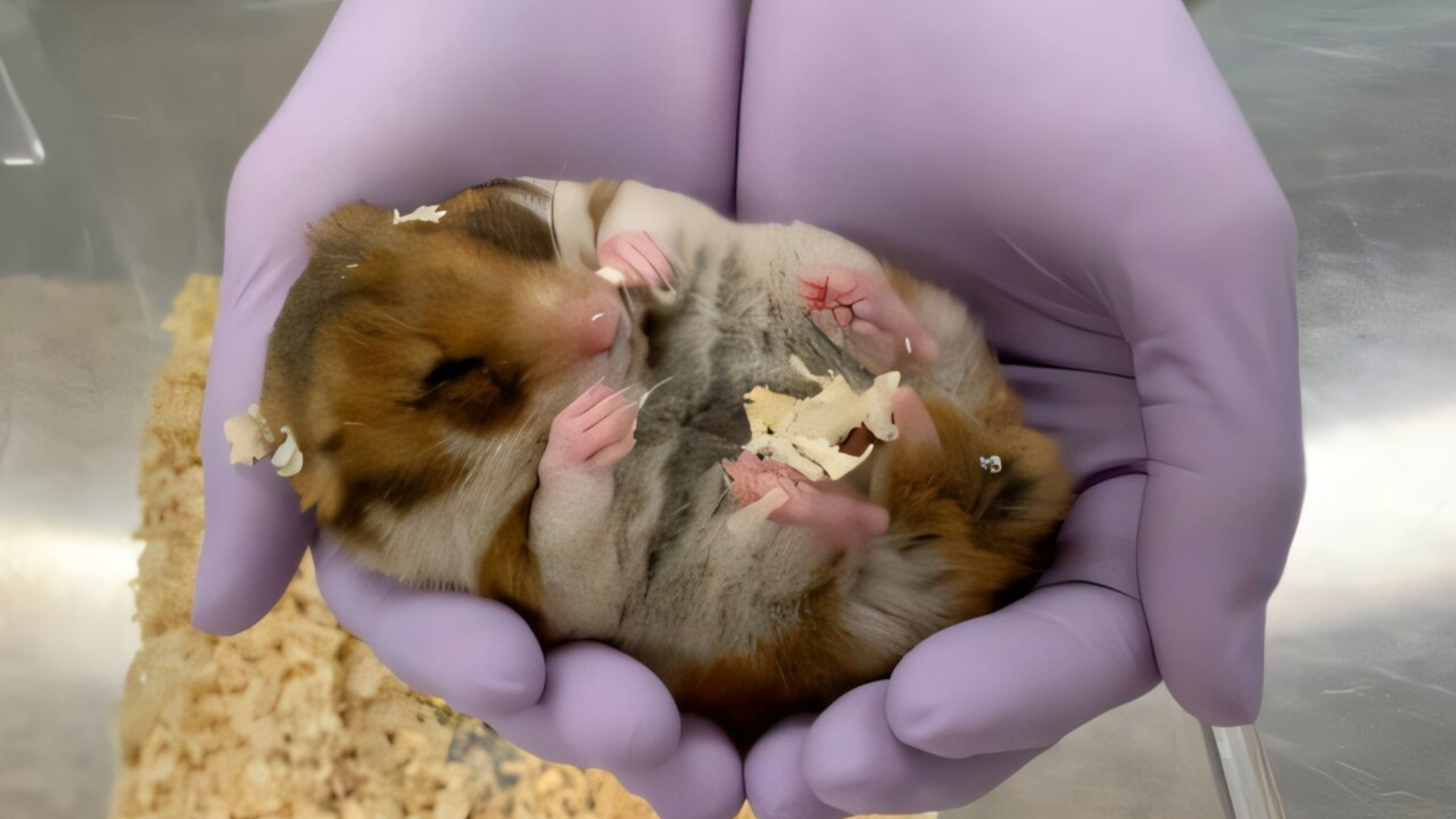
With the freezing temperatures that have recently pummeled parts of the northeastern United States, the idea of curling up for the winter and snoozing until spring sounds very appealing.
There’s just one problem for our species—well, actually, there would be many. As far as the science of hibernation goes, a long period of cold and inactivity usually isn’t good for human muscle tissue and muscle stem cells, or the cells that carry out the repair and maintenance of muscle tissues. This problem exists for most animals, but not the ones that hibernate and let winter pass them by.
Within this context, researchers investigated how the muscles of hibernating animals are safeguarded throughout extended stretches of inactivity and dramatic cold. In a study recently published in The FASEB Journal, scientists discovered that in these situations, the muscle stem cells remain alive, essentially putting their activity on hold.
In other words, when faced with acutely low temperatures, the cells in question don’t die—they become inactive, Mitsunori Miyazaki, co-author of the study and a biochemist at Hiroshima University in Japan, tells Popular Science. Muscle repairing can recommence when they are warm again. Through this dynamic, animals in hibernation save energy and conserve muscle stem cells.
“Our findings suggest that hibernating animals do not simply tolerate muscle damage during winter. Instead, they actively suppress muscle repair in a controlled and reversible way,” Miyazaki explains.
Jokes aside, understanding how animals hibernate could provide insight into how to help people forced to experience hibernation-like states.
“Understanding how muscle stem cells survive extreme cold while temporarily reducing their activity may provide useful insights for preventing muscle loss in humans, such as during aging, prolonged bed rest, or medical hypothermia,” says Miyazaki. “It may also offer clues for protecting muscle during long-term space flight, where the absence of gravity leads to severe muscle loss.”
Next, how about learning how to actually hibernate?
