
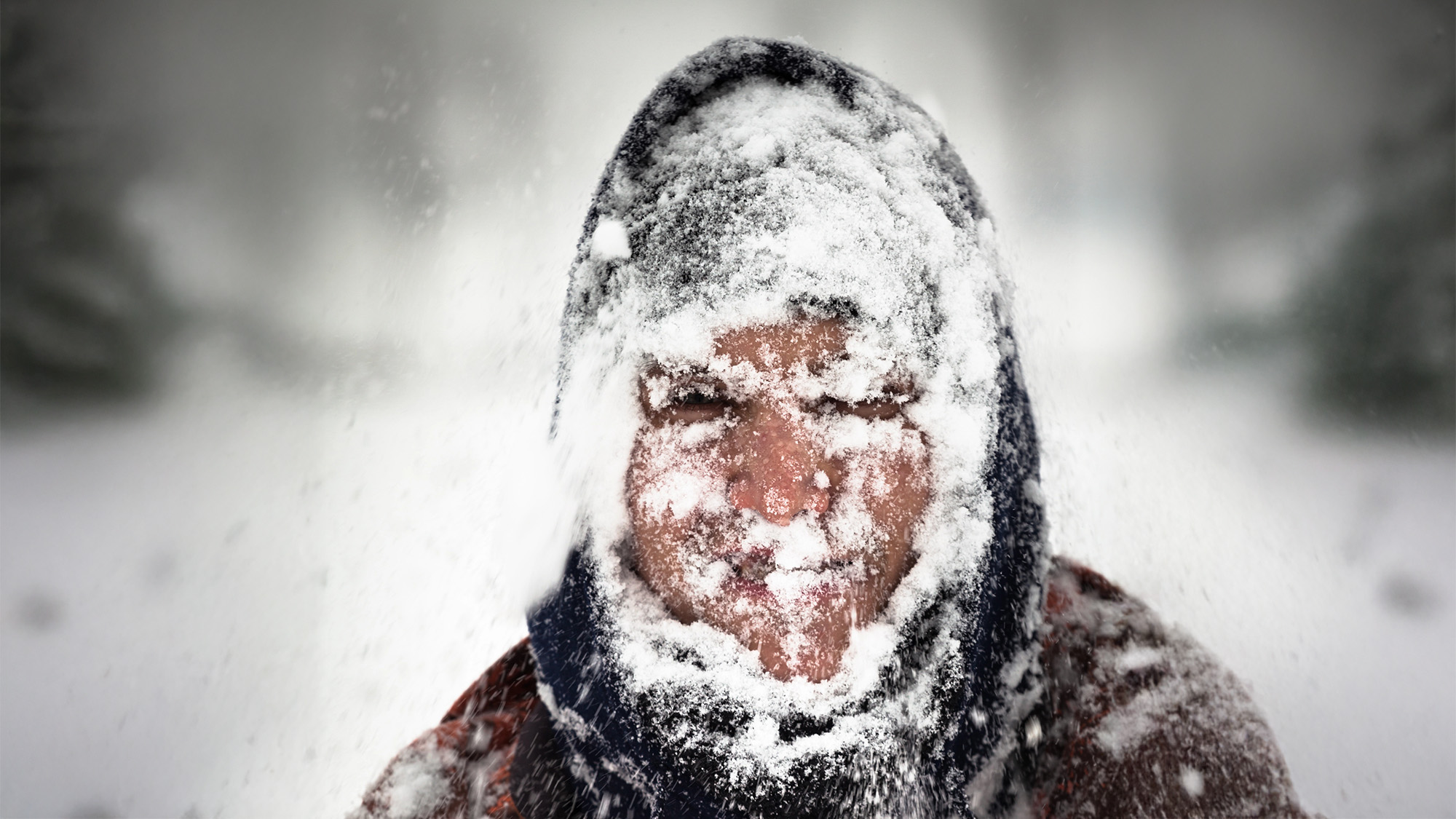
Whether you prefer sweltering summers or frigid winters, significant temperature changes mean only one thing to your body: bad news.
Humans are homeotherms, meaning that our core body temperature stays roughly constant. Temperature drops that disrupt this balance can wreak havoc on our bodies, which are primed to work at or near a normal body temperature of 98.6 degrees Fahrenheit.
When we get cold, our bodies respond by reducing blood flow to our skin, shivering to generate heat, and trapping warm air near our skin with goosebumps. But in extreme conditions, our built-in warming methods fail, and our body temperature starts to drop. Once it falls below 95 degrees Fahrenheit, the body has officially entered hypothermia.
A falling core temperature can be disastrous for the body, but, in rare situations, it can actually be beneficial to enter hypothermia, and some medical procedures recommend inducing it. In this article, we’ll explore the positives and negatives of hypothermia and find out how low we can go.
Accidental hypothermia puts the body at risk
Mild hypothermia—a body temperature between 89.6 and 95 degrees Fahrenheit—has subtle symptoms. Patients might report feeling hungry, sick, or confused. Their skin may become pale and dry.
Below 89.6 degrees Fahrenheit, the body has entered moderate hypothermia. Patients feel lethargic, and their heart rate and breathing slow. The brain and its internal thermometer short-circuit at these temperatures, leading to bizarre behavior such as paradoxical undressing.
In severe hypothermia, below an internal temperature of 82.4 degrees Fahrenheit, the body starts to switch off. Blood pressure and heart rate plummet further.

These symptoms make it all the more incredible that in 1999, radiologist Anna Bågenholm made a full recovery after her body temperature dropped to 56.7 degrees Fahrenheit. It’s the lowest body temperature an adult has ever survived outside a hospital.
Anna Bågenholm’s remarkable survival story
Bågenholm fell through ice while on a ski trip, and spent nearly an hour and a half immersed in perishingly cold water. By the time rescue teams had reached her location, she was clinically dead. When she was pulled from the water, rescuers intubated her and began CPR, which continued until doctors hooked her up to a heart-lung machine for three hours while she warmed up.
Bågenholm spent a month on a ventilator. Her blood stopped clotting, her nerves were damaged, and her internal organs malfunctioned. But despite this full-body assault, she survived. Five months later, she was back at work and hiking again, undeterred by her brush with death.
In 2014, a Polish toddler survived even colder conditions
Only one case of accidental hypothermia surpasses Bågenholm’s ordeal. In the winter of 2014, a Polish toddler named Adam wandered out of his grandmother’s house in the village of Raclawice, north of Krakow. The temperature was 19.4 degrees Fahrenheit.
Adam was found hours later, unconscious and unmoving. His body was so stiff that rescuers couldn’t intubate him. Like Bågenholm, he was hospitalized and connected to a machine that breathed for him. Despite his body temperature dropping to 53.2 degrees Fahrenheit, Adam made a full recovery and was discharged after two months.
How did Adam and Bågenholm survive, against all odds? Researchers think there are multiple factors at play. At regular temperatures, the brain has a relentless demand for oxygen and other nutrients that is greatly reduced by lower temperatures. Although ultra-low temperatures slow vital neural activities, they also slow those that control cell death and destruction. Bågenholm was trapped in an air pocket while being covered with flowing icy water. That meant she could still breathe as her body cooled to a temperature where a lack of oxygen wasn’t a big deal for her brain.
Related 'Ask Us Anything' Stories
What is shivering? Why our bodies shake when it’s cold.
What does ‘chance of precipitation’ really mean? A meteorologist explains.
Do you need more sleep in fall and winter? Probably.
Why you get goosebumps when you’re scared—or inspired
Can humans spontaneously combust? The baffling cases explained.
Induced hypothermia can protect the brain
Niklas Nielsen, an anesthesiologist at Lund University in Sweden, says that the medical community has been aware of the potentially protective effects of low body temperature for decades. Surgeons often lower their patients’ core body temperature to protect vital organs during brain or heart surgery.
During open-heart surgery, surgeons will fill the heart with a liquid called cardioplegia, which temporarily stops and cools it. This gives surgeons time to operate on the still heart while an external machine handles blood flow. The lowest recorded temperature a human has been cooled by induced hypothermia and survived with brain function intact is 39.6 degrees Fahrenheit. This extreme example was recorded in a case from 1961.
These studies are evidence, says Nielsen, that “low temperatures should not make the treating team think that the patient is beyond recovery.”
If we include induced hypothermia as an example of low body temperature, the 1961 example is the lowest ever recorded example at 39.6 degrees Fahrenheit. If not, then young Adam’s survival at 53.2 degrees Fahrenheit takes the prize for the lowest body temperature.
The 1961 temperature is unlikely to ever be beaten. Modern medicine recognizes that lowering body temperature is a double-edged sword, and newer techniques try to keep cooling to a minimum to avoid side effects. Risks include an increased risk of infections, such as pneumonia, blood-clotting issues, and kidney problems.
Outside the hospital, it’s important to remember that many people have died after enduring the conditions that Anna and Adam survived. For us homeotherms, it’s much better to spend a winter’s night indoors.
In Ask Us Anything, Popular Science answers your most outlandish, mind-burning questions, from the everyday things you’ve always wondered to the bizarre things you never thought to ask. Have something you’ve always wanted to know? Ask us.
