
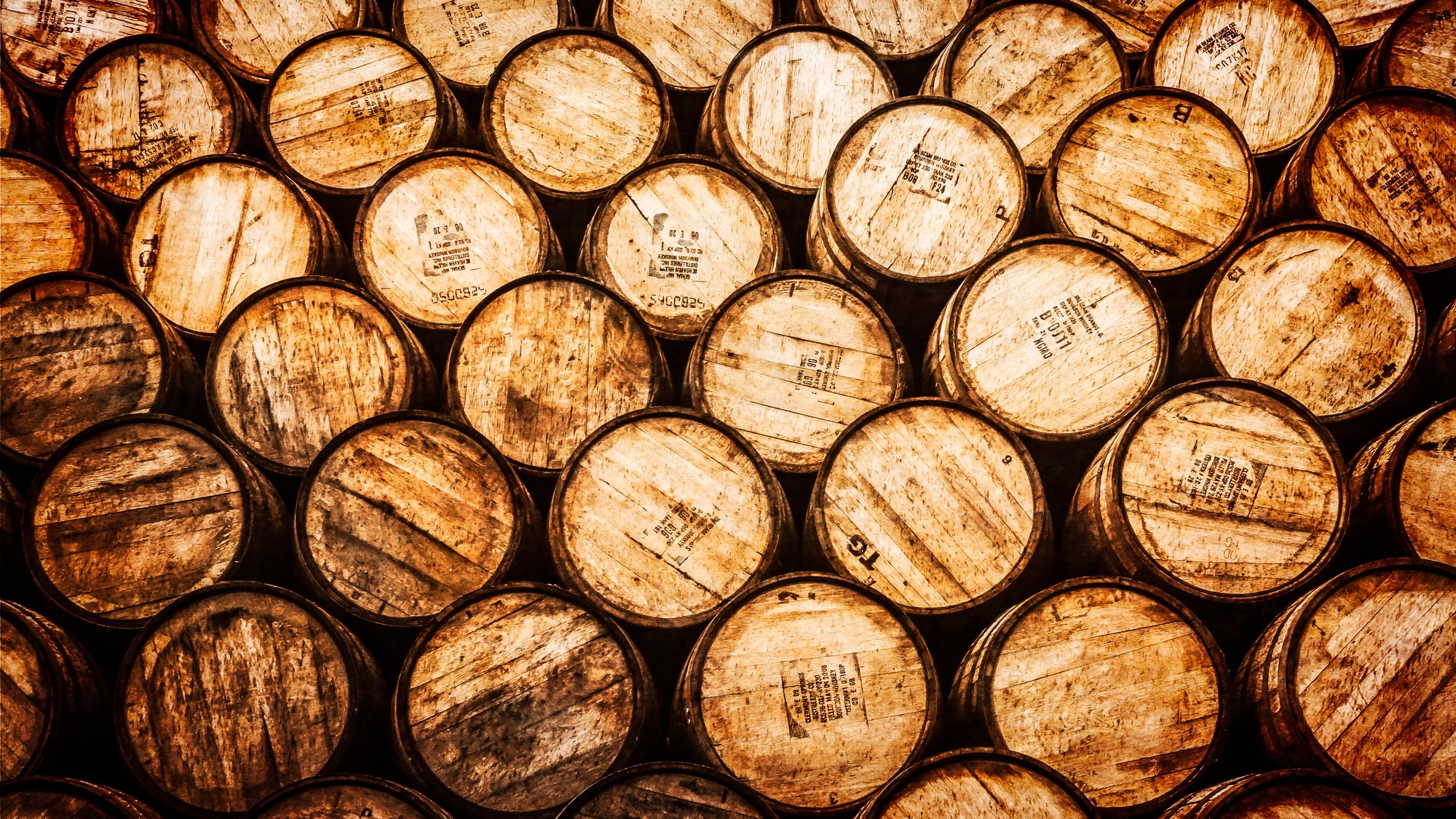
It’s generally not a great idea to mix bourbon with high-voltage electricity. That said, chemists at the University of Kentucky discovered a potentially powerful use for one of whiskey’s most annoying—and plentiful—byproducts. According to the team , the liquor’s waste grains can be recycled into supercapacitors that rival commercially available options.
Behind every bottle of bourbon are vats of waste materials. Most of that unwanted trash is stillage—a goopy, mushy mixture of grains and corn. And in Kentucky—where 95 percent of the world’s bourbon is produced— there is a lot of stillage.
“From the final volume of bourbon produced, you get 6 to 10 times that amount of stillage as waste,” University of Kentucky chemist Josiel Barrios Cossio explained in a statement. “So it’s a big deal.”
Although stillage is often sold to farmers for livestock feed and soil enrichment, it’s a tricky material to handle. Transporting it is difficult given how watery it is, but it’s also exorbitantly expensive to dry. However, if there were uses that justified the costs of turning stillage into different materials, it could offer a convenient and comparatively eco-friendly solution to the ongoing predicament. And that’s exactly what Barrios Cossio and his colleagues set out to accomplish.
The team was particularly interested in stillage’s possible integration into energy storing supercapacitor electrodes, which are used in everything from consumer electronics, to automobile braking systems, to utility grids. Past research has shown other agricultural byproducts like corn fiber could be turned into similar materials, so Barrios Cassio and fellow chemist Marcelo Guzman wondered if the same could work for bourbon’s blended grain trash.
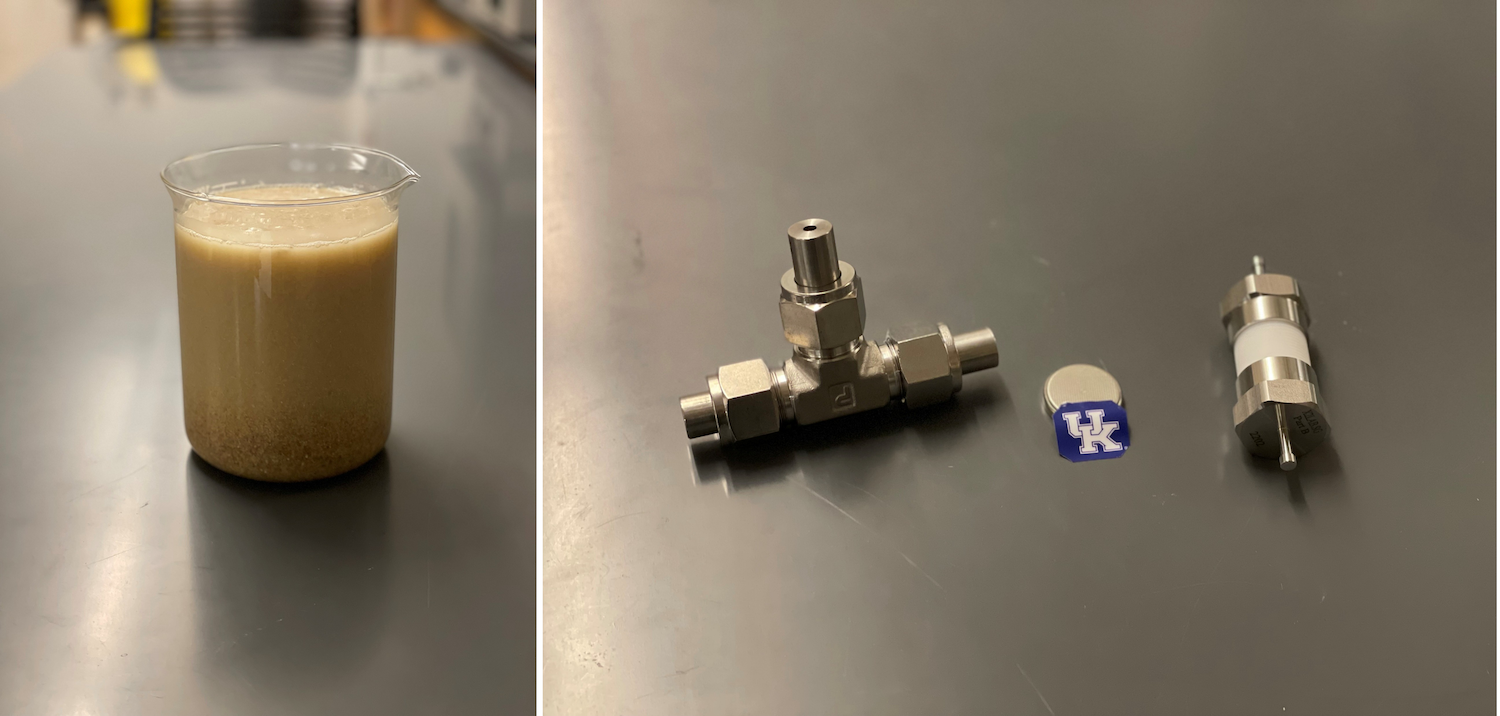
To test their theory, the researchers put the stillage under immense amounts of heat and pressure inside a 10-liter reactor. This created a fine, black carbon powder that was then heated to 392 degrees Fahrenheit to form a graphite-like solid called hard carbon. They also combined some of the powder with potassium hydroxide before heating it to 1,472 degrees to generate activated carbon. The former material is great for absorbing lithium ions and improving energy storage abilities, white the latter houses large amounts of charge thanks to its spacious internal surface area.
Once they had their stillage-derived materials, the team experimented with creating double-layer capacitors featuring liquid electrolyte placed between coin-sized, activated carbon electrodes. Laboratory tests showed their inventions held their own against commercially available electrodes, by storing as much as 48 watt hours per kilogram. Further experiments also yielded a hybrid supercapacitor by combining activated and hard carbon electrodes. In this case, the stillage supercapacitors actually outperformed existing options by around 25 percent.
“It was a huge discovery for me that you can make hybrid devices from this waste,” said Barrios Cossio. “Hybrid devices are not common. Not common and not easy to make.”
There is still a lot of work to be done on improving and optimizing their designs, but the chemists believe that their discoveries may soon become commercially viable alternatives to today’s supercapacitors. If nothing else, the work certainly calls for a toast.
