
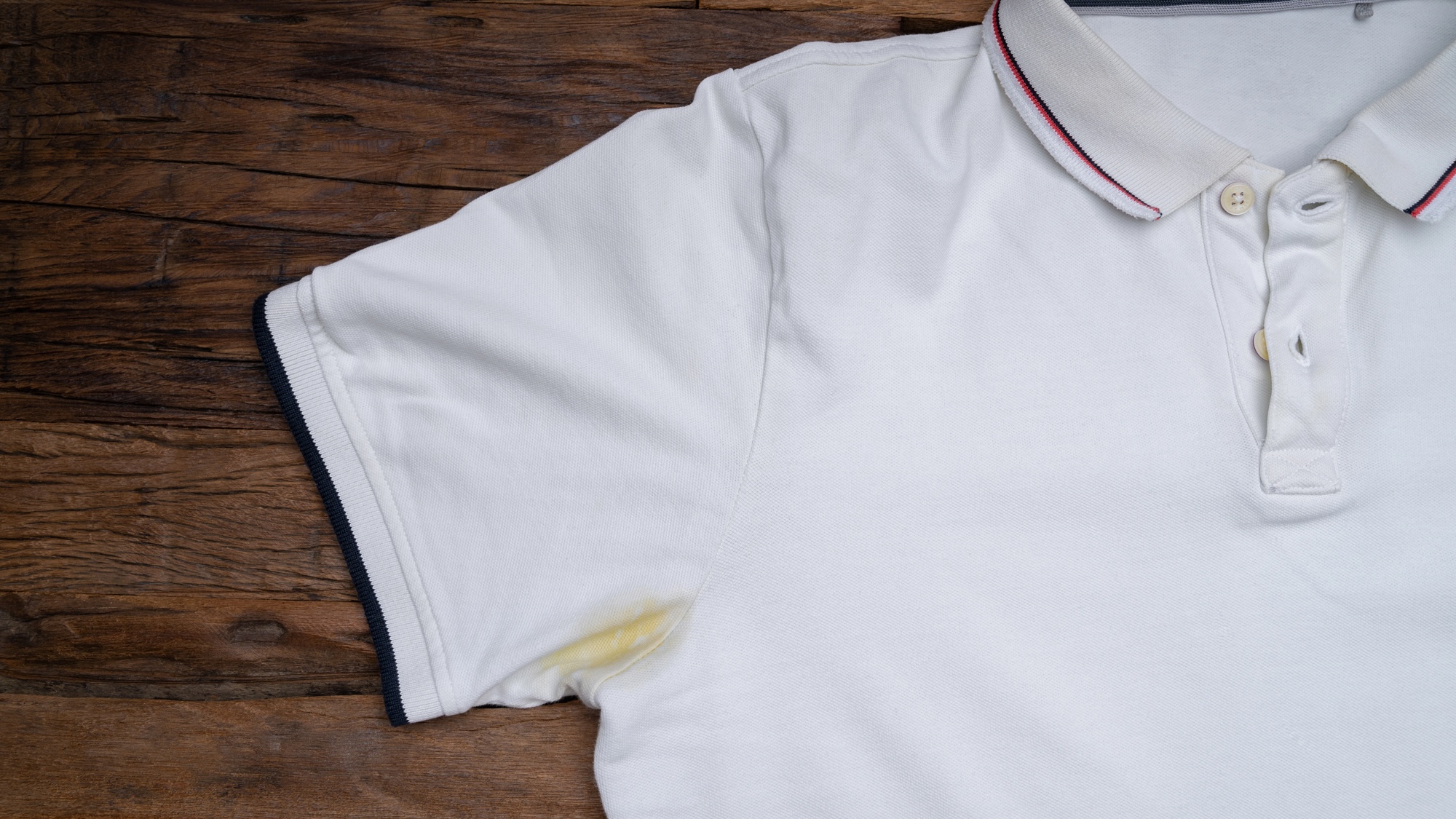
Sweat stains are a white t-shirt’s worst enemy. Unfortunately, that notorious fabric yellowing is often unavoidable due to the combination of oleic acid, squalene, and other organic compounds found in your skin oil and sweat. Factor in a chance encounter with natural food pigments like the carotene and lycopene found in tomatoes and oranges, and it’s probably only a matter of time before you’ll need to break out the bleach or hydrogen peroxide. Even then, the results are often unsatisfactory for your (once) vibrant white shirts.
However, new research indicates there may be another strategy to restore clothes to their former glory. It may be time to swap the harsh chemicals and solvents for a high-intensity blue LED light, according to a study recently published in the journal ACS Sustainable Chemistry & Engineering.
How oxidization cleans stains
Fabric whitening solutions like bleach or hydrogen peroxide work through a process called oxidization. Take the dreaded ketchup stain as an example. The blood-red remnant seen on cloth is visible due to the leftover light wavelengths that remain unabsorbed by the condiment’s chemical composition. Introducing an oxidizer like bleach breaks apart the stain’s double bonded carbon atoms responsible for absorbing light. With enough atomic deterioration, the stain absorbs so few wavelengths that it appears white again to the human eye. The ketchup chemicals may still remain on your cotton shirt, but they’re essentially invisible.
Unfortunately, many popular chemical oxidizers are still environmentally harmful, while constantly buying new clothes is simply unsustainable. Inducing oxidization without harsh solvents or a revolving wardrobe would be an ideal way to help keep clothes clean and the planet healthy. Now, researchers in Japan may have finally figured this puzzle out.
Curing the yellow stain blues
Chemists Tomohiro Sugahara and Hisanari Yoneda found that high-intensity blue LED light irradiation removes the yellowing that occurs in aged resin polymers during a previous study. They soon wondered if the sample principles applied to fabric stains without damaging the material itself.
“Our method utilizes visible blue light in combination with ambient oxygen, which acts as the oxidizing agent to drive the photobleaching process,” Sugahara said in a statement. “This approach avoids the use of harsh chemical oxidants typically required in conventional bleaching methods, making it inherently more sustainable.”
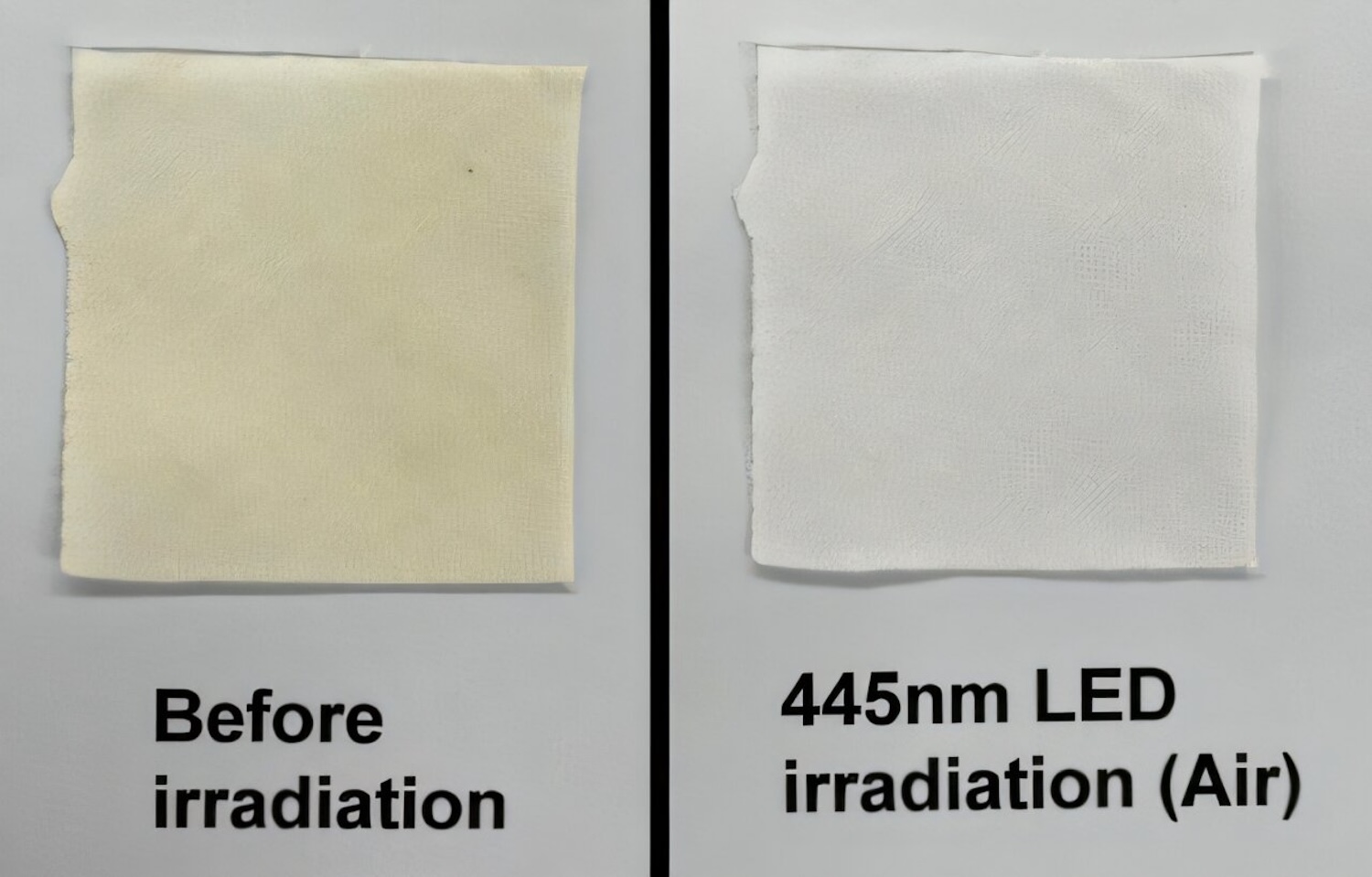
First, the pair exposed vials of beta-carotene, lycopene, and squalene to a high-intensity blue LED light for three hours each. Every sample lost color, while a follow-up analysis confirmed that the ambient air’s oxygen content itself helped move along the photobleaching process. Next, they dabbed cotton fabric swatches with squalene before heating them to simulate an aging stain. From there, the team tested three stain-removing options: a hydrogen peroxide bath, or exposure to either blue LED or ultraviolet (UV) light.
The results were unambiguous: the blue light outperformed both the hydrogen peroxide and UV options. With the UV light, the treatment actually generated new yellow-tinted compounds. Further experiments showed that blue LED treatments safely lightened similar squalene stains on silk and polyester, while also mitigating stains from common stain-causing compounds like oleic acid, tomato juice, and orange juice.
Sugahara and Yoneda still want to conduct additional longevity and safety tests before attempting to commercialize the system, but believe that it’s well within the realm of possibility that a little LED light could soon go a long way in extending the life of your clothes. Avoiding any new food stains will still be your responsibility, however.
