
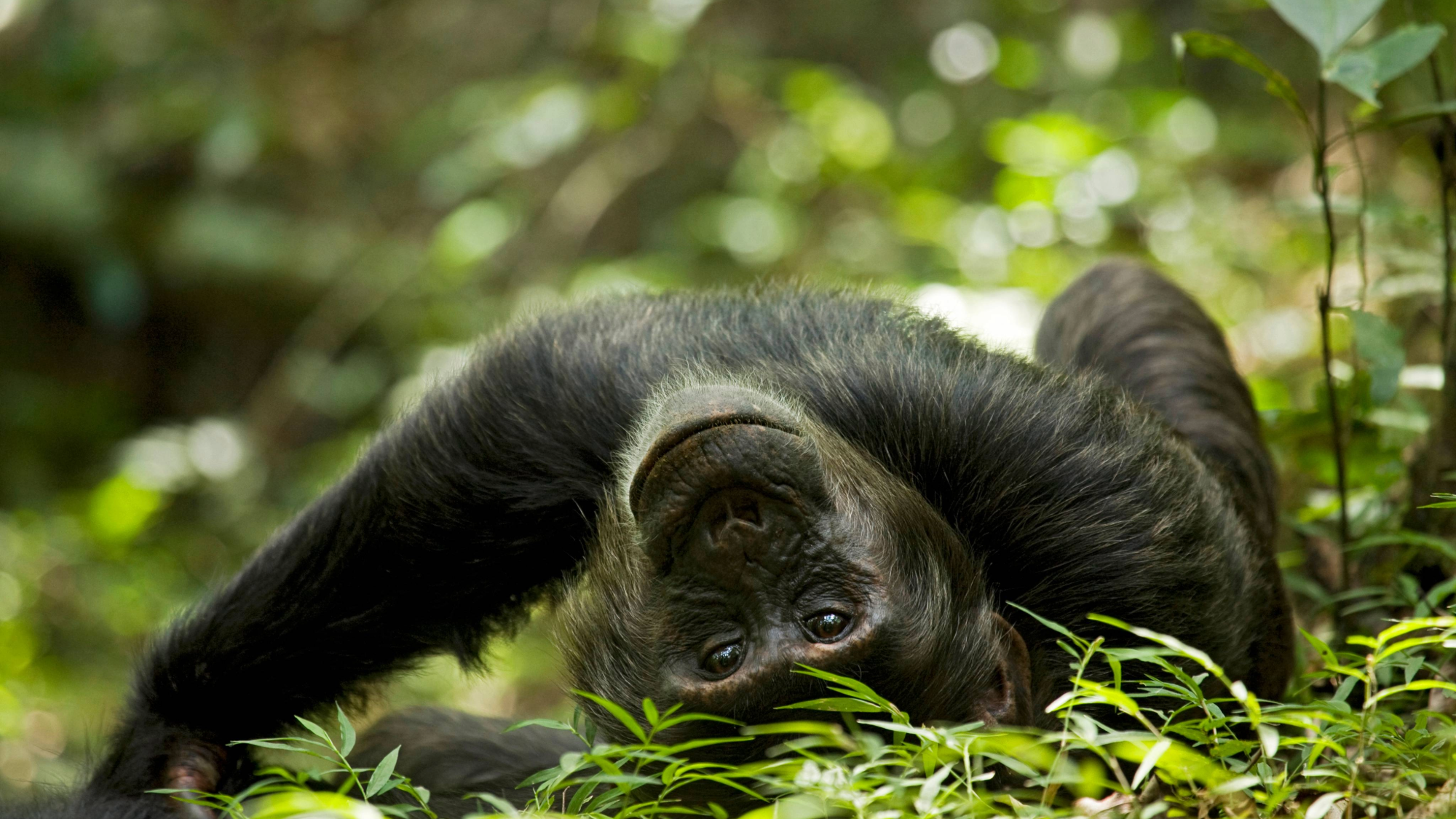
Chimpanzees love their alcohol. Among our closest primate relatives, they frequently feast on fermented fruit in the wild. So much so that the drunken monkey hypothesis posits that chimps and potentially many other animals will ingest alcohol as part of their diet and even seek it out. And as descendants of boozy, fruit-eating apes ourselves, humans likely evolved the same tendency.
Now, some more proof of their intoxicating habits is in their urine. After University of California, Berkeley graduate student Aleksey Maro and integrative biologist Robert Dudley discovered that the boozy fruits chimpanzees eat is the equivalent of two standard alcoholic drinks (14 grams), they needed to confirm the full amount of alcohol consumed by the monkeys. Since breathalyzers are not really practical for wild chimpanzees, they turned to their urine.
Staying clear of the spray zone
In August 2025, Maro worked with Sharifah Namaganda, a Ugandan graduate student at the University of Michigan who had prior experience collecting urine samples at Ngogo, a habitat within Kibale National Park. With her guidance, Maro collected forked branches and covered the ends with plastic bags. The bags and branch contraption created a shallow plastic bowl to collect urine samples. They found that longer handles helped stay clear of the spray zone.

Maro then patiently waited under trees with feeding chimps, watching for signs of movement, as they will often pee before leaving their feeding spot. The improvised collector worked well and he also collected urine from puddles along the forest floor. When chimps are closer to the ground, they will straddle small logs, defecating on one side and peeing on the other.
After 11 days of urine collecting, Marso had enough samples to fill in a crucial gap in the drunken monkey hypothesis. Most of the urine samples contain a metabolic byproduct of alcohol called ethyl glucuronide. This by product proves that they ingest significant quantities of ethanol in their diet, most likely from those fermenting fruits. The team’s findings are detailed in a study published today in the journal Biology Letters.
“We find widespread physiological evidence of the consumption of alcohol by chimpanzees,” Maro said in a statement. “If there’s any doubt about the drunken monkey hypothesis—that there’s enough alcohol in the environment for animals to experience alcohol in a way analogous to humans—it’s been cleared up.”
Counting drinks
Of the 20 urine samples taken from 19 different chimps, 17 tested positive on commercial strips that are sensitive to 300 nanograms per milliliter (ng/ml) or more ethanol. Of the 11 samples tested with strips sensitive to 500 ng/ml or more, 10 were positive (making a total of 4 out of 20 below the 500 ng/ml cutoff). For humans, that 500 ng/ml is a level expected after one to two standard drinks within the previous 24 hours. Similar levels would be expected in a chimpanzee that was scarfing down slightly fermented fruit all morning.
“The levels are high, and this is a conservative estimate given the time course of exposure through the day,” Dudley said. “In nanograms per milliliter, these are coming in way above some of the clinically relevant and forensically relevant human thresholds.”
Maro only collected samples from chimps that he and the Ngogo staff could recognize. Males and females alike tested positive for ethanol byproducts in urine, and the negative results came disproportionately from females and juveniles. Dudley said that it’s possible the males hoard the more alcoholic fruits.
The human factor
According to the team, future studies should assess the effects of dietary ethanol on the chimp’s physiology and behavior over time, including whether or not consumption of fermented fruit affects aggression or the timing of female fertility.
“Food and alcohol evolutionarily are, as it turns out, very much connected, especially in the lives of chimpanzees,” Maro said.
It could also come back to humans as well and questions still remain about if we evolved to be predisposed to consume alcohol and how much did that influence the domestication of yeast to brew our own alcoholic beverages.
“The final link here with the drunken monkey hypothesis remains to be shown: that the chimps are selectively consuming fruits with higher ethanol content,” Maro said. “That hasn’t really been demonstrated for any taxon in the wild. So that would be the next future direction on this–to definitively prove the universal hypothesis of attraction to alcohol.”
