
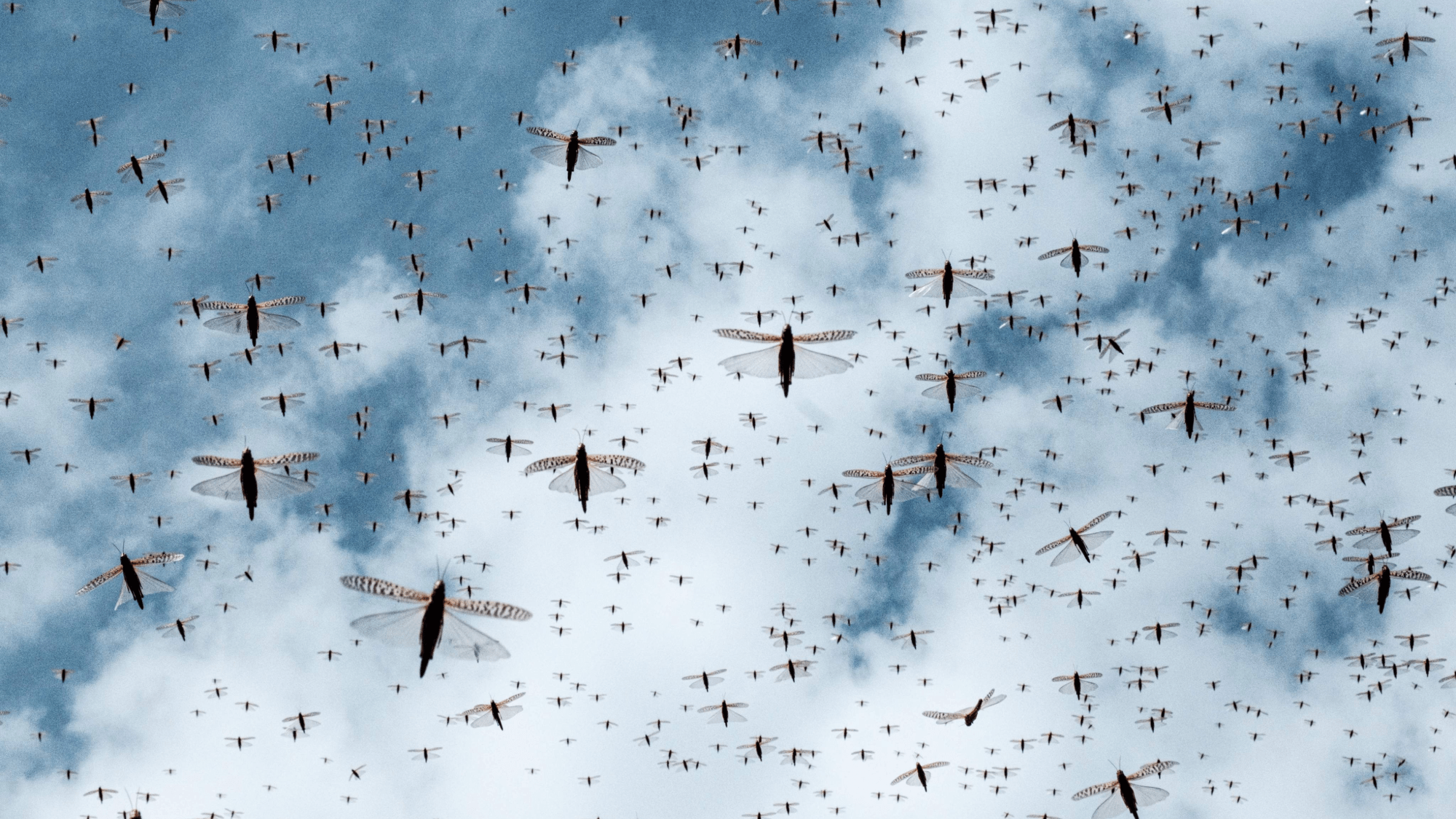
Swarms of locusts devouring a farmer’s livelihood might sound apocalyptic, but major locust infestations are a regular problem in agricultural communities around the world. These locust swarms—dense, droning packs of certain grasshopper species—can cover hundreds of square miles, and the insects consume vast amounts of vegetation and threaten global agriculture. In the western United States, a hotspot for grasshopper and cricket outbreaks, rangelands critical for livestock grazing suffer an estimated $1.2 billion in annual losses.
In a study recently published in the journal Scientific Reports, scientists with Gaston Berger University in Senegal, the Global Locust Initiative at Arizona State University (ASU), and real farmers experiencing repeated outbreaks of Senegalese grasshoppers (Oedaleus senegalensis), identified a surprisingly simple strategy. Enriching soil with nitrogen, the main building block in protein, could help control the pests using their diets.
Hacking the locust diet
In parts of the Horn of Africa, the Arabian peninsula, and across southwest Asia, desert locusts have plagued farmers in numbers not seen in decades. In response, communities have treated farmland with chemical insecticides and biopesticides. The 2019-2021 locust plague in this region cost an estimated $300 million to control. Scientists are also studying Central American locust swarms in Mexico that could spread into U.S. borders, where locust swarms have largely disappeared since the early 1900s. And as climate change creates warmer and wetter conditions, some researchers warn that certain locust species may expand their range.
In Senegal, the potential new solution lies in how the Senegalese grasshopper fuels its swarming behavior. Protein is at the bottom of the locust food pyramid, and incorporating it could help stem swarming. In field tests, crop plots treated with nitrogen-based fertilizer yielded high-protein, low-carb crops. These are a far less tasty meal for the species, since it relies on a high-carb diet to create fat stores that power population growth and long-distance migration.
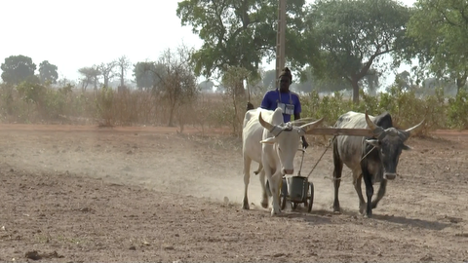
Over several months, in central Senegal, the ASU and Gaston Berger team worked with 100 farmers from two village areas. Each farmer grew a grain called millet in two plots: one treated with commercial nitrogen fertilizer-treated plot and one untreated plot. The scientists then surveyed the field for pest abundance and damage three times throughout the growing season. They found that the fertilizer treatment significantly decreased pest abundance and crop damage, while increasing millet yield.
The researchers are among the first to demonstrate this type of outbreak management strategy with the Senegalese grasshopper, which is just one type of grasshopper that has locust swarming tendencies. While all locusts are grasshoppers, not all grasshoppers are locusts—and only a handful among thousands of grasshopper species are considered true locusts.
Arianne Cease, the director of ASU’s Global Initiative, tells Popular Science that she hopes this research will help farmers around the world manage grasshopper and locust outbreaks originating in agricultural fields, using soil-based strategies.
“Locust outbreaks are a highly complex, highly impactful global challenge,” Cease says. “When these upsurges happen, they dramatically affect people’s livelihoods. It’s important for us to recognize how dangerous locust outbreaks can be for food security and economic security. And we need to have a diverse set of strategies to sustainably manage them.”
A scalable solution?
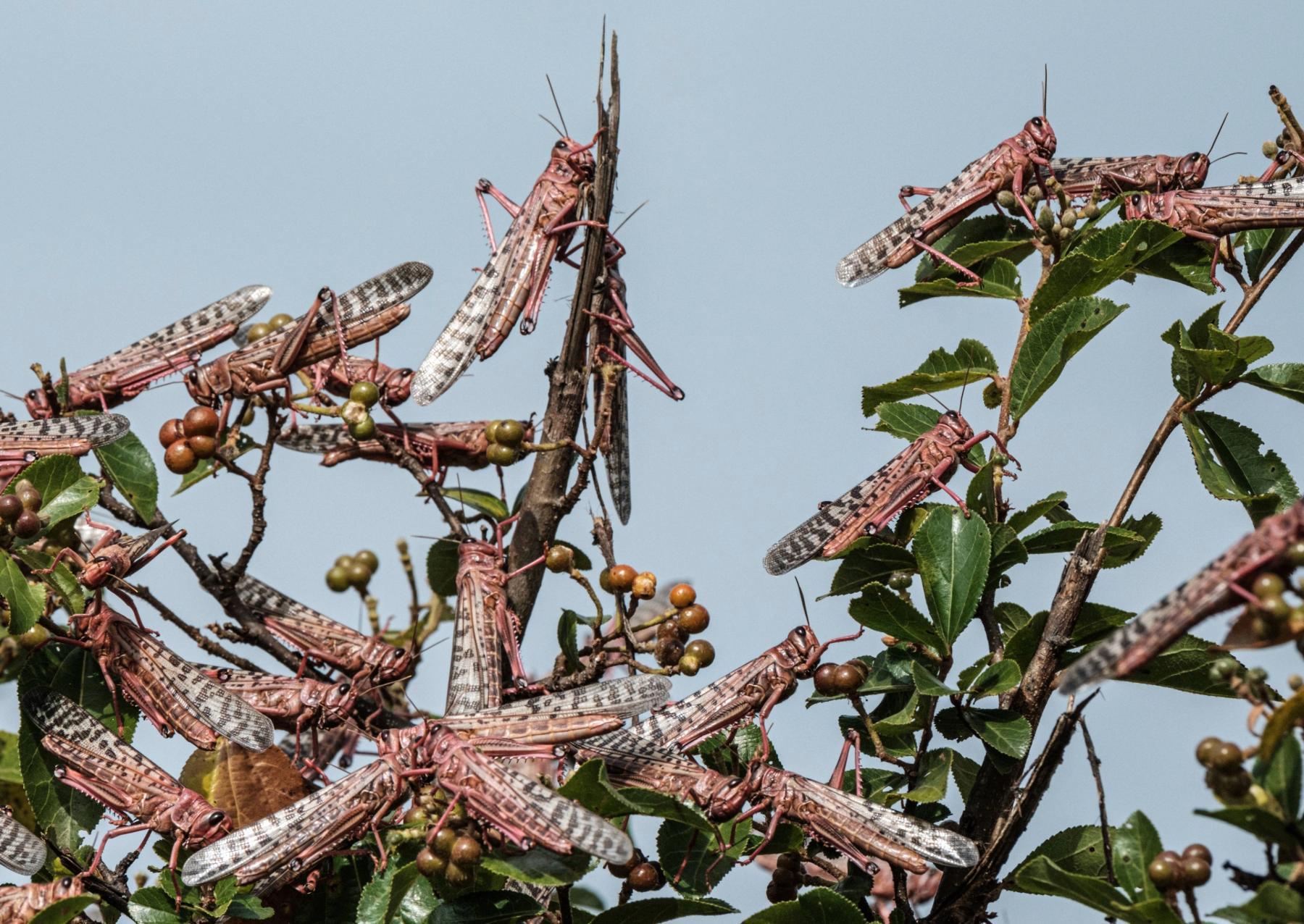
According to biologists, locusts swarm under specific, often complex environmental conditions, such as above-average rainfall that creates moist soil ideal for breeding, along with periods of drought that brings resource scarcity and forces density. Close quarters and suitable breeding conditions among locusts can activate sudden and rapid breeding and collective behavior, leading to outbreaks.
Daniel Gebregiorgis, a climate scientist with the Department of Geosciences at Georgia State University, says that while the nitrogen fertilizer-based method for locust management is a promising solution, scaling presents a possible challenge because outbreaks often occur in remote areas. Many locust management strategies also face hurdles with widespread application in places with limited connectivity.

Gebregiorgis emphasizes that this new research is particularly significant since human-caused climate change is driving an uptick in locust outbreaks. Notably, he says an increase in cyclonic activity that brought heavy rain across primary desert breeding areas in the Arabian Peninsula and East Africa fueled massive locust plagues in the region in 2020.
“Because of global warming, many regions are receiving above-average rainfall, and coupled with increasing temperature and soil moisture, conditions that sustain locust breeding are increasingly being met,” Gebregiorgis tells Popular Science. “With increasing cyclonic activity as well, this fundamental shift in climate acts as the most important trigger for locusts. I would call locust outbreaks one of clearest manifestations of the climate crisis today.”
Human behavior such as overgrazing and overfarming can also create conditions that elicit swarming, according to Cease. Livestock overgrazing and intensive cropping can degrade land and cause soil erosion, creating nitrogen-poor soil that spawns carb-heavy plants which support locust growth and help sustain swarms traveling long distances.
‘Just insects doing their thing’
As part of their next steps, researchers at Gaston Berger University in Senegal, led by locust biologist Mamor Touré, are using compost fertilizer rather than more costly commercial fertilizer, to achieve the same effects in a more accessible and sustainable way. Cease says that their work with the Senegalese researchers supports farmers as active participants in locust management. It also may fight the perception that locust swarms are random, if not malignant, forces of nature or even divine will.
“There’s this narrative, largely driven by our religious histories, that locusts are a plague and they arrive when you do bad things,” Cease says. “But, in fact, they’re just insects doing their thing – and there are many aspects of how we manage our landscapes or how we are broadly affecting climate that impact the probability that these locusts will form swarms.”
