Throughout the 20th century, New York maintained a reputation for being the greatest city in the world. It housed the world’s tallest building, the most extensive subway system and a group of the world’s most creative minds. While the city strikes us as an aggressive, ambitious place, New York thrives on a sensr of nostalgia as much as of enterprise. What New Yorker hasn’t felt incensed upon seeing a mom-and-pop deli replaced by a CVS? Who hasn’t felt overcome with sentiment while beholding the Brooklyn Bridge on a summer evening? How fitting, given that we’re using our archives to tour old-school NYC this weekend.
Click to launch the photo gallery.
Much of our New York coverage concerns the city’s great, if not overpopulated, future. We correctly predicted that the city would eventually hold up to 20 million people on a given day, but we couldn’t conceive where all of them would live (keep in mind that this was before we imagined that people would commute from New Jersey each morning). One engineer proposed filling in the East River while creating three new islands in the New York Bay. Another suggested draining the the East River to create a boulevard between Manhattan and Brooklyn.
Within a decade, we began covering more realistic projects, such as the expanded subway system beneath Times Square, the Empire State Building’s new automatic “robot” elevators, and the newly high-tech Madison Square Garden above Penn Station. You can see all of these things today. The rocket-shaped Columbus Circle tower and the pint-sized subway conveyor cars, not so much.
Click through our gallery for more visions of a New York that never really came to pass.
Augmenting NYC: January 1916
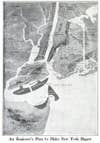
What’s the solution to overcrowding? Creating more land, of course. At least that’s what Dr. T. Kennard Thomson, a consulting engineer, proposed while considering New York City’s population problem. His project entailed adding fifty square miles of land from the New York Bay, which would amount one hundred miles of new waterfront areas. With the addition of extra space, downtown would become midtown, putting City Hall at the center of “a really greater New York.” The black portions of this picture show the areas Thomson planned to recover from the harbor and East River, as well as the new East River he planned to carve inside Queens. With the original East River filled in, Brooklyn and Manhattan would become the new East and West Side, while the new rivers in Queens and Harlem would provide battleships with easy access to the Long Island Sound. Sure, the project would cost more than the Panama Canal, but he figured that the added populace would contribute enough financial returns to justify the investment. Read the full story in “A Really Greater New York”
Grand Central: January 1916
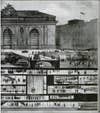
Today, the ground beneath Grand Central Terminal houses New York’s second-busiest subway station, but in 1916, commuters could only dream of shuttling around in tunnels as storied as this one. At the time, construction workers and engineers were struggling to install the Lexington Avenue line without disturbing traffic on ground level. Digging subway tunnels was a tricky business, especially in areas like Grand Central where workers had to dig around existing subway lines. Quite frequently, they would encounter “rotten rock,” or weak strata, which would collapse temporary structures and trap builders underground. Engineers also had to deal with underground water, which would frequently convert the floor of construction sites into quicksand. At the corner of Broadway and Canal street, engineers installed a set of pump that removed 20 million gallons of water a day from just one spot. Meanwhile, near Grand Central, New Yorkers watched in horror as a temporary street collapsed into a tunneling site, taking a truck, a streetcar, and several pedestrians with it. Read the full story in “The Giant Task of the Subway Diggers in New York”
Times Square Subway: June 1918
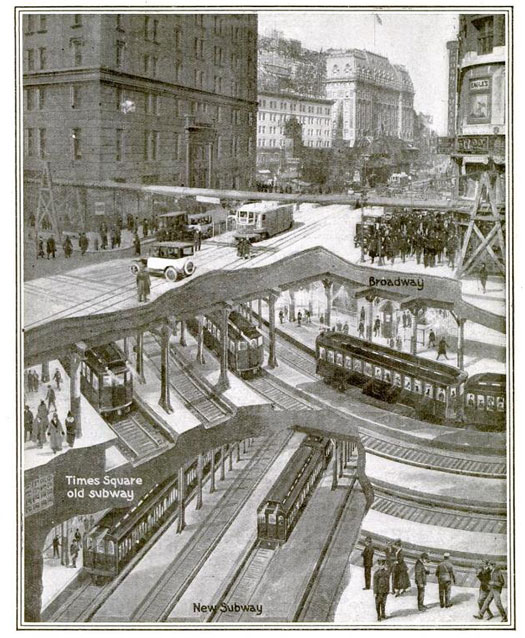
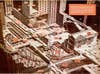
Nowadays, having your commute interrupted by subway construction is a fundamental, if not annoying, aspect of being a New Yorker, but back in 1918, there was something wonderful about knowing we had the technology to dig tunnels beneath tunnels. How does that work, we wondered. How do subway tracks not cave into each other? Using the Broadway line’s construction as an example, we explained to readers how engineers would use steel wedges and wooden beams to support existing rails while blasting the rock from beneath them. Eventually, the steel wedge would serve as permanent ceiling for the second layer of tunnels, while another beam would hold everything in place. After areas surrounding the supports were filled with cement, workers could take them away and let the structure stand on its own. Read the full story in “Building a Subway Under a Subway”
Draining New York’s East River: December 1924
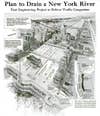
That pesky East River. Think of all the space New Yorkers could enjoy if it were solid land. Just a decade after T. Kennard Thomson gave his proposal, John A. Harriss, special deputy commissioner in charge of traffic, proposed erecting a wide boulevard between Manhattan and Brooklyn. This would require damming and draining the East River between the Williamsburg Bridge and the Harlem River. A new city hall atop the boulevard would house a police, health, music and art center, while new high schools, playgrounds, and even a theater district could serve all four boroughs. Beneath the boulevard would be parking spaces, subway lines, east and west ramps, as well as a tunnel for large vehicles. Read the full story in “Plan to Drain a New York River”
The Empire State Building’s New Elevators: April 1931
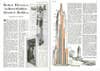
Just weeks away from its official opening, the Empire State was poised to take its place as the world’s tallest building, but how would it deal with the inevitable influx of tourists and office workers? By using top-notch elevators of course. Engineers and architects decided to use 58 elevators with automatic starting, stopping, leveling and door-opening to serve the building’s many passengers. “‘Sixty-eight,”seventy,’ ‘seventy-nine,’ the passengers announce their floors to the attendant, who merely presses a button on the control panel for each number called,” we said. “He need worry no more.” A novel concept, given that most conventional elevators just a few years prior lacked something as fundamental as automatic doors. In the picture on the right, the red lines signify sections of local elevators while the black lines show the express banks. Read the full story in “Robot Elevators to Serve 85,000 in Greatest Building”
Times Square: January 1937
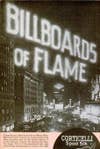
Times Square might have changed a lot since 1937, but even then, billboards on the “Great White Way” were practically their own tourist attraction. What many people didn’t realize, however, was that these boards could take up to three months to design, configure and erect. To find out how workmen assembled billboards, we paid a visit to the General Outdoor Advertising Company, where we surveyed the assembly of a billboard depicting peanuts tumbling out of a bag. Before sketching the billboard, assemblymen would study a slow-motion movie of nuts falling out of a bag. Using the frames, they would plot out the lights on the circuits, which were controlled by a motor-driven mechanism that would turn them on and off at certain intervals. Read the full story in “Billboards of Flame”
Conveyer Cars: May 1951
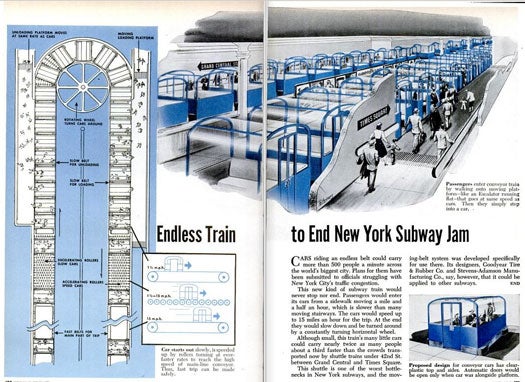
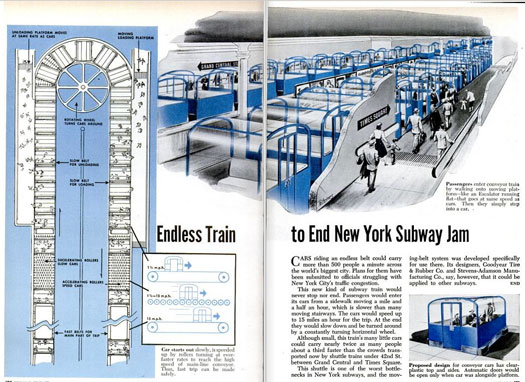
Anyone who has had to transfer between Grand Central Station and Times Square knows that it can take an unnecessarily long time to wait for a train that only brings you across one stop (well, two if you take the local train). As a solution, the Goodyear Tire & Rubber Company and Stevens-Adamson Manufacturing proposed installing conveyor cars that would shuttle passengers between those two stations. If all went according to plan, these cars would carry twice as many people a third faster than the existing shuttle train. To ease up traffic even further, a moving sidewalk would carry commuters to and from the tunnels, the conveyor cars and the subway platforms themselves. Read the full story in “Endless Train to End New York Subway Jam”
MetLife Building: September 1962
During the time of its construction, the MetLife Building, originally called the Pan Am Building, was poised to become the “most complicated building ever built,” and indeed, it went on to become the largest commercial office building after it opened in 1963. Between late 1965 and early 1977, the roof of the building actually served as a helicopter pad, until various accidents forced it to close. As the picture on the left shows, the Pan Am was more than just an office building. It would be a crossroads between transportation and business. Trains would run under it and pedestrians would take escalators connecting Grand Central’s upper concourse and the second floor of the building. Read the full story in “The Most Complicated Building Ever Built”
Madison Square Garden: May 1966
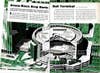
In 1968, sections of Penn Station’s above-ground areas gave way to the current incarnation of Madison Square Garden, which is of course a landmark arena for concerts and sporting events. During its construction, we looked forward to express escalators capable of emptying the structure within 22 minutes, as well as seats mimicking the experience of watching events at a classical Greek forum. In the meantime, commuters could look forward to a newly-airconditioned Penn Station with an increased underground capacity. Read the full story in “Arena Arises Atop Buried Rail Terminal”
Columbus Circle: December 1985
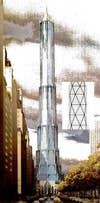
Today, Columbus Circle houses Time Warner Center, which consists of two towers connected by an upscale retail center and a fancy atrium. That is to say, it looks nothing like how we imagined it in 1985. Architect Eli Attia proposed a rocket-shaped structure with a small foundation and no vertical columns. Diagonal framework would conduct the forces of wind and gravity to the ground, thus resolving the need to have a wide foundation. That seemed like an ambitious feat, given that his proposal called for a building over 130 stories tall. Read the full story in “Super Skyscrapers”