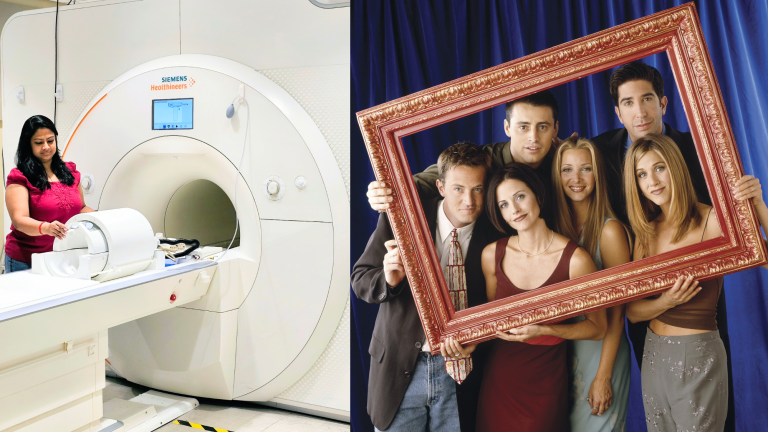
Brainput Multitasking Assistant A volunteer tries out the Brainput workload-sensor and multitasking-helper. Solovey, et al.

Your office mates, whether they’re people or pets, can probably tell when you’re feeling stretched too thin — heavy sighs, hand-wringing and general signs of stress are fairly easy to spot. Yet your computer takes no notice, its beach ball of death spinning away incessantly and its processor failing utterly to work any faster. Now a new brain-computer interface could turn your computer into a more sympathetic partner, taking over some of your tasks when it senses you’re overworked.

The system, called Brainput, is designed to detect when a person’s workload becomes excessive and to modify said workload to make it easier. Erin Treacy Solovey, a postdoc at MIT, uses functional near-infrared spectroscopy to monitor brain activity and aid this brain-computer interaction.

Solovey and her colleagues used the fNIRS to determine when a person was multitasking, analyzing brain signals in earlier experiments to isolate patterns of activity. They could distinguish three specific states of multitasking, and developed classification algorithms for these patterns. The system works by strapping a fNIRS sensor on a user’s forehead — because hair interferes with the signal, for one thing, and also because the area tracks the anterior prefrontal cortex, which is involved in high-level processing.

Solovey and colleagues used Brainput with virtual robots, which were designed to adapt to the mental states of a dozen human volunteers. The volunteers had to send a pair of robots through a maze to find a WiFi signal, continually switching between both robots to keep them on the right paths and prevent them from crashing. As the volunteers’ brains began in a specific type of multitasking — a detectable state of activity known as branching — the robots took on more of the work.

Such a system could guard against distracted drivers by helping out when a person’s attention is just too divided. Or it could help workers who must juggle several tasks at once, perhaps air traffic controllers. “In any activity involving multitasking or
information overload, we could expect to see improvements in the user’s performance and experience,” Solovey and her colleagues write.

A paper on the Brainput system was presented last week at a Computer Human Interaction Conference in Austin, Texas.

[Technology Review via Extreme Tech]

0 Comments


July 2013: The Future Of Flight

The incredible innovations, like drone swarms and perpetual flight, bringing aviation into the world of tomorrow. Plus: today's greatest sci-fi writers predict the future, the science behind the summer's biggest blockbusters, a Doctor Who-themed DIY 'bot, the organs you can do without, and much more.


Online Content Director: Suzanne LaBarre | Email
Senior Editor: Paul Adams | Email
Associate Editor: Dan Nosowitz | Email
Assistant Editor: Colin Lecher | Email
Assistant Editor: Rose Pastore | Email

Contributing Writers:

Kelsey D. Atherton | Email
Francie Diep | Email
Shaunacy Ferro | Email

circ-top-header.gif
circ-cover.gif