Like a duck wearing Ray-Bans, but in fabric form
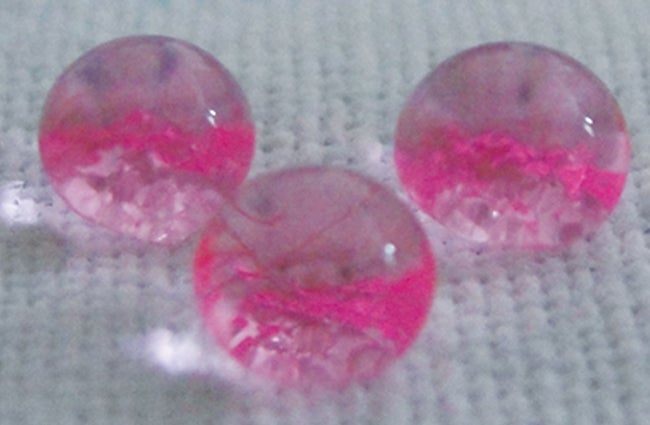
Superhydrophilic Textile LingLing Wang

Scientists at the not-suspiciously-named-at-all Northeast Normal University in China have come up with a new textile that's remarkably resistant to the horrors of both water and sunlight. In fact, it offers more than double the amount of UV protection required to attain "ultimate" UV protection status.

Essentially, the scientists coated the cotton fabric base with zinc oxide nanorods as well as zinc oxide crystallites, which Discovery describes as "dumbbell-shaped." That treated material was found to have a UV Protection Factor (UPF) rating of a whopping 101.15. To give you an idea of what that number means, UPF has a few different levels of UV protection. UPF 15-24 is "good," UPF 25-39 is "very good," and so on. The highest level is UPF 50 and up, which is considered "ultimate UV protection"--it lets in less than two percent of UV rays. A UPF of 101.15 lets in less than a single percent, which would qualify for "excessive" protection if that level existed.

The material is also superhydrophobic, that property coming from a coating on top of the zinc oxide nanorods made of silica. It seems the level of hydrophobia was enhanced by the combination of the silica and zinc oxide nanorods. The scientists are optimistic that this kind of fabric modification could become widespread--and I know a certain person's oddly hydrophilic windbreaker that could benefit from a coating. (The person is me.) With other high-tech textiles like power-harvesting uniforms and cotton candy-inspired fabrics gaining steam, your clothes might become some of your most impressive technological gear.

[PubMed via Discovery]

16 Comments

So if water dosnt get in, Can I assume no washing is required? That would be the selling point for me.

@bipbip: Water doesn't get in, but dirt can. But that brings up a good point: how do you wash the damn thing? Is it dry-clean only?

-IMP ;) :)

Seems like an interesting concept, but how hard is it to mass produce? It would be quite marketable as a new super-waterproof wetsuit...
--
Check out my tech blog at regiz.blogspot.com

I think the biggest question is whether it's safe to wear on human skin in everyday life. (even if it's only made of zinc and silica it could possibly be dangerous) Otherwise it would be relegated similar to the tops of umbrellas and boat coatings.

So if it is very UV resistant then we can use it in the x-ray scans for medical personnel or even for the unearthly event of a nuclear holocaust.

The word "seem" kinda popped out of the article.

@pbipbip my water proof jacket is SUPER dirty. so are my water proof boots and water proof socks and gloves, etc etc (i live in a very snow area, water proof everything is a plus)
but my boots just need a hose off. my jacket not so sure. probably depends on the application.
It does seem that it may improve upon things like scotch guarding. and my water proof things are not very stylish and tend to be more rugged do to the water proofing, either because of the neoprene, use of rubber, etc. Like the author said a nice light windbreak that is waterproof too, that would be nice.

I smell lightweight, radiation resistant space suits right around the corner.

Even if it isn't safe on human skin, you can apply it to a substrate that is safe. Problem solved...

@xalar UV radiation is a whole different frequency than X-Rays so I would doubt that it would help or people would be using sunscreen for X-Ray protection. As for a nuclear event thats has all different kinds of radiation not just one. This stuff would be good at preventing sunburns though. It might be great for welders who get sunburns through clothing even jeans they have to ear thick heavy gear to protect themselves. I can think of a lot of uses for material like that but I bet its going to be expensive. I dont look busy because I did it right the first time

My question is whether it is breathable. Even if it is 99% waterproof and 99% UV proof if it isn't breathable then not many will want to wear it because it will be extremely uncomfortable to wear, especially in the case of the welding which where i'm from only happens in the mid-spring to the end of autumn approximately, and our summers get hot enough with high humidity.

@zajhein Zinc and Silica are key ingredients in one of the most popular makeup products in the country (not to mention sunscreen). The amount of these nanolayers coating the materials in comparison to makeup or sunscreen can't possibly be dangerous.

From a sun-a-phobe - I can't wait for their proof of concept and their solution for washing clothing.

Finally, the perfect speedo can be a reality!

This is a project true to science, take a concept and see just how far you can possibly take it. Props to the scientists for being able to emphasize two characteristics at the same time.

FYI- the latin root phillic means approximately, "love"; phobic means appromately, "hate". So hydrophillic means it will absorb as much water as it can; while hydrophobic means it will repell as much water as it can. Double-checking for content before posting would probably be helpful. Cheers.

I have Superhydrophobic kids but no one is writing articles about them.....

I feel like this would be really uncomfortable to wear. Since water cant get in, I'm assuming it can't get out either. It'd be like bathing in your own sweat all day.

i'm thinking water vaapor can probably get through, it's liquid water it repels, humidity shouldn't be more of a problem that it already is


June 2013: American Energy Independence

Five amazing, clean technologies that will set us free, in this month's energy-focused issue. Also: how to build a better bomb detector, the robotic toys that are raising your children, a human catapult, the world's smallest arcade, and much more.


Online Content Director: Suzanne LaBarre | Email
Senior Editor: Paul Adams | Email
Associate Editor: Dan Nosowitz | Email
Assistant Editor: Colin Lecher | Email
Assistant Editor: Rose Pastore | Email

Contributing Writers:
Rebecca Boyle | Email
Kelsey D. Atherton | Email
Francie Diep | Email
Shaunacy Ferro | Email

circ-top-header.gif
circ-cover.gif