Marines in Afghanistan Find That Solar Panels Save Soldiers’ Lives
A battalion of Marines in Afghanistan is going green, using solar panels to reduce their energy consumption and thereby reduce...
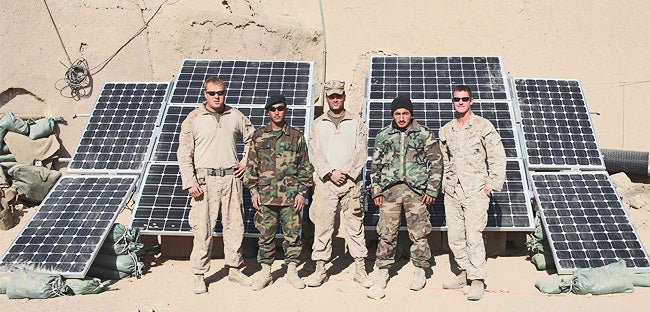
A battalion of Marines in Afghanistan is going green, using solar panels to reduce their energy consumption and thereby reduce the things they carry — and even save lives.
The Marines and sailors of 3rd Battalion, 5th Marine Regiment arrived last October at Forward Operating Base Jackson, outside Sangin, Afghanistan, with an array of solar equipment. The battalion’s generators typically use more than 20 gallons of fuel a day, but the Marines have cut that to 2.5 gallons a day, according to Staff Sgt. David Doty, who maintains the gear.
Saving generator fuel can cut down on the number of convoys the Marines must make to fueling stations, and therefore lessen the chances of becoming a target. The 3/5, based at Camp Pendleton, Calif., lost more than a dozen Marines right after deployment last fall, including nine men killed by IEDs over a four-day period in October.
“A refueling vehicle becomes a screaming [easy] target,” said 1st Lt. Daric Kleppe, commander of 1st Platoon, India Company.
The solar array is called an Experimental Forward Operating Base, ExFOB, and involves several different solar panels for a variety of uses, according to a news report by the Marines. The Solar Portable Alternative Communication Energy System, or “SPACES,” is a small, portable solar panel that can be used to power small items like a radio. There’s also a PowerShade, a large solar tarp that fits over a Marine’s tent to power his lighting system, and the Ground Renewable Expeditionary Energy System, or “GREENS,” which can power four computers at a time, enough for a whole platoon’s command center. The ZeroBase Regenerator, seen in the above photo, is a six-paneled array that funnels energy into a single battery, powering more than 20 lighting systems and 15 computers throughout the night.
The setup has plenty of obvious benefits — for instance, during long patrols in Helmand province, the Marines can use their solar tarps to recharge their radio batteries, leaving more room to pack ammunition.
Sangin, located in southwestern Afghanistan, is one of the country’s most violent districts, with a strong presence from the Taliban and opium traders. American armed forces replaced British troops in the region in September.