A research effort doubles as a shark-attack warning system

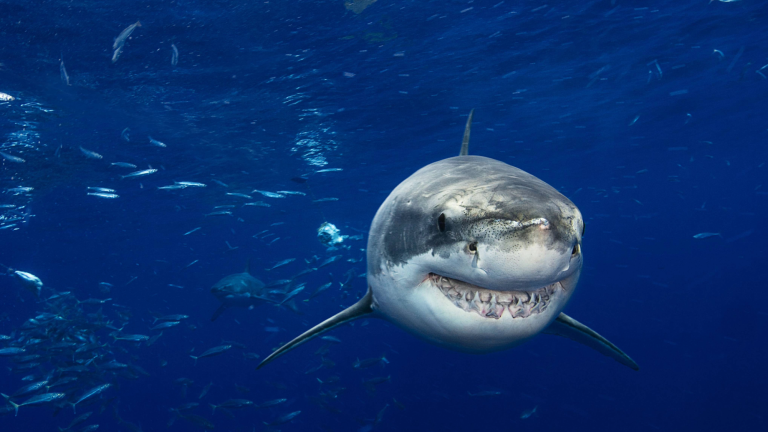
When Animals Attack Australian researchers use satellite-linked buoys and seafloor sensors to track RFID-tagged great white sharks. Stephen Frink/Getty images

Great white sharks have been around for more than four million years, yet they remain one of the world’s most mysterious animals. Scientists know that the beasts have special organs for sensing electromagnetic fields and that their jaws can snap down with 4,000 pounds of force. But migration patterns, which are critical for conservation efforts, are mostly unknown.

OMG GR8WHT!: Most shark attacks are on surfers, probably because the silhouette of a dude paddling out on his surfboard looks just like a delicious sea lion.  Courtesy Western Australia Fisheries Department
That will change now that marine biologists in Australia can follow the whereabouts of 75 of the man-eaters using radio-transmitter tags and a network of 20 satellite-linked buoys.

It’s not known how far great whites—whose worldwide numbers are estimated to be fewer than 3,500—migrate or if there’s a season when they spend more time near the coast, says Rory McAuley, a senior research scientist with Western Australia’s Department of Fisheries. McAuley hopes that the buoys, along with about 50 sensors on the ocean floor, will also reveal behavior. This information could help authorities better predict the monthly risk at beaches and restrict seasonal shipping routes to protect sharks from boats.

As a bonus, the work could give swimmers a heads-up when a great white is closing in. If a tagged shark swims within approximately a quarter-mile of a coastal buoy, the system sends a text to lifeguards on nearby beaches. Even swimming at top speed, it might take the dangerous fish a couple of minutes to reach shore, possibly enough time for the lifeguards to drop the phone and sunscreen and get folks out of the water.

Satellite-Linked Buoys:  Courtesy Western Australia Fisheries Department

2 Comments

@ShermanShark: Yeah,eatn a tourist LOL

Some how I was offended by referring to Great Whites as "Man-eaters". I understand we are just more meat floating at the waters surface for them to attack, and if I was a Great White I would sure take my revenge out on man-kind with all those renewable resources that have at their disposal, aka teeth. Still, seems to make people believe they are "Man-Hunters" also, which I don't consider true.

Awesome Tech though, I could see this being used on plenty of different species on land and in water.


138 years of Popular Science at your fingertips.

Innovation Challenges


Popular Science+ For iPad

Each issue has been completely reimagined for your iPad. See our amazing new vision for magazines that goes far beyond the printed page


Download Our App

Stay up to date on the latest news of the future of science and technology from your iPhone or Android phone with full articles, images and offline viewing


Follow Us On Twitter

Featuring every article from the magazine and website, plus links from around the Web. Also see our PopSci DIY feed


February 2012: The Future of Fun

Science is reinventing play, from extreme sports to gamification to ridiculous roller coasters to the playgrounds of tomorrow, and this issue is chock full of fun. Also, on a less fun note: Did global warming destroy my hometown?


circ-top-header.gif
circ-cover.gif