The Sex Files
With advances in laboratory-based reproduction, sex will be optional for humans
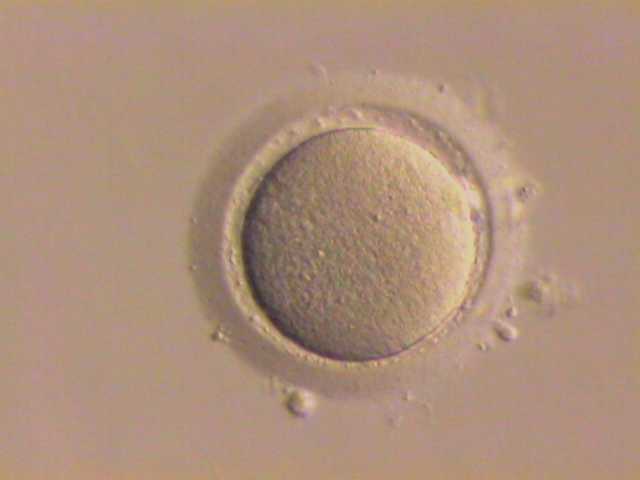
Human Egg

According to an Australian fertility specialist, in-vitro fertilization may soon be a more reliable way for us to reproduce than old-fashioned sex. Coming breakthroughs in IVF -- now mainly a last-ditch effort for infertile couples -- may bring it to the point where it's more effective than the traditional approach.

It sounds like something straight out of Gattaca or Brave New World: a time when babies are routinely made not in the bedroom but in the lab, in a fine-tuned, streamlined process where success is practically guaranteed.

"Natural human reproduction is at best a fairly inefficient process," John Yovich, a doctor at PIVET Medical Centre and Cains Fertility Centre in Australia, told the Daily Mail.

Yovich co-authored a study in the current issue of the journal Reproductive BioMedicine Online that surveys a decade of recent advances in embryology. Today, IVF success rates hover around 40 percent, and the procedure costs thousands of dollars -- meaning it's not exactly a cakewalk. What's more, many scientists believe the technology has nearly reached its limits. But the authors of the study predict continued progress in the next years, asserting, "Nothing proves that the future cannot be brighter."

The title of the paper asks, "Can we perform better than nature?" And the answer is a cautious yes.

As evidence for this claim, they cite the sex lives of none other than cows. Ranchers have been making cattle in test tubes for a long time, in part because the scientific approach allows them to control qualities like the sex of offspring. They've found that embryo production is a whopping 100 times more efficient when done in the lab -- or the farmhouse, or wherever one goes to mix cattle sperm and eggs -- than by letting a cow loose in a field with a horny bull. By using intracytoplasmic sperm injection, a procedure in which a single sperm is injected directly into an egg, the researchers say scientists could one day see even higher success rates in humans.

"There are many examples even in reproductive biology that the natural way is not necessarily the optimal or the most efficient one," they conclude.

Sci-fi writers, get to work.

Mara Hvistendahl is writing The X-Y Problem, a book on reproductive technology, sex selection, and gender imbalance.

22 Comments

Where's the fun in that!??

"Hey hunny, instead of poked with my "needle", do you wanna just drive down to the doctor and get poked with his?"

This wouldn't get rid of sex, merely the procreative end.

As is, though, it is hard to beat the natural method for cost (free). If it is less than effictive, simple rinse and repeat.

For couples having trouble, artifical means are already commonplace.

Very few cultures are still so biased that rigging your child's gender is worth it.

Unless this was matched against a widespread contraceptive program to remove all unwanted pregnacies, leaving only planned ones, it will never be the norm.

Of course, a widespread cantraceptive program than was passively compulsive (say, in the food supply or as a medical procedure at birth), would be in line for that Brave New World totalitarian utopia.

history told us that mankind doesn't even know what's best for itself, trying to overrule Natural Selection seems not a good idea!

Though I don't doubt that the technology will get better in the future, comparing us to what we do with cows isn't the same at all. Raising cows this way is for food but the same can't be said for people. Procreating means more to us than mere efficiency.

But the ethical/social issues of using reproductive technology could become a heated political issue very soon. Remember Octomom? That could be just the beginning. The ability to alter who are children will become by culturing them in a lab brings up all sorts of possibilities; some good and bad.

@boompang: I think we've seen this before. It's something that you'll typically find only in history books: EUGENICS.

i think u all are forgetting we will now (i think) be able to eliminate things like down syndrome by selecting healthy sperm.

im sure sheldon would be happy about this

Hrm... well... I do support human eugenics (somewhat) but its the consent issue that bothers me. Basically, you can change one cell (zygote) and the whole body will be affected; but that's before birth, the person in question doesn't get any choice in the matter. If, say, through nanobots, large scale modification of DNA after adulthood was possible, I think it should be available to anyone who wanted it. But it would take quite a while... maybe have the 'bots work on your dna while in a 6 year near-light sleeper ship to a nearby solar system?

Well, this technique could get us rid of genetic diseases, and these seem to be more and more common... So I guess it is a good idea, at least if there is some laws protecting against choosing sex or such things. This would cause lots of problems...

This is a great idea. With a fembots and invetro fert. People can stop having relationships. And as we all know relationships is the curse of man kind.

Boka. read my mind. The next generation is ethically doomed.

Next thing you know the army will have an army of android soldiers all thanks to this discovery.
BTW: Procreating is much better, it's fun and you still get your child

Am I wrong in thinking that the fact that sex isn't 100% effective in producing offspring is a good thing? We have too many people on the planet already. Why would making the process more efficient be a worthwhile idea? The "fairly inefficient process" the scientist mentions is one of the few things remaining to keep our numbers in check.

Don't forget war + diseases.

i was thinking the opposite... how can something tried and true be "fairly inefficient"? sounds like a case of the giant science ego. here's how i see it. we don't want to age and die....ok. we want genetically perfect offspring....ok so then what we get is a species that continues to grow in numbers doesn't die (well, not from natural causes anyway)and is constantly destroying its surroundings, which will inevitably lead to the death of the species as a whole. what else does that? tip of my tongue. starts with a c.....

I agree, but hey that's the irony.

nhan1st, you don't know what you're talking about. War, disease, starvation and poverty all fuel human procreation.

These are basically countries where your children are your retirement fund, take care of you when you get sick and represent cheap labour on the farm(you put them to work as soon as they are toddlers). As many of them die before adulthood the only way you can be sure is to have many of them.

Why so serious? - The Joker (Dark Knight)

Anyways, don't you see that people die first in war and diseases and procreate later? Procreation is just a natural way of bringing back the loss population and I never said anything about poverty and starvation.

It all depends on who has control of the technology at the end(beginning?). In the right hands, it could mean the end of diseases and, with enough people around, it might finally get the governments of the world off their collective asses and start colonizing space. In the wrong hands...

I agree with BA_Gilbert45 - the issue is who has control, and how much control they have. If people are using the technology voluntarily, and it's a matter of free choice as to whether a couple conceives naturally or using this or some other technology, then there are far fewer ethical problems. However, if it became compulsory for children to be created this way (for a government to enforce a eugenic plan, or something along those lines), and people were prohibited to have children naturally and stigmatized when they did, then there would be a myriad of ethical problems.

If it aint broke, don't fix it

Look, my wife and I underwent 4 years of fertility treatments to produce one kid. The drugs they use increase the chances of breast and ovarian cancer. The procedures are invasive and uncomfortable, particularly for the woman. This is hardly what I would call more "efficient". It should be reserved for medically necessary treatment of infertility; not as a quick and sexless way of procreating, which it is not. The medical community should keep it's hands off unless needed. We're already unable to die without their help and we need them during the birth process, how much more of our lives do they want?

@boompang:

By being able to selectively breed, humans will be able to get rid of such nasty birth defects as:
Down's syndrome, various tissue diseases(one of which is a condition nicknamed "glass bones", due to leaving your bones an extremly fragile mess), ALS, mental retardation, siamese twins, sickle cell anemia, and a metric crap ton of other birth defects and hereditary diseases.

in fact, by breeding only via IVF, we will be able to make the human evolution progress FASTER, because we'll be able to choose the direction evolution will take.

sure, religious organizations will get a rage boner while trying to kill this attempt, but eventually, they will be ignored, due to the possibility of being able to insure your kids won't be retarded, or ugly, or just stupid. because people will choose embryos with the best genetic inclination towards being really, really smart.


June 2013: American Energy Independence

Five amazing, clean technologies that will set us free, in this month's energy-focused issue. Also: how to build a better bomb detector, the robotic toys that are raising your children, a human catapult, the world's smallest arcade, and much more.


Online Content Director: Suzanne LaBarre | Email
Senior Editor: Paul Adams | Email
Associate Editor: Dan Nosowitz | Email
Assistant Editor: Colin Lecher | Email
Assistant Editor: Rose Pastore | Email

Contributing Writers:
Rebecca Boyle | Email
Kelsey D. Atherton | Email
Francie Diep | Email
Shaunacy Ferro | Email

circ-top-header.gif
circ-cover.gif