

We may earn revenue from the products available on this page and participate in affiliate programs. Learn more ›

Having a quality video camera will upgrade the production value of whatever you may be shooting. Whether working on a short film, a YouTube channel, or video content for social media, having more than your phone to capture your footage will ultimately make your final product look more professional. Although most modern cameras can shoot 4K video, when selecting a video camera, you should also consider specs like resolution, frame rate capabilities, sensor size, and bit-depth. The video cameras in this buying guide should appeal to a diverse group of videographers and fit various budgets. Of course, you can spend Michael Bay money and get true cinema rigs, but those fall outside the scope of this article because of their cost and complexity. Keep reading to learn more about the best video cameras currently available.
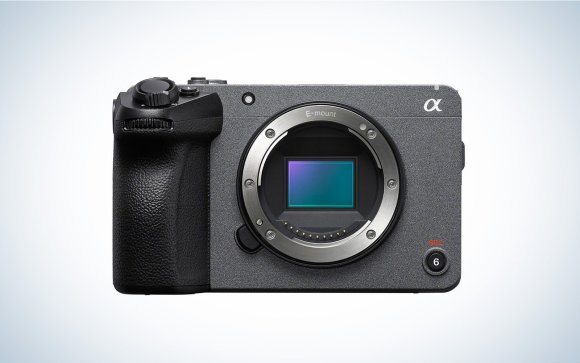
- Best overall: Sony FX30
- Best for filmmaking: Blackmagic Design Pocket Cinema Camera 6K Pro
- Best for photo and video: Canon EOS R6 Mark II
- Best for vlogging: Sony ZV-1
- Best compact: DJI Pocket 2
How we chose the best video cameras
When selecting the cameras that appear in this buying guide, we considered video cameras that fit a variety of budgets, experience levels, but also a variety of needs based on the kinds of videos that might get created. We evaluated cameras that would be a good fit for filming documentary films, capturing events, and for YouTube creators. The cameras in this buying guide were selected through hands-on experience, user feedback, and trusted editorial reviews.
The best video cameras: Reviews & Recommendations
Your phone has a video camera baked into it, but these dedicated cameras all offer something the device in your pocket can’t. Here are our specific picks to meet your cinematic (or social media) needs.
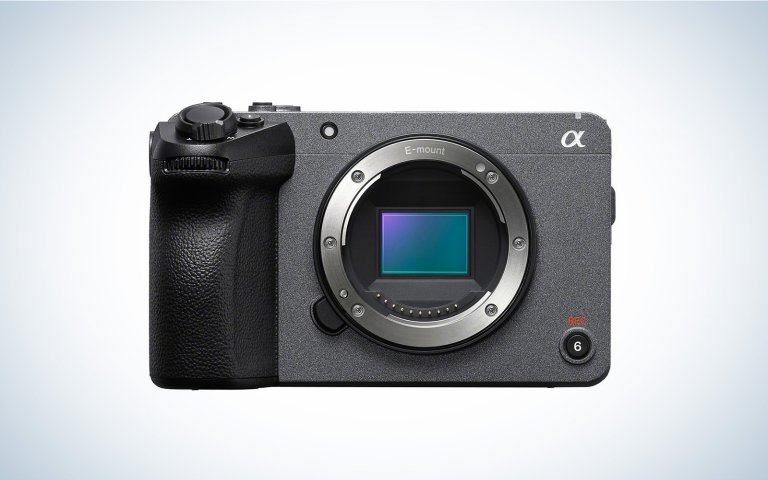
Best overall: Sony FX30
Sony FX30
Pros
- In-body image stabilization
- S-Log3 capabilities with uploadable custom LUTs and S-Cinetone color profiles
- Rig-ready body
Cons
- No mechanical shutter
Specs
- APS-C sensor
- 10-bit 4: 2:2 S-Log3 capture
- Shoots oversampled 4K up to 60p
Why it made the cut: This 4K APS-C sensor camera is optimized for video and offers a wide variety of capture formats, making it our pick for best overall video camera.
The compact Sony FX30 was built with small-scale filmmakers in mind. The 4K APS-C camera features excellent in-body image stabilization, five thread holes for attaching mounts, and three command dials for straightforward operation. The FX30 can shoot oversampled 4K up to 60p, features the same Log shooting modes found inside Sony’s high-end cinema cameras, and can upload customized LUTs (Look Up Tables, which work like visual styles you can apply to footage) to judge what final image quality will look like. Although it can technically shoot stills, the lack of a mechanical shutter doesn’t make it the ideal camera for the job because moving subjects can look distorted due to sensor readout. However, since it’s a camera designed with filmmakers in mind, we wouldn’t count that as a drawback.
Best for filmmaking: Blackmagic Design Pocket Cinema Camera 6K Pro
Blackmagic Design Pocket Cinema Camera 6K Pro

Pros
- Built in ND filters
- External controls make it easy to adjust settings while rolling
- USB-C port allows you to record to external drives
- EF lens mount makes it compatible with Canon lenses
Cons
- Have to build out with accessories
Specs
- Super 35 sensor
- 13 stops of dynamic range
- Records in 12-Bit Blackmagic RAW
Why it made the cut: Blackmagic Design Pocket Cinema Camera combines a high dynamic range, excellent low light performance, and a massive sensor to offer Hollywood-style production value at a fraction of the price.
The Black Magic Pocket Cinema Camera makes it easy to capture Hollywood-style video thanks to its high dynamic range capabilities and ability to record in 12-bit Black Magic Raw. Although it’s pricey compared to many of the 4K and 6K mirrorless cameras currently on the market, it’s a much more affordable option than the ARRI and Red rigs typically found on big-budget film sets. You can shoot 50 fps at 6K and 120 fps at 2.8K. USB-C expansion ports allow you to record directly to external drives. The external controls make it easy to change settings while rolling, plus it has an extremely intuitive interface for easy operation.
The integrated Canon EF mount gives the camera native access to Canon’s DSLR lenses. Since Canon is phasing out cameras with that mount, there are a ton of great deals out there on the secondary market for extremely high-end lenses.
Best for photo and video: Canon EOS R6 Mark II
Canon EOS R6 Mark II

Pros
- Supports ProRes RAW workflow with an Atomos recorder
- Dedicated switch for stills and video settings
- Offers false color displays
Cons
- Unreliable AF in video mode
- Histogram unavailable when recording video
Specs
- Full-frame 24-megapixel CMOS sensor
- Shoots oversampled 4K up to 60p
- 10-bit C-Log3
Why it made the cut: This second-generation Canon EOS R6 is an excellent choice for shooting stills and video, thanks in part to a design that keeps video and still settings clearly separated from one another.
The Canon EOS R6 II made some substantial improvements to video features compared to the original, which is why it’s our pick for best hybrid camera. It’s built around a 24-megapixel full-frame CMOS sensor, a comfortable hand grip, and an intuitive control system that keeps video and photo settings separate. It can shoot oversampled 4K video up to 60p and has an improved system for thermal management—meaning it won’t overheat while shooting. Although the autofocus isn’t always reliable when shooting in video mode, this is still an excellent option for the creator looking for something that can shoot both video and stills.
Best for vlogging: Sony ZV-1
Sony ZV-1

Pros
- Has a directional 3-capsule mic for audio
- Supports HLG and S-Log2/3 for easy color grading
- Real-time Eye AF
Cons
- No headphone jack for audio monitoring
- Limited zoom range
Specs
- 20-megapixel 1” BSI CMOS sensor
- Shoots 4K up to 30p
- 8-bit Log and ‘HLG’ shooting modes
Why it made the cut: A compact camera designed specifically with vloggers in mind, the SV-1 has excellent autofocus and a simple touchscreen interface that makes it easy to control while doing a walk and talk.
The ZV-1 is a compact, easy-to-use camera that makes it easy to start vlogging without much technical know-how. It has a clever directional three-capsule mic that makes it easy to capture quality audio while recording. It can shoot 4K up to 30p and Full HD video up to 120fps. There is a giant record button on the top of the camera and a simple touchscreen interface that makes operating the ZV-1 extremely intuitive.
Its autofocus is fast and accurate, and settings like background de-focus and product-showcase mode are aimed specifically at content creators. If you are looking for an easy-to-use, compact camera with 4K capabilities, the ZV-1 has much to offer.
Best compact: DJI Pocket 2
DJI Pocket 2

Pros
- Pocket-sized and easy to travel with
- Offers 140 minutes of recording time on a fully charged battery
- Fast f/1.8 lens
Cons
- Difficult to operate when attached to smartphone
- Subpar zoom quality
Specs
- 1/1.7-inch CMOS sensor
- Shoots 4K video at 60fps
- Built-in 3-axis gimbal for smooth, stabilized footage
Why it made the cut: This pocket-sized all-in-one gimbal and 4K camera is great for capturing stabilized footage.
This clever all-in-one gimbal and camera makes it easy to capture 4K stabilized footage. As the name suggests, the DJI Pocket 2 is compact enough to fit inside a pocket easily. The Pocket 2 features four mics with directional audio and a feature called soundtracking. The Pocket 2 is great as a secondary camera on a shoot or for capturing BTS footage from the day. Ultimately the Pocket offers an extremely easy way to grab some stabilized footage while shooting video.
Things to consider before buying a video camera
Before purchasing a camera, it’s important to consider what your goals are and what kind of videos you are trying to create. You should also consider where your final video will be displayed. Streaming services like Netflix and Hulu have specific requirements for video specs that often require shooting on higher-end cameras. If you want to create video content primarily displayed on YouTube or other social media platforms, a mid-range video camera might be a more appropriate choice. Ultimately a person working on a full-length film or a short documentary will have very different needs than someone creating video for a YouTube channel.
Camera types
One of the most important things to understand before buying a video camera is the different types of cameras available on the market. At the high-end, there are cine-cameras. Cine-cameras are some of the most expensive and largest cameras on the market because they often have the largest sensor, can shoot at very high resolutions, and allow for more flexibility when color grading.
There are currently several mirrorless cameras aimed at videographers who don’t necessarily need a high-end cine camera. These cameras are great for creating videos that will primarily live on YouTube, making them a nice choice for vloggers, event videographers, and content creators. The nice thing about this set of cameras is that they also can shoot high-quality stills.
Resolution
You’ll likely want to export 4K footage when you’re done editing, and you’ll need at least 4K capture for that. That’s table stakes at this point. Some cameras offer higher-res shooting which allows creatives to shoot over-sampled 4K footage to provide more detail.
Lens mount
If the camera doesn’t have an integrated lens, you’re going to have to provide some glass, and that plays a huge part in how your productions look. Camera manufacturers (like Sony and Canon) typically offer their first-party lenses to go with their bodies. Other manufacturers like Blackmagic equip their cameras with mounts that can accept lenses from a third party. Many filmmakers also use vintage manual focus lenses on their video cameras because they provide a unique look, and they typically cost a lot less than their modern high-end counterparts.
Heat management
True cinema cameras offer robust cooling because the electronics inside can get very hot as they pull in high-res footage. Dedicated video cameras are better equipped to deal with these issues than most hybrid-oriented mirrorless cameras. Manufacturers often indicate in the specs how long you can expect a camera to go before it runs into heat issues. It’s also worth noting that some modes heat things much more quickly than others. If you’re maxing out resolution and framerate while capturing a data-hungry format, things will get toasty a lot faster than if you’re shooting basic 4K footage.
FAQs
YouTubers use a variety of cameras to create their videos, but most opt for compact mirrorless cameras when shooting. If there is a particular YouTuber whose style you want to emulate, take a look at the description of their videos, it’s not unusual for YouTubers to explicitly say what gear they are using and include affiliate links to purchase it.
Having a camera that can shoot 4K is a great tool for filmmaking because it gives you more flexibility with your footage. If your end goal is to have your film streaming on a platform like Netflix, it’s best to shoot in the highest resolution possible. For example, Netflix currently requires content streamed on the platform to be shot on a camera with a true UHD 4K sensor with a minimum of 3840 photosites across.
Professional filmmakers working on big-budget projects will typically be shooting on a high-end cine camera. A professional YouTuber is more likely to be shooting video on an advanced mirrorless camera. Professionals who are filming events might use a mixture of the two. Ultimately, the camera that a professional is using on the job depends a lot on the delivery requirements of said job.
Final thoughts on the best video cameras
- Best overall: Sony FX30
- Best for filmmaking: Blackmagic Design Pocket Cinema Camera 6K Pro
- Best for photo and video: Canon EOS R6 Mark II
- Best for vlogging: Sony ZV-1
- Best compact: DJI Pocket 2
Choosing the best video camera ultimately depends greatly on what you are shooting and where the final video will end up. It’s not unusual for videographers to shoot on various gear, depending on what a project calls for. When selecting the best video camera, you should always consider what type of gear is the best for getting the job done.