A startup company hopes to create a bigger light-gas gun to send payloads into orbit more cheaply
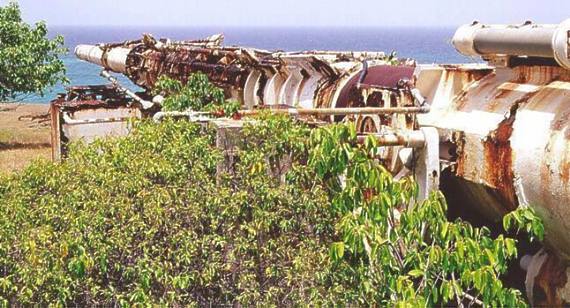
Fire Me to Space A new supergun would dwarf this HARP gun that fired projectiles high into the atmosphere during the Cold War Stephen E. Mendes

Rockets are the tried and true workhorses for launching payloads into space. But that could change, if a physicist realizes his vision for a 1.1-kilometer-long (0.7 mi) gun that could fire cargo into low Earth orbit.

The new supergun concept could fire payloads of 450 kilograms (990 lbs) at more than 13,000 mph, according to John Hunter, a physicist who formerly worked at the Lawrence Livermore National Laboratory in California.

Hunter's notion would build on a light gas gun created by the Lawrence Livermore Laboratory in the 1990s. He and two other scientists who formerly worked on the Super High Altitude Research Project have now formed their own startup company called Quicklaunch in San Diego, California, to make the big daddy version that could fire projectiles at more than twice the speed of the original.

Similar supergun visions have floated around since science fiction guru Jules Verne described a giant gun firing three men in a projectile toward the moon. The U.S. Department of Defense teamed up with Canada to fund a series of supergun experiments in the High Altitude Research Program during the Cold War, and fired projectiles high into the atmosphere from a modified Navy gun with a barrel length of 36 meters (118 ft).

Many ideas have also focused on the use of electromagnetic rail guns that could accelerate payloads over long distances to reach escape velocities, even if none have undergone serious testing for space launches. By contrast, the Quicklaunch concept uses light gases such as hydrogen to achieve higher projectile velocities at certain temperatures -- traditional gun projectiles depend on the velocity of the propellant gases.

First the company needs $500 million, Hunter told New Scientist. But he claims that the actual launch costs could beat out current rocket launch costs by a factor of 10.

New Scientist also asked the opinion of Franklin Chang-Diaz, an ex-astronaut who has developed an advanced ion engine that looks set for launch to the International Space Station in 2013. Chang-Diaz suggested that a supergun or rail gun concept might be better suited to launching payloads from the moon, where lower escape velocities are required.

After all, the recent discovery of water on the moon and the anticipation of future ice mining operations might make the moon a serious base of operations. Between that and the notion of lunar superguns delivering payloads, Robert Heinlein must be giggling to himself somewhere.

[via New Scientist]

15 Comments

It seems like a great idea because it would be a lot cheaper. The drawback is the acceleration the payloads would undergo, something like 1500g. That's a lot. That limits the kinds of payloads you could launch this way.

laurenra7 your figure of 1500g seems a little iffy. To accelerate to 5811 meeter per second in 1.1km you need an acceleration of 1453 meeter per second ^2 and would last 4 seconds. One g ~ 10 meeter per second ^2 so it would only be 150g better by a factor of 10. This is well within the limits of most electronics with out moving parts.

Despite loving the idea I am still skeptical. First off its not fast enough to enter a stable low earth orbit which needs 6500 meters per second it would only be fast enough to be in a rapidly decaying orbit. To make things worse there would be huge losses due to friction of traveling through the atmosphere way worse than that of re-entry because the most dense air would be encountered when it was going fastest. And lastly your not in an orbit at all your in an ellipse and on your path you will smack down roughly where you launched from. Of corse this wont happen because what ever you launch must have a small rocket fired half way around the earth adding speed and changing the course so you wont hit the back of your launching gun (I know drag would make you land before it but hey). So I know that all these problems can be engendered around but what do you end up with a .5 billion dollar small sat launcher that might be 3x cheaper than a falcon 1. There is not a huge market for launchers in this mass to orbit range. Most satellites cost much more than there launch to space and no one will be excited about having to over building everything for the much higher g loads and would opt to pay the 3x and launch with spaceX. I don't think there is currently enough market for this to make it viable in its current form. Maybe when Russia makes it's orbital manufacturing base or when Bigelow starts hawking there apartments up there or when infrastructure is in place for orbital refueling or or or... There are allot of things on the horizon that could increase demand for cheapest to orbit per kg that could use something like this but the easiest way I can see to give it more viability would be to make it bigger and longer, accelerate slower over a longer distance and carry more payload to orbit. All that said I do love the idea and wish them the best of luck with it but I wont be investing my savings on that venture.

If not orbital velocities, at least a heck of a boost is a reasonable expectation.

It might make maore sense to place the launcher on a mountain where the muzzle end would be in thinner air. The terrain could support a gently curving barrel at the right anglse with minimum external structure. Even if the cannon could not quite impart a stable, circular orbit to a payload it would still make a heck of a first stage. Supposing it could work, this would be the best way to launch a massive swarm of sun shields to cool the Earth down. The sunshield factory could be located right at the base of a cannon. Make 'em and place 'em, for years on end.

Yah putting it on a mountain would help but wont make the problem go away, even on Everest the air has 1/3 the pressure as it dose at sea level. 1/3 of a huge problems is still a problem. Also America doesn't have any good mountains to launch from, there is one politically possible mountain is Kangchenjunga almost as high as Everest and is on the border between Nepal and India.

Mt. McKinley in Alaska would work, as long as you don't mind subzero temperatures...

McKinley would only help to launch to a polar orbit.

This idea has been worked up before, as I recall. While the numbers don't look spectacular as it applies to a simple shell, it definitely is a leap year in the attempt to boost simple mass to LEO. I think that a two-stage chemical rocket that is designed as 'keep in orbit', material wise, as we are gonna have to start boosting simple materials soon to keep outward progress moving.

flex damping on the pipe would be fun work, if a guy could get it.

daniel brown--Fred Bull already made most of one for Saddam. What happened to it?

daniel brown Bull wanted to make it with NASA. It was to be a first stage, boosting the rest up. Killing Bull showed that someone belived it would work.

Amazing what we do to our creative base when there is fear a multibillion dollar enterprise will be shown to be obsolete. Didn't Bull pull an unauthorized missile launch on his homemade out of parts from work missile? Hit like 55 miles with a 12 ft missile. Air Force blacklisted him, was the word, no support on the supergun idea. So we lost his creativity to Saddam.

Why build this contraption when a rail gun 1/2 the size will do the job better than a noisy gun. Big boys and the size of their guns.

This calls for a bit of joined up thinking.If the tube were quite a lot longer, say 15 kilometers,and exited near the top of some mountain. If the tube were evacuated and had a door that opened and closed just before and after each "shot" a space craft accelerated at a bearable 3g would exit the gun at over 2000 mph which would put into the speed range for a scram jet. As other comments have pointed out very high speed much lower than 30 kilometers would consume a lot of energy in air resistance.

@lauld You're correct that a longer tube exiting at or near the top of a mountain is probably the correct answer. As well a single door would be most in-efficent, a series of airlock like doors would have to be used, to prevent the need to evacuate the air from a 15 Km * 15 m * 10 m volume each time a launch was done.

For some of the other comments, there are two main reasons NASA is headquartered in Florida, one of the worst possible places on Earth for actual launches. One is simply political, they got a good deal on the ground. The other actually has some scientific reasoning. The closer one is to the Equator the easier launches become, because you can borrow some of the energy the Earth provides, using the rotation to reduce the overall energy costs of a launch vehicle. Florida being the southern-most State in the Union... Need I continue?

That said, Florida is probably the Single Worst possible place to put a Space Yard, plauged by near constant thunderstorms and summer hurricanes. Alternate sites have been listed here, and some would be prime if not for A) shear remoteness, B) political difficulties, or C) both.
Kangchenjunga was recommended by animemaster, but suffers from C, being in a rather remote location, far removed from easy access, and in one of the worlds most politically hot spots currently around. Kilamajaro in Africa sits almost perfectly on the Equator, but is plagued with so many political problems it wouldn't be worth the security costs. It is also geologically active, and thus would not make an extended tube system viable.

Any mountain would have to be both remote enough that there are few people living nearby, but close enough to major metropolitan areas to have a ready pool of workers and easy access to supplies, as well as being located within 5 degrees of either of the Tropic of Cancer or Capricorn to fully utilize the rotational boost. To further complicate matters, the area must be politically friendly to both the US and EU, both politically and geologically stable, and have an adequate education level for local workers to be able to contribute. I personally have found a few mountains that fit the general bill in most respects, most of these on the Indian sub-continent, but the political instability in the region makes me wary of recommending any. The best alternitives I have spotted thus far are Mt. Wyatt or Mt. Coolon on the east coast of Australia. A few hundred miles from major highway access, politically about as stable as possible, and not a whole lot of people directly downrange of the sonic booms the launches would inevitablly create. Weather in the area seems to be fairly cooperative as well from my admitedly sparse research into the area. Outside of the "prime launch zone" of within 5 degrees of a Tropic, it's not any further south then Florida is north. Anybody know somebody in the Australian government that might be willing to listen to a proposal?


June 2013: American Energy Independence

Five amazing, clean technologies that will set us free, in this month's energy-focused issue. Also: how to build a better bomb detector, the robotic toys that are raising your children, a human catapult, the world's smallest arcade, and much more.


Online Content Director: Suzanne LaBarre | Email
Senior Editor: Paul Adams | Email
Associate Editor: Dan Nosowitz | Email
Assistant Editor: Colin Lecher | Email
Assistant Editor: Rose Pastore | Email

Contributing Writers:
Rebecca Boyle | Email
Kelsey D. Atherton | Email
Francie Diep | Email
Shaunacy Ferro | Email

circ-top-header.gif
circ-cover.gif