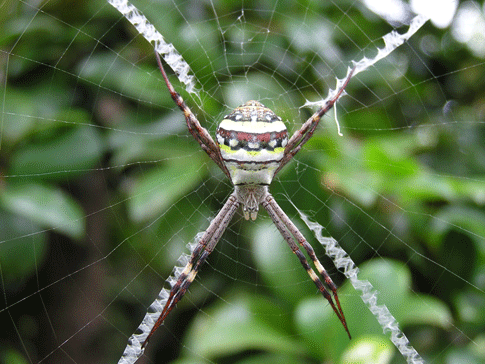
Most spider webs work through chance: The spider erects an invisible trap and waits until some unlucky insect hits it. But a common Australian spider called the St. Andrew’s Cross—known for its striking, cross-barred web—is sneakier.
According to Dieter Hochuli, a professor at the University of Sydney, the spider lures its prey with the highly visible white stripes of its web. The decorations, which significantly increase the rate at which it captures bees, wasps and houseflies, mimic the ultraviolet light reflected by flowers, tricking the pollinating insects into approaching the deadly trap.
Stay up to date on the latest news of the future of science and technology from your iPhone with full articles, images and offline viewing
Featuring every article from the magazine and website, plus links from around the Web. Also see our PopSci DIY feed
Share links with friends, comment on stories and more
In our December issue, Popular Science names the 100 best innovations of the year: bombproof wallpaper, self-parking cars, the fastest helicopter, and 97 more. Plus inventor profiles and videos.
Check out the best of what's new here.
obscure knowledge? where does that come in?
...comes from Australia...lots of obscure things down this way.
These little buggers are far more inteligent than most think and far too many dont give them enough credit. Im just glad there not bigger then we might be in trouble :)
from Tampa, FL
But is this the only spider that does this? Because I have heard of others I think.
Hey look, a flower! *bzzzzzzz* Hey wait, this isn't a flower... it's a sticky net full of DOOM!! OHNOES!! x_X
With over 40000 species of spider, I'm sure there's more than just one that employs "sneaky webs". Where's Gil Grissom when you need him?
"You have a question? I've got an answer! I just make no gaurentees it's the right one or the one you were looking for" :P