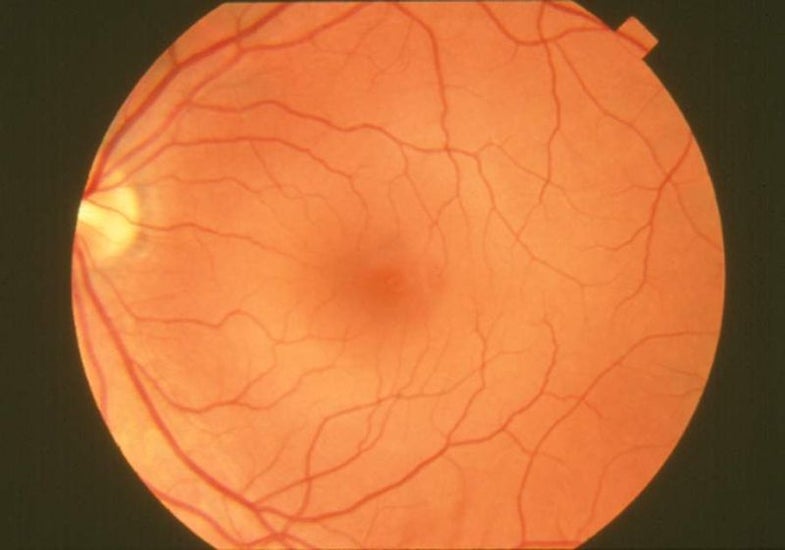
Retina Some of these cells did not start out like the others

Researchers at the University of Florida claim to be the first to use targeted gene manipulation to take adult stem cells and change them into another kind of cell completely. They changed the stem cells, from bone marrow in this instance, into retinal cells. These retinal cells, when injected into blind mice, helped cure their blindness.

The scientists started by extracting the blood stem cells from the bone marrow of a mouse, and used a virus to insert a new gene into the cells. This gene caused the cell to start producing a lot of a certain protein that is only found in retinal cells, basically convincing the cell it was a retinal cell. According to the researchers, drugs could perform the same function as this gene therapy.

The final transformation was only completed once the manipulated cells were injected back into the mouse. Once they were in the bloodstream, the body recognized the cells as those belonging in the eye, where they eventually settled. These cells replaced damaged cells on the outer layer of the retina. This is the layer that is normally damaged in diseases like macular degeneration and diabetes-related blindness. After 28 days of receiving the modified stem cells, formerly blind mice reacted to light tests the same as normal mice.

Macular degeneration is an age-related disease that affects almost 2 million people in the States alone; this could lead to the cure. But the groundbreaking process of tricking adult stem cells into becoming other cells could be even more beneficial, providing the flexible benefits of embryonic stem cells without the enduring controversy.

[via PhysOrg]

Want to learn more about breakthroughs in electronics, medicine, nanotech, and more?
Subscribe to Popular Science today, for less than $1 per issue!

6 Comments

cure the three blind mice first.
www.youtube.com/watch?v=H-PnT38bGvg

This research seems to be improving almost monthly with new discoveries and techniques.

Yeah, this research could definitely be profitable with all of these discoveries.

profitable? no! you're going to charge all these people who have severe health problems who probably don't have money to begin with. you're a terrible person for even suggesting it. we need to help each other out, these discoveries are made so that we can better mankind and make it possible for everyone to have the same opportunities.

save me a couple cells.

i want telescopic vision.

This stuff is amazing, especially the sheer speed of developments.

I know human trials are far off, but if I'm around when it goes commercial, with my terrible, but almost entirely correctable, eyesight, I'll try to jump right on it!

I'm also glad scientists look well along the road of developing stem cells that aren't embryonic ones, given the tremendous controversy those arouse. Though come to think of it, I suppose opponents of the use of embryonic stem cells may have a back-up of arguing that even non-embryonic ones are "Frankencells," as those opposed to genetically-modified foods shriek "FRANKENFOOD!!!"

Anyway -- to the scientists, keep on strolling. Better still, go for the gold in a hundered-yard dash!!! ;-)


138 years of Popular Science at your fingertips.

Innovation Challenges


Popular Science+ For iPad

Each issue has been completely reimagined for your iPad. See our amazing new vision for magazines that goes far beyond the printed page


Download Our App

Stay up to date on the latest news of the future of science and technology from your iPhone or Android phone with full articles, images and offline viewing


Follow Us On Twitter

Featuring every article from the magazine and website, plus links from around the Web. Also see our PopSci DIY feed


February 2012: The Future of Fun

Science is reinventing play, from extreme sports to gamification to ridiculous roller coasters to the playgrounds of tomorrow, and this issue is chock full of fun. Also, on a less fun note: Did global warming destroy my hometown?


circ-top-header.gif
circ-cover.gif