Three technologies that fix themselves

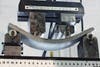
Pressure Point: The polymer fibers in flexible concrete help it resist 500 times as much stress as conventional concrete.  Courtesy Nicole Casal Moore/University of Michigan;

Flexcrete

Researchers have known for decades that concrete fixes itself as cement particles near a small crack mix with air and water to form calcium carbonate. But some fractures are too big to heal on their own. Now engineers at the University of Michigan have mixed a new concrete formula with reinforcing glue-like fibers that hold it together under pressure, allowing only hair-width cracks that can mend after a rainy day. Available in a few years, the remixed concrete will cost more than the standard stuff, but less maintenance could make it cheaper in the long run.

Scratch-Be-Gone

Body Work: Sunlight will heal scrapes like these.  Frank Cezus/Getty Images
It’s Murphy’s law: Park a new car at the store, and a shopping cart will scratch it. Soon, however, a sunny hour-long drive will allow the paint to repair itself. Scientists at the University of Southern Mississippi used chemicals found in crab shells to make a polyurethane paint that reconnects molecular bonds under ultraviolet light, even down-to-the-metal scrapes that current resin-based healing paints can’t handle. The new paint could be ready for automakers in two years.

Digital Detour
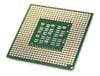
Good as New: Chips will soon work around dead transistors.  iStock
All it takes is one burned-out transistor in a microprocessor to kill a computer. Now, engineers at the California Institute of Technology have built a chip with sensors that measure power levels in a circuit. When the chip detects a faulty transistor, actuators redirect the current around the bad one, in a thousandth of a second. The group expects to scale up its 10-actuator prototype into a full-size chip, with 1,000 actuators, in three years.

Want to learn more about breakthroughs in electronics, medicine, nanotech, and more?
Subscribe to Popular Science today, for less than $1 per issue!

3 Comments

i need some self healing sunglasses. well i always got krazy glue.
www.youtube.com/watch?v=H-PnT38bGvg

The first 2 are fascinating, but I don't know what chip types are being discussed for the transistor bypass.

An Intel Core 2 Duo processor has 291,000,000 transistors, so that's probably not the target. This is an extreme, but there are many chips in the 100k transistor range. Maybe there are some details, not mentioned here, that would make this concept seem more reasonable.

Having the healing chips would be excellent for aircraft. Having it on a desktop chip would be amazing because there are so many transistors i doubt you would notice one out.


138 years of Popular Science at your fingertips.

Innovation Challenges


Popular Science+ For iPad

Each issue has been completely reimagined for your iPad. See our amazing new vision for magazines that goes far beyond the printed page


Download Our App

Stay up to date on the latest news of the future of science and technology from your iPhone or Android phone with full articles, images and offline viewing


Follow Us On Twitter

Featuring every article from the magazine and website, plus links from around the Web. Also see our PopSci DIY feed


February 2012: The Future of Fun

Science is reinventing play, from extreme sports to gamification to ridiculous roller coasters to the playgrounds of tomorrow, and this issue is chock full of fun. Also, on a less fun note: Did global warming destroy my hometown?


circ-top-header.gif
circ-cover.gif