Stealthy Robot “Ferret” Sniffs Out Contraband
Meet the littlest customs agent
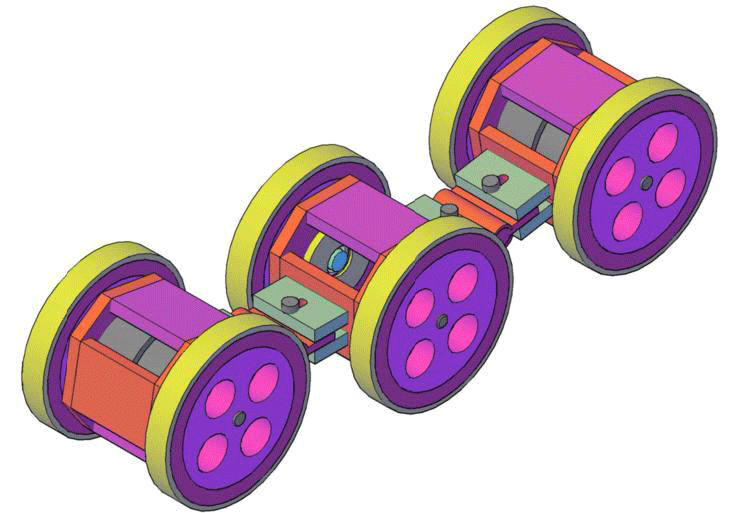
Calling a lithe, sniffing robot a “ferret” raises hopes that it’ll be rather cuter than the mockup pictured, but the cargo-screening device in development has capabilities that outshine its aesthetic shortcomings. Though still in its beginning stages — working prototypes will be ready in about two years — this robot could revolutionize airport and seaport security by serving as an all-in-one drug, weapon, explosive, and illegal-stowaway detection powerhouse.

Sea Cargo
Security systems currently employ a variety of methods to reach these objectives, with varying degrees of safety and success. Right now, cargo scanners can gauge only the shape and size of a container’s contents, while drug-sniffing dogs, carbon monoxide probes, and heartbeat monitors identify other indications of contraband. The ferret will use its mobility and a combination of laser and fiber-optic probes to detect the presence of specific illegal substances at significantly lower concentrations than current methods can account for. It will also be the first cargo-screening device able to fit inside, explore, and relay communications from standard-size cargo containers, eliminating the often dangerous need for human officials to open these containers themselves.
The project, called “Cargo Screening Ferret,” is underway at the University of Sheffield, funded by the Engineering and Physical Sciences Research Council. The researchers have equipped the robot with probes that are more comprehensive and more sensitive than any currently available for detecting drugs, weapons, explosives, or illegal immigrants. While detecting illegal human cargo is currently a challenge for border officials — X-rays could cause radiation damage to people hidden within cargo, and are thus illegal — the ferret will carry sensors for detecting traces of carbon dioxide within cargo containers, thereby revealing the presence of people within.
Not every robot can be cute, but this one’s pretty impressive.
Via: EurekAlert