Scientists say amphibian death could be the start of the first mass extinction since the dinosaurs
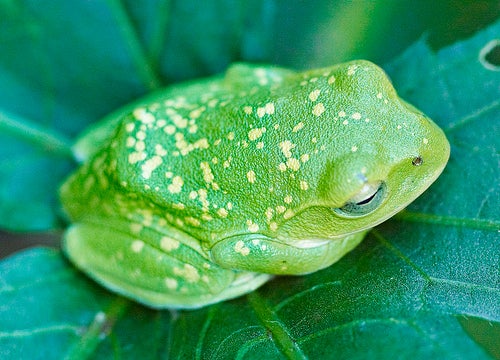
Severely In Danger? Joi (CC Licensed)

Lots of amphibians (a third to a half of all species) are dying, and their deaths are the breaking-edge of what many scientists are calling the first mass extinction since the dinosaurs checked out 65 million years ago, researchers say in a new paper published online in the Journal Proceedings of the National Academy of Sciences.

Scientists are not sure when this extinction crisis began—it could have started 10,000 years ago, or during the industrial revolution, or this century. But we are definitely seeing an extinction “spasm” right now, say the Berkeley scientists, especially among our clammy, froggy friends. This extinction is unlike the five that came before it, according to the paper’s authors from UC Berkeley, because it has nothing to do with any asteroid impact, or volcanic surge, or great sea cooling. Instead, it may have almost everything to do with us. Amphibians made it through last time, when the dinosaurs disappeared. But with new, people-driven pressures on biodiversity, the survivors are now some of the most vulnerable.

Almost 200 amphibian species have gone extinct in the last few decades alone, with several pressures adding to the crisis. One is a fungal skin disease called chytridiomycosis, which has been implicated in mass frog deaths in Central and South America, and is claiming species almost everywhere else on earth, according to the paper. Scientists believe the disease spreads on amphibians introduced by humans into new environments. Climate change is also implicated, possibly as a trigger for chytrid infections, but also as a force of its own. Many amphibian species are adapted to live only in a small temperature zone, and montane species are particularly vulnerable to temperature shifts that can shrink the small slice of mountainside they inhabit down to nothing.

Habitat loss is another important player, impacting 90 percent of the amphibian species the IUCN lists as at risk of extinction. Warming (and the weather changes that go along with warming) shrinks habitats, as does humanity’s constant bulging expansion over more and more of the earth. Research into treatments for chytrid is ongoing, with new results with beneficial skin bacteria, but with human-caused climate change progressing, and habitats shrinking, the papers authors close their report with the worry that we may not be able to make a dent in this latest mass extinction, and even if we can, we have very, very little time to do so.

Want to learn more about breakthroughs in electronics, medicine, nanotech, and more?
Subscribe to Popular Science and enter to win $5,000!

6 Comments

I would not be surprised if this extinction started in our current century. The amphibians extinction is similar to the mass extinction of the dinosaurs but there is one major difference, we did not cause the extinction of dinosaurs by taking away habits or adding pollution into the air. I am sure this will not be that last of the extinction news, many more spices will follow.

TheRealWazzar

from Oxenford, QLD

Aww, why can't we make something else extinct, like Flies or Mosquitoes?

In the process of trying to eradicate mosquitoes in the Southern US, they are destroying the habitat that frogs need to breed. Growing up, we would find tadpoles and frogs in almost every empty field and lot. Now, with improved drainage and the push to prevent standing water, it is rare to find frogs and I never see tadpoles.

The point was driven home for me recently when my son's school held a frog jumping contest. Almost no one showed up with a frog because nobody could find any. It is really sad.

Hmmm. Second try on this comment.

This article is not news. Evidence of this extinction was major news when I was in college, circa 1992. It is a tragic event, but I have to question the reporting of it now. It's hardly a cutting edge story anymore.

So lemme get this straight... The extinction could have started happening over 10,000 years ago, but somehow man-driven global warming in the last 20 years is the cause.... WHAT? But we don't really know when it started so we're gonna say the bad man did it. What happened to the iota of scientific rigor in this magazine? The fact of the matter is that the climate has never STOPPED changing. and organisms will be forced to adapt or die as usual.

I find it strange that every change started with the Industrial Revolution. Maybe pollution is to blame, but maybe it gave people way more free time to go around documenting amphibian species! This story is extremely dubious. They are not sure what is causing it, but it might be this fungus, but they don't know how the fungus works or how it spreads. If they think humans are spreading it maybe they should stop going from habitat to habitat and interacting with amphibians! I still haven't seen any mention that the fungus in question actually prefers COLDER temperatures and that climate change could mitigate the damage it might be doing to amphibian populations. The bottom line is that the headline "Mass Extinction!!!!!!" gets more interest than "Everything is Fine."


Download Our iPhone App

Stay up to date on the latest news of the future of science and technology from your iPhone with full articles, images and offline viewing


Follow Us On Twitter

Featuring every article from the magazine and website, plus links from around the Web. Also see our PopSci DIY feed


Become a Fan On Facebook

Share links with friends, comment on stories and more


November 2009: Astronaut 3.0

Inside NASA's astronaut bootcamp and the grueling new training regimen for deep space. Plus, ten young geniuses shaking up science today, one writer's quest to analyze every man-made chemical in her body and more.

Check out the issue's full contents online here

Popular Science Photo Pool


Share your photos in the Pop Sci pool at www.flickr.com!
tags_sprite.png
POP_embeddedForm_cover_May09.jpg