Increase in Autism Due Only to Changes in Diagnosis

Researchers find more evidence that claims of a current "plague of autism" are greatly exaggerated
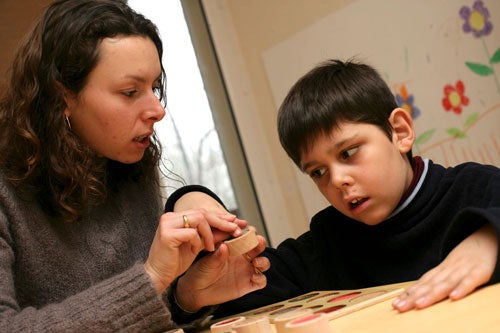
Autistic Boy: Many autistic kids have low levels of the hormone oxytocin, which facilitates social bonding. This may partly explain why they struggle with simple behavioral tasks like perceiving textures and identifying facial expressions. Photo by Phanie/Photo Researchers

There is more evidence this month demonstrating that we are not, in fact, presently suffering through an age of increased incidence of autism, but rather as the definition of autism is refined, we discover individuals who were previously misdiagnosed. A University of Oxford study has followed up with a group of 38 adults who were originally involved in a series of studies on developmental language disorders in the late 80s and 90s. Those who manifest symptoms of the disorders have difficulty with spoken language, a trait also seen in autism. All of the subjects had attended specialized schools and were previously not diagnosed with autism.

Using today's criteria, the researchers found nearly a quarter of the participants to have an autistic disorder rather than one based on spoken language. "Our study shows pretty direct evidence to support the theory that changes in diagnosis may contribute towards the rise in autism," says Dorothy Bishop, the lead on the new study. "These were children that people were saying were not autistic in the 1980s, but when we talk to their parents now about what they were like as children, it's clear that they would be classified as autistic now."

Via MedGadget

4 Comments

Comments

anneS
Article Rating:
1
2
3
4
5

The lead researcher in that study commented that 38 adults does not mean that we have reason to believe there is no epidemic. It's only 38 people.
I love the spin you put on this story! (NOT)

0 out of 0 people found this comment helpful
HeatherL
Article Rating:
1
2
3
4
5

This is no surprise to me as a parent of two such children. For years we searched for answers with our older child, but ended up with the younger, more interactive child diagnosed first (PDD-NOS) just last month. The elder is showing sign's of a slightly more severe condition (Asperger's), but no one would commit to it. He is now awaiting assessment from the same clinic that did his brother.

0 out of 0 people found this comment helpful
twandlw
Article Rating:
1
2
3
4
5

First, 38 people is hardly a large enough sample to justify a conclusion. Second, out of 38 participants “nearly one quarter were misdiagnosed”? Nine people is hardly significant. And the other 29 were diagnosed correctly. When it comes to developmental disorders, you will always find some people who are not diagnosed accurately. It is not an exact science. The results of this study hardly warrants such a bold headline to your story. To lend credence to your story, you publish a photo of an autistic child with a caption that has nothing to do with the article’s claims (but hey, if it’s in print it has to be true, right?). Hearst and Pulitzer would be proud – this story should be printed on yellow paper. Or in this case a yellow background. This is why I did not renew my subscription to Popular Science; lately there has been less science and more sensationalism.

0 out of 0 people found this comment helpful
maryann
Article Rating:
1
2
3
4
5

Maryann L
As an educator of students with special needs for 20 years, the 'source' of autism presents may questions. While there is no doubt that the diagnosic instruments have improved and may account for some of the increase, there is much more to the issue. To discount environmental and genetic issues would be a disservice to our entire population. We must persist in scientific investigations and resist the temptation to accept improvement in diagnosis as the ultimate causality for the devastating increase in this population.

0 out of 0 people found this comment helpful

Popular Tags

Regular Features

PPX: The PopSci Predictions Exchange

RSS Link

SciTech

Ready to bet on the future? Start here!

Subscribe for 2 free issues!

may2008_cover.jpg