Cyber Goggles for Human Tagging
A new pair of specs may let you tag your world as easily as you tag a blog post--so long missing keys
Tagging has become a popular standard in Web content management. If you can enter a field of data somewhere, chances are good you can also attach tags. Tags let a user associate that data with a subject matter, much like a card catalogue in a library. When that user goes to retrieve the data, they need only remember a keyword or two to find it. All the posts on this blog, for instance, have tags to denote the topics covered. Social bookmarking sites allow users to tag their links. Photo sharing apps like Flickr do it as well. It’s a helpful convenience for when you’re out with a camera or in with a laptop.
Just imagine if you could tag everything you saw with your eyes in the course of a day.
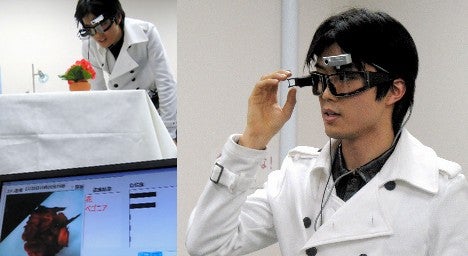
Pink Tentacle is reporting that researchers at the University of Tokyo have developed a system which can do just that. Conceived as a memory aid for the elderly, the Cyber Goggles package consists of a pair of over-sized glasses on which a tiny camera and LCD screen are mounted. Both feed into a computer worn on the back. The camera records what the wearer sees while software in the computer recognizes and names objects in the field of view in real time. The wearer can then type in a keyword later on—say, butterfly—and the screen will playback the clip from the moment he saw the insect.
If this succeeds, you’ll never lose your keys again. Or need to remember where you parked your car. Or misplace the remote. The researchers also hope the image processing technology will be used to search through hours of video footage to find particular images. Imagine what a blast that will make home movies.