"The FDA is in some ways pressured, because one, there's not a good treatment for brain trauma," Spiess tells me, explaining his strategy for
getting the agency to pay attention to a drug he thinks will fill a critical void in emergency medicine. "Two, there's a major international event going on, and we're losing our soldiers because of brain trauma." Traumatic brain injury is now found in 30 percent of the injured veterans sent home to Walter Reed Army Medical Center from Iraq and Afghanistan-twice the percentage as in Vietnam. Often caused by the concussive force from insurgents' improvised explosive devices or from penetrating head wounds, TBI can wipe out a victim's memory, leave him blind, trigger epilepsy, or kill him outright. Many are calling it this war's signature wound. So it's no coincidence that the Army and Navy have expressed interest in the use of Oxycyte to deliver oxygen to the brain. Getting the military on board, Spiess says, improves the chance of getting the drug on a "fast track," the sped-up FDA approval course that could put Oxycyte in Iraq by late next year.
"If we can get it through the FDA, then we can use it in so many different ways," Spiess says. To treat stroke, for instance, or heart attacks, sickle-cell anemia–even spinal-cord injuries."
SPINAL ZAP
Jason Highsmith leads me into a cold, fluorescent-lit room filled with half a dozen rat-size operating tables. Recently, Highsmith, a neurosurgeon who just finished his residency at VCU, inflicted spinal-cord injuries on sedated animals and then tried to increase oxygen flow to the impacted areas using Oxycyte. Studies have shown that preserving as little as 5 to 10 percent of the neurons in the spinal cord after an injury can mean the difference between being wheelchair-bound and walking with a cane. Keeping the oxygen flowing is vital to those neurons' survival.
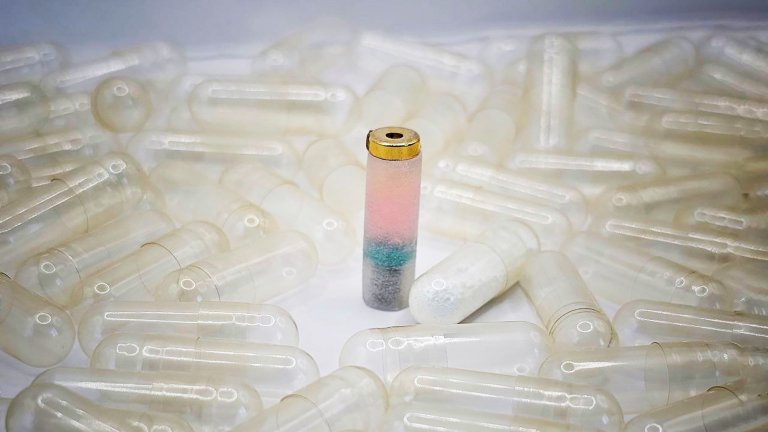
"It's like a magnet for oxygen," says Highsmith, 33, who is 6'2" and bean-thin. He hands me a leftover glass vial of Oxycyte from the fridge, half-filled with the white fluid whose watery consistency reminds me of soymilk. It doesn't look like much, but when combined with supplemental oxygen, the amount of Oxycyte in a jar the size of an aspirin bottle can carry as much oxygen as the four liters of blood typically pumping through a person's body.
Highsmith offers me a seat beside his computer and pulls up a PowerPoint presentation. "I just shared this with the neurosurgery department last night," he says, still sounding keyed-up. To explain why Oxycyte is so beneficial during injuries, Highsmith clicks through to an image of a healthy human spinal cord. A forest of microcapillaries branches around it, each microcapillary three or four microns wide. To deliver oxygen, our doughnut-shaped red blood cells, which are naturally wider than those capillaries, must nonetheless squeeze through the tiny passageways to unload their oxygen. "There's not a lot of room for error," Highsmith says, "even under normal circumstances."
Once the spinal cord-or any organ-is injured, these incredibly
narrow vessels constrict even further, a reaction some researchers believe must be the body's way of preventing blood loss. The defense mechanism's unfortunate side effect is that it starves the damaged tissue of oxygen until the veins collapse and, in extreme cases, the tissue dies. Highsmith clicks to a picture of an injured human spinal cord, and it looks as if the once-thriving forest of veins has been clear-cut. He assumes that the rats that received PFCs in his study maintained a healthy grove of veins even after injury, since the oxygen levels in their spinal cords were six times as high as in the rodents that didn't get Oxycyte. "It's like a miracle drug," he says. "Like pouring oxygen over the tissues."
Stay up to date on the latest news of the future of science and technology from your iPhone with full articles, images and offline viewing
Featuring every article from the magazine and website, plus links from around the Web. Also see our PopSci DIY feed
Share links with friends, comment on stories and more
In our December issue, Popular Science names the 100 best innovations of the year: bombproof wallpaper, self-parking cars, the fastest helicopter, and 97 more. Plus inventor profiles and videos.
Check out the best of what's new here.
As I understand it, oxygen, especially in high doses, is quite toxic. Perhaps this therapy is a double-edged sword...
yes oxigen exposure is bad. however this is only long term at high quantities. infact, for many medical problems it is commo practice to administer oxygen in high quantities. ie: scuba dive emergencies (infact even if there is no emergency oxygen is still recomended after diving) and the giude book ruling in the general training is give them as much oxygen as you have on hand for as long as you can. this also says in the artical that it is not a permant solution but a treatment or stand in.