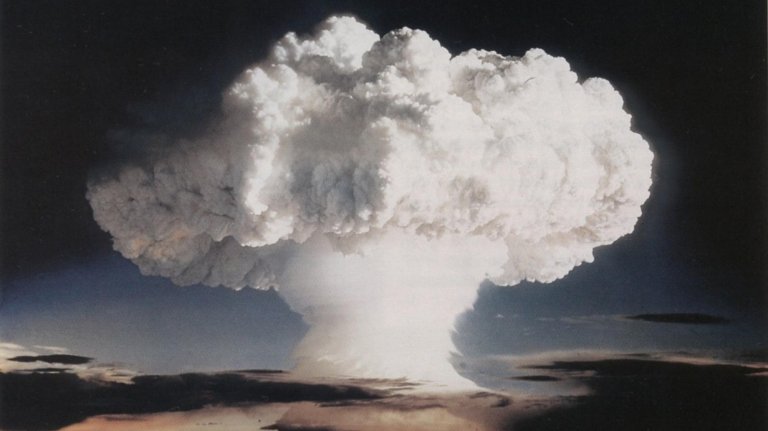
It’s the ultimate nightmare: a nuclear attack in the U.S. masterminded by terrorists. Here’s how that could happen— and how we can prevent it

Last fall, the race to stop terrorists from acquiring a nuclear bomb passed through Tashkent, Uzbekistan. There, on the morning of September 19, a Russian Antonov 12 cargo plane touched down carrying two nearly indestructible steel canisters. Under the watch of elite security forces armed with machine guns, Uzbek officials unloaded the canisters and drove them to a remote, wooded area about 20 miles from the Central Asian capital. Waiting there at the Institute of Nuclear Physics, which houses a small nuclear reactor used for scientific research, was a team of Americans, Russians and officials from the International Atomic Energy Agency. With extreme care, they filled the canisters with 24 pounds of reactor fuel containing highly enriched uranium, the ideal ingredient for a terrorist nuke. Area roads were closed off as an armed convoy rushed the cargo back to the airport. The canisters were loaded back onto the Antonov 12 and flown to Russia, where their contents were sent to a secure facility and blended with less-potent materials to create a mixture that is of little use to aspiring terrorists.


Amid the conflict in Iraq and the hunt for Osama bin Laden, this is a side of the war on terrorism you rarely hear about: the drive to prevent terrorists from acquiring the ingredients for a nuclear bomb. In recent years, operations similar to the one in Uzbekistan have been conducted in Libya, Serbia, Romania and Bulgaria. These efforts reflect an intense and growing concern within the U.S. government about the specter of nuclear terrorism. It is one of the few issues on which President George W. Bush agreed with his former rival, John Kerry, who called nuclear terrorism the greatest threat that we face in the world today.


That threat comes not just from suspected weapons programs in Iran and North Korea, but also from Al Qaeda
and other terrorist groups. Last year Michael Scheuer, who ran the CIA’s Osama bin Laden unit for several years in the late 1990s, wrote a letter to the Senate Intelligence Committee warning of the “careful, professional manner in which al-Qaeda was seeking nuclear weapons . . . in deadly earnest.” More than a decade ago, bin Laden allegedly tried to buy a canister of uranium in Sudan for $1.5 million. (He appears to have been scammed.) In August 2001, he met with two Pakistani nuclear scientists. And later that year, crude sketches of nuclear weapons were found in Al Qaeda training camps in Afghanistan. Scheuer told CBS’s 60 Minutes last year that bin Laden even sought a religious edict from a Saudi cleric on whether he could use a nuclear weapon against America. The cleric’s answer: Go for it.


Intent isn’t the same as capability, of course. But of more than a dozen nuclear-arms experts I interviewed, almost all agreed that assembling a crude nuclear bomb, though extremely difficult, is by no means impossible.


Just ask Graham Allison. In his recent book Nuclear Terrorism: The Ultimate Preventable Catastrophe, he concludes that a terrorist nuke attack is “inevitable” unless the U.S. works much harder and faster to safeguard nuclear material. A former assistant secretary of defense who served under President Bill Clinton and now teaches government at Harvard University, Allison is actually taking small bets from colleagues that terrorists will detonate a crude nuclear bomb in a U.S. city within a decade. “If this happened tomorrow,” he says, “I could almost explain it more easily than I could explain why it hasn’t happened.”

Not everyone is as alarmist as Allison. Most experts with whom I spoke said that a nuclear terror attack is plausible but not inevitable, and that there’s no way to precisely gauge the odds. “I don’t think the public ought to lose a lot of sleep over the issue,” says nuclear physicist Tom Cochran of the Natural Resources Defense Council.


There is a consensus, though, about how such a nightmare would unfold. What follows is an examination of each step a terrorist organization would need to take to pull off a nuclear attack, and what is being done to raise the hurdles.


Page 1 of 5 12345next ›last »
Want to learn more about breakthroughs in electronics, medicine, nanotech, and more?
Subscribe to Popular Science today, for less than $1 per issue!

0 Comments


138 years of Popular Science at your fingertips.

Innovation Challenges


Popular Science+ For iPad

Each issue has been completely reimagined for your iPad. See our amazing new vision for magazines that goes far beyond the printed page


Download Our App

Stay up to date on the latest news of the future of science and technology from your iPhone or Android phone with full articles, images and offline viewing


Follow Us On Twitter

Featuring every article from the magazine and website, plus links from around the Web. Also see our PopSci DIY feed


February 2012: The Future of Fun

Science is reinventing play, from extreme sports to gamification to ridiculous roller coasters to the playgrounds of tomorrow, and this issue is chock full of fun. Also, on a less fun note: Did global warming destroy my hometown?


circ-top-header.gif
circ-cover.gif