In Curious Behavior: Yawning, Laughing, Hiccupping, and Beyond, which published last week, Robert R. Provine, a professor of psychology and neuroscience at the University of Maryland, Baltimore County sets out to answer some of biology’s burning questions: Why are yawns contagious? Why do we cry tears? Why does light make (some of) us sneeze? And my personal favorite: Why don’t we talk out of our butts?
_Click here to enter the gallery_
“My book is a catalogue of human mysteries, solved and unsolved,” Provine says. “Most such human acts have been mysteries since antiquity, and remain so. Scientists neglect the commonplace.”
The book aims to change this by bringing little-known experiments about everyday acts like itching and farting into the light of day.
Click through to the gallery to find out how — and why — our curious behaviors exist.
Jennifer Abbasi is a science and health writer and editor living in Portland, OR, and PopSci_’s Sex Files columnist. Follow Jen on Twitter @jenabbasi._
Farting
Our flatulence is mostly made up of nitrogen, oxygen, carbon dioxide, hydrogen and methane. (This last gas is the flammable agent in a lit fart, btw, but only a third of us produce enough of it to set a toot on fire). Although the aforementioned gases comprise 99 percent of farts, none of them explain the telltale smell. Bacteria in our guts produce the CO2, hydrogen and methane in our farts, and they must also be responsible for other trace gases that stink. For Provine, the noisiness of farts begs the question: Why don’t we talk out of our butts? No parts of our vocal apparatus evolved specifically for making sound, he points out. “We speak through the same toothy orifice through which we breathe, eat, drink and vomit, and the vocal folds (cords) used for sound production are simply two flaps of muscular tissue that act as a seal to keep food and drink out of the airway when swallowing,” he writes in Curious Behavior. “We ‘play’ this biological instrument to produce speech.” The GI tract has enough analogous morphology to produce sound in the form of farts, but a missing mouthpiece — or buttpiece, so to speak — keeps us from effectively shaping sound-producing vibrations into words.
Yawning
Mammals and most other vertebrates, including turtles, crocodiles, snakes, birds and fish, yawn. In humans, yawning has a slew of known functions, including clearing our ears, making our eyes tear, inflating our lungs with air, and signaling to others that we’re tired or bored. Fetuses yawn in the womb, and the act could function in them to sculpt the hinge of their jaws or to help develop their lungs. Scientists have also proposed that yawning cools the brain and enhances alertness. Contrary to popular belief, however, we don’t yawn because of too much carbon dioxide or too little oxygen coursing through our brains or our blood. And as for contagious yawning — “catching” a yawn from someone else — Provine and others believe this familiar phenomenon synchronizes human groups. “Contagious yawns propagating through a population drive a correlated ripple of physiology and emotion, transforming group members into a collective super-organism,” he writes.
Laughing
Chimps respond to play with a pant-pant laugh, a glimpse into how laughter evolved in humans. “Laughter is literally the ritualized sound of the labored breathing of physical play,” Provine writes. He calls it primate onomatopoeia. First came a breathy pant during physical play in the common ancestors of chimps and humans, then the ritualization of the pant as a vocal symbol of play, followed by the human version of the pant-pant: the ha-ha. Laughter was important to convey the intention of play verses attack in our evolutionary history. In babies, who can laugh by three to four months, it telegraphs a pleasant encounter (like fun tickling) rather than an annoying one (like too much tickling). Although we equate laughter with comedy, most laughs in human conversation — 80 percent, according to Provine’s research — are not in response to jokes, but rather to banal statements, like “Are you sure?” and “It was nice meeting you.” This tells us that laughter is more a tool of relationships than of humor.
Emotional Crying
We know that babies cry to get what they want, but why do we spill tears when we’re sad? Tears contain a natural chemical called nerve growth factor, which could help in healing eye wounds. What started as a medicinal mechanism may have also helped ancient peoples show fellow tribesman that they were in pain and in need of help. Emotional tears — a uniquely human phenomenon — tell others that we’re sad, which often elicits help or empathy. People who lose the ability to cry because of health conditions or medications report being unable to signal their sadness to others without having to explain in words, something that can be difficult to pull off when you’re feeling extremely emotional. Interestingly, men have been shown to find even the smell of women’s tears unattractive, which could have helped women stave off undesirable sexual advances during human history. Because women may cry more during menstruation, when they’re not fertile, tears may also be a reproductive cue telling men not to bother.
Sneezing
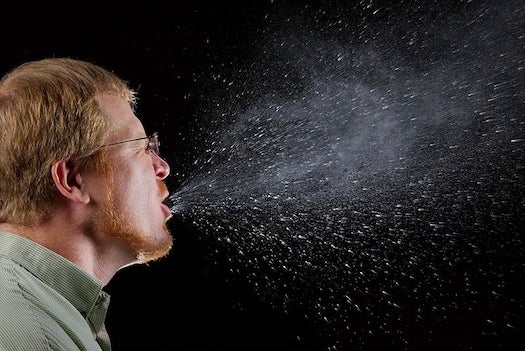
Physically, sneezing resembles a fast yawn, Provine writes, which points to an evolutionary connection between the two acts. Yawning, which is present in more animals and shows up earlier in human development, may have evolved first; sneezing may have arisen out of the yawn to clear irritants, dried secretions (aka boogers) and potential pathogens from the nose. A fourth of adults have an inherited tendency to sneeze or an increased ability to sneeze around bright light, a phenomenon called the photic sneeze reflex. Some say that light-induced sneezing is a meaningless neurological quirk, but Provine suggests that it evolved as a “daybreak ritual” that provides daily nasal cleansing. The fact that the photic sneeze often can’t be repeated too soon seems to support a theory of a health-promoting cleanse triggered daily by the sun (or artificial light in modern times). The benefit, however, may be offset by the dangers inherent in the closed-eyed nature of the sneeze, car crashes among them.
Vomiting
Vomiting expels harmful substances (rotten food, toxic levels of alcohol) from our bodies. Seeing and smelling vomit, along with feces, urine, blood and decay, triggers disgust in us, probably because it and all these associated gross-outs can harbor disease. In fact, an online study with more than a million participants found vomiting to be “the worst sound in the world.” As any school janitor knows, vomiting can be contagious, spreading from one person to another. In these cases, puking is a canary in a coal mine, a warning that serves to rid people of potential pathogens before they can cause too much harm. “Messy false alarms are a modest price for a potentially lifesaving maneuver,” Provine writes.
Itching and Scratching
“We are biologically primed to maintain the skin by engaging in the defensive and auto-grooming act of scratching,” Provine writes. The skin, he says, is our first line of defense against disease and must therefore be maintained. We itch — and scratch — in response to fleas, lice, ticks, flies and mosquitoes, all of which may carry disease, as well as venom-loaded insects and toxic flora. Our skin also uses itching to draw attention to conditions like eczema, athlete’s foot, thyroid disease, diabetes, jaundice and even brain tumors. Itching is contagious and highly suggestible. (Notice yourself scratching away while reading this?) Being able to “catch” an itch from someone else historically protected us from pests “jumping ship,” in Provine’s words, from our neighbors to ourselves. The pain of scratching cancels itching out.