
A lawsuit over the death of a 14-year-old girl raises new questions about how much caffeine is too much--and what other nefarious factors might come into play.

Caffeinated drinks
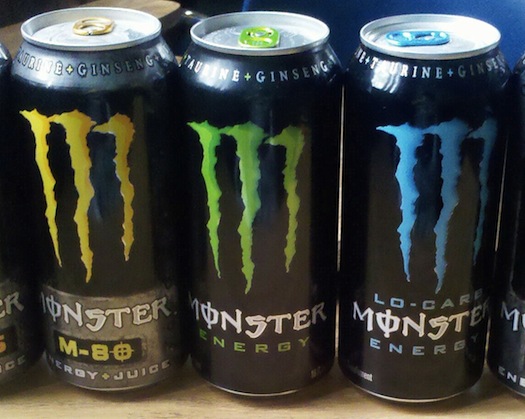
Monster Energy Drinks Wikimedia Commons

A wrongful-death lawsuit filed last week against the makers of Monster energy drinks claims that 14-year-old Anais Fournier drank two 24-ounce cans of Monster in the day before she unexpectedly died late in 2011. The coroner’s report described “caffeine toxicity” as contributing to her death. Just what does it take to ingest a lethal dose of caffeine?

The answer is hard to pin down, in part because it happens so rarely, but it’s clearly a hell of a lot. In an email, Jack James, the editor-in-chief of the Journal of Caffeine Research, says that overdose for adults requires roughly 10 grams of caffeine. (People typically ingest just 1 to 2 mg/kg of caffeine per beverage.) A 2005 Forensic Science International article on two fatal caffeine overdoses in New Mexico pegs the figure closer to about 5 grams--an amount that would still require drinking more than 6 gallons of McDonald’s coffee. Whereas a normal cup of coffee might bring the concentration of caffeine in your plasma to 2.5 to 7 mg/L, the two people who died in New Mexico--a woman who might’ve used caffeine to cut intravenous drugs, and a man whose family said he ingested a bottle of sleeping pills--both had concentrations 100 times higher. (A web application called “Death By Caffeine” uses a benchmark around 6 grams per hundred pounds of body weight to estimate death, but it’s “for entertainment purposes only.”)

So if a true caffeine overdose is so rare, why has caffeine--perhaps the most widely used drug in North America--been blamed for contributing to a handful of deaths over the years? Perhaps because it almost always works in concert with other far more nefarious factors such as alcohol or heart conditions. Indeed, the suit filed in California points out that Fournier suffered from Ehlers-Danlos syndrome. According to the autopsy report, the cause of death was a cardiac arrhythmia that the caffeine brought on. But the arrhythmia was also complicated by “mitral valve regurgitation in the setting of Ehrlers-Danlos syndrome,” which affects collagen synthesis and thus multiple body systems, including the cardiovascular system.

“Caffeine toxicity of the kind experienced by Ms. Fournier (if, indeed, that is what she experienced) is not well understood,” James says. “There is speculation in the literature regarding the possibility of some individuals having a peculiar sensitivity to caffeine, but there is no clear definition or understanding of what such sensitivity might be.”

Caffeine almost always works in concert with other far more nefarious factors.

One thing is clear: Anais’s caffeine intake simply would not be harmful for most people. Two cans of Monster each contain 240 mg of caffeine, which the lawsuit equated with the caffeine of 14 12-oz. cans of Coca-Cola. While drinking 14 Cokes sounds positively disgusting, the caffeine therein is actually well within the bounds of what many people consume in a day. For instance, Starbucks Pike Place coffee would deliver that 480 mg of caffeine with just 24 ounces of joe. As Mark F. McCarty, an applied nutritionist in San Diego, said: “I don’t see another case of a child who died from acute exposure to the equivalent of four coffee cups of caffeine. That strikes me as extremely rare. I can’t imagine that Monster was worried about this, because there’s nothing in the literature to suggest this would happen.”

That’s not to say there aren’t close calls, especially in children. A girl in Ohio suffered seizures, heart problems and fluid in her lungs after she ate her mom’s diet pills, containing 2 to 3 grams of caffeine (the equivalent of eight or 12 cans of Monster). She was transported by helicopter to the pediatric hospital in Columbus and survived, despite the high dose and her age: just a year old. In another instance, a 16-year-old boy in Toronto ingested something like 6 or 8 grams of caffeine (25 to 33 Monsters) via 30 or 35 pills called “pink hearts.” He suffered chest pain, elevated blood sugar and irregular heartbeat, but was treated and survived. The physicians who published on the case noted: “On examination, he was alert, oriented, nervous, agitated and irritable”--exactly how you’d imagine a teenager on way too much caffeine.

Energy drinks, though, might be raising the stakes. "In the past it was generally accepted that it is virtually impossible for a normal, healthy person to consume a lethal dose of caffeine when taken in one of its usual dietary forms," James says. "Nevertheless, of the many thousands of cases of caffeine exposure registered with the American Association of Poison Control Centers alone, some do indeed result in death. Until the advent of energy drinks, essentially all of the many reports of lethal and near-lethal cases of caffeine poisoning, involved atypical methods of ingestion. The advent of energy drinks appears to have changed that profile."

Caffeinated energy drinks are designed for, and marketed to, children, with the aim of recruiting long-term consumers.

A 2010 study analyzed seven years of databases from Australian poison information centers, and found nearly 300 callers reporting “exposure” to energy drinks, often in tandem with alcohol or other caffeine sources, that led to symptoms such as hallucinations, seizures and arrhythmias. At least 128 of those people were hospitalized. In the United States in 2010, about 150 people were treated for exposure to energy drinks, according to American Association of Poison Control Centers statistics (pg. 130); coffee is nowhere on the list. This year, toxicologists in Boston recommended further study on the “novel exposure” that is energy drinks, citing ingredients such as taurine, niacin and pyridoxine as potential targets. Caffeine may be the star in most energy drinks, but among so much chemical detritus, it’s hardly the only stimulant in play.

All of which raises the question, for James, of why drink manufacturers even include caffeine in energy drinks, which he describes as having stimulant benefits that range from marginal to nonexistent. “Manufacturers know that repeated consumption of caffeine leads to physical dependence,” James wrote. “… The more recent bevy of caffeine energy drinks and sodas are specifically designed for, and marketed to, children, with the aim of recruiting long-term consumers of those products.”

Including caffeine in soft drinks and energy drinks piggybacks on the dependence that coffee, tea, cola and chocolate have created with their natural caffeine content. The effect most people conflate with caffeine stimulation, James wrote, is primarily “withdrawal reversal,” which lends the sensation of a small high when, in reality, “the person is merely restored to how they would have been feeling had they not been a caffeine consumer in the first place.”
15 Comments

I'm off the opinion that the girl knew there was caffeine in the drink, knew it was a stimulant, and that is WHY she was drinking it. This lawsuit is ridiculous and is a symptom of a over litigious society bent on blaming others for their own mistakes and shortcomings.

A) If she knew she had health problems both she and her parents should have been policing her consumption of anything that exacerbate that problem.

B) If she didn't know she had a health problem, then how is MONSTER responsible for knowing she did? They market a drink that is perfectly acceptable to consume of 99.99% of the humans on this planet.

Either way, suing the makers of the drink is just a way for irresponsible parents to attempt to capitalize on the death of their child. If they really felt that the drink was to blame and honestly wanted to do something about it, they would be looking at getting the FDA to change its guidelines on what is and isn't acceptable levels of stimulants in non prescription products.

This would be like someone who is allergic to peanuts sueing Jiffy's after eating a tube of peanut butter or a diabetic sueing Crystal after eating 5lbs of pure cane sugar.

If the child had a medical condition that made her susceptable to caffinee, then an energy drink was a bad choice. It is also a bad choice for Grandpa Uptight's hypertension, Debby Downer's depression, or Uncle Sloshie's driving home buzz.

Personal responsibility is not someone else's responsibility.

I have heard people say this girls case means we need regulation of caffeine. WE DO NOT need more government regulations on this. She had a rare health condition, in combination with a heart problem, and she died the day after, so a significant portion of the caffeine would already be out of her system. I do not bevel it killed her. Caffeine has diuretic properties, so it flushes itself out of your system. Meaning the more you drink, the faster it leaves.

Science without religion is lame. Religion without science is blind. Albert Einstein

Survival of the fittest!!!! Take responsibility for your own actions people or you deserve to die painful and lonely death.

2 knowing things are going on.

One, the manufactures of these drinks, knowing omit as much possible information of the negative side effects of these drinks, while hyping the positive effects.

Two, people who buy them knowing exploit them for the hyped up reasons advertise for these drinks and do not care to take the time of understanding what crap they put in their bodies.

So it is the manufacture that should be more responsible and it is the individual who should be more responsible too.

Eat to live. Do not live to eat. Make a conscious mature choice to feed your body what it needs to be healthy. Do not eat solely for pleasure.

Monster energy drinks was not the cause, and if so maybe she should have been placed in a bubble shielded from the world as her body is so frail. I'm sick and tired of being punished for others mistakes and complaints. Survival of the fittest. However i do disagree "haywall" she did not deserve to die because of her choice to drink Monster like every other kid dose. Jackass.

$$$$$$$$$$$$$$$$$$$$$$$$$$$$$$$$$$
Are you job less? want to earn Thousands of Dollars working few hours on your computer? Now it is possible. A Big US based profit share company make this so easy... Read more
CLICK THE HOTLINK FOR ADDED INFO. ))>> AIM18. com <<((
$$$$$$$$$$$$$$$$$$$$$$$$$$$$$ $$$$

Most "energy drinks" don't rely on caffine alone, for their effects. Monster, for instance, also contains: taurine, panax ginseng, L-Carnitine, Guarana, and B vitamins.

This article is grossly misleading, and has no place in what purports to be a science magazine.

Water!
or
Home filtered water,..better!
Clean, cheap and in the fridge, mmmmm so GOOD!

Oh and by the way, while naturally zero calories, no chemicals were added to achieve this..... oh so el-natural!

@tundrasea
couldn't disagree with you more, the lawsuit was in relation to caffine as that was the potetnital cause of death, and that is what Monster is being sued for, therefore this article is spot on. Also it did mention all the other ingredients breifly, as it should because the issue was not with the other ingredients only caffine.
+1 to Xionanx

On a regular day, I drink two, bad day...three....incredibally bad day...four.....doing so for quite a while now, no problems what so ever........You need something when you are working 10-15-19 hour days.....

"...roughly 10 grams of caffeine, just 1 to 2 mg/kg of caffeine per beverage, concentration of caffeine in your plasma to 2.5 to 7 mg/L, benchmark around 6 grams per hundred pounds of body weight, equated with the caffeine of 14 12-oz. cans of Coca-Cola, that 480 mg of caffeine with just 24 ounces of joe...".
Mixing ounces and pounds with liters, grams and kilograms makes reading impossible. Go to Sevres in France and there you can see the Standard meter and kilogram. Now, show me a physical Standard inch, foot, or gallon and we'll be ready to discuss which system to use rather than wrecking spacecraft, that cost billions of dollars, on Mars because of "confusion and misunderstanding".

A cup of coffee or maybe two is considered healthy. Beyond this, you’re tampering with your own health.

or just stay awake. people's dependence on energy drinks is disconcerting.

Come on...
Why would you die from caffeine consumption?
All the buzz around caffeine and energy drinks lately: Josh Hamilton and his mysterious eye condition, then the FDA and Consumer Reports on deaths following the consumption of energy drinks, then requests from politicians asking for FDA investigation and regulation and also these statutory safety warnings that should be now stated on the packs of these caffeinated drinks.

From a medical point of view, caffeine is considered as having more health benefits than risks but only in the case of a moderate consumption: www.ephedrinewheretobuy.com/ephedrine-where-to-buy-eca-stacks/coffee-a-true-wonder-drug

My point of view: we should focus on these products that add alcohol to energy drinks: when you mix them, you get the hyperactivity from an energy drink with caffeine plus the disinhibition from the alcohol. For me, these products should be controlled because the risk factor is much higher, especially for young people.

Cheers, Mike


June 2013: American Energy Independence

Five amazing, clean technologies that will set us free, in this month's energy-focused issue. Also: how to build a better bomb detector, the robotic toys that are raising your children, a human catapult, the world's smallest arcade, and much more.


Online Content Director: Suzanne LaBarre | Email
Senior Editor: Paul Adams | Email
Associate Editor: Dan Nosowitz | Email
Assistant Editor: Colin Lecher | Email
Assistant Editor: Rose Pastore | Email

Contributing Writers:
Rebecca Boyle | Email
Kelsey D. Atherton | Email
Francie Diep | Email
Shaunacy Ferro | Email

circ-top-header.gif
circ-cover.gif