How to Stop a Pandemic
Scientists are constantly keeping an eye out for new diseases, trying to stanch them before they blow into a global...
Scientists are constantly keeping an eye out for new diseases, trying to stanch them before they blow into a global pandemic–and while that’s one way to fight the threat, there are other ways to prepare.
Predict: The best way to avoid a pandemic is to identify pathogens before they emerge. Scientists at PREDICT, a consortium of infectious-disease organizations funded by USAID, track and collect zoonotic pathogens in 20 hot-spot countries in order to create a database of the most dangerous. Researchers have discovered more than 100 new viruses in just three years of operation.
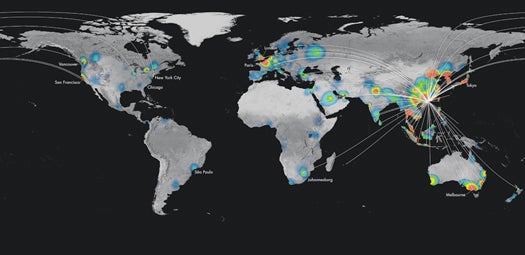
Model: To stop an emerging zoonosis from spreading, scientists need to model its future course. Epidemiologists at BioDiaspora use various data, including insect populations, human demographics, and airline routes, to map outbreaks. Health agencies use the maps to plan a response. In the example above, scientists used airline-passenger-density data to model a Thanksgiving outbreak scenario.
Treat: Once a pandemic spreads, rapid vaccination is critical. But most facilities take nine months to produce doses at scale. The U.S. government is funding the development of three new facilities in Texas, North Carolina, and Maryland. After completion in 2015, they should be able to produce up to 150 million doses in four months.