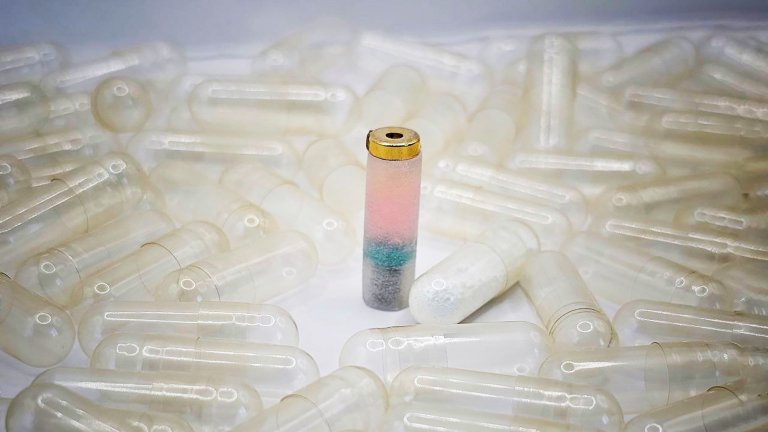
Oxygenating Blood With Microparticles Researchers have developed microparticles packed with oxygen that can be injected into the bloodstream in cases where the lungs cannot properly oxygenate the blood, buying medical personnel as much as an extra half hour before the patient suffers the effects of oxygen deprivation. Courtesy Children's Hospital Boston

When a person stops breathing--be it from an obstruction in the airway or something like acute lung failure--the clock is decidedly ticking. Deprived of oxygen for long enough, a person can go into cardiac arrest. Brain damage sets in. Without oxygen, things go south pretty quickly. So a team of researchers at Boston Children’s hospital has designed a kind of injectable oxygen that can be quickly introduced to a person’s bloodstream to oxygenate the blood, buying paramedics or other medical personnel perhaps as much as half an hour to remedy an oxygen flow problem.

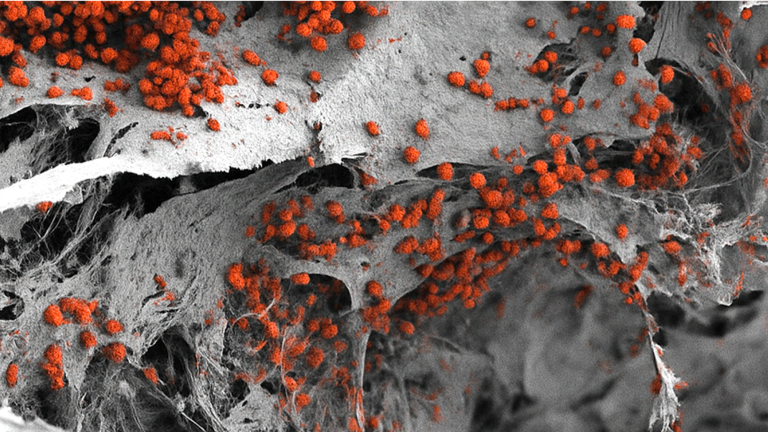
The microparticle solution is different than blood substitutes, which do carry oxygen but need to be oxygenated by the lungs. These new microparticles consist of a single thin layer of lipids that encase a tiny bubble of oxygen gas. These particles are delivered to the bloodstream via injection in a liquid solution and can return a deoxygenated blood supply in vivo to near normal levels in a matter of seconds. And if a person gets in a situation where he or she needs this kind of therapy, seconds definitely count.

In animal tests, when the airway was completely blocked and no air could reach the lungs, an infusion of the microparticle solution kept the animals alive and in stable shape for 15 minutes without their taking a single breath. In humans facing a life or death situation, first responders could perhaps buy as much as 30 minutes by popping shots of oxygen into a patient’s bloodstream.

But quash all visions of injecting oneself with a steady dose of oxygenated particles and living indefinitely in an oxygen free environment. The oxygen is encased in lipids--basically fatty molecules--and carried in a solution that would overload the blood in high enough doses, causing a range of other biological complications that would make lack of oxygen just one problem among many. Still, 15-30 minutes isn’t bad if you’re at the receiving end. The microparticles are portable, so given the right approvals every EMT, crash cart, transport helicopter, ambulance, police officer, firefighter, and clinician could keep a syringe full of oxygen particles handy, allowing them to quickly stabilize patients until some other life-saving technology, like a breathing tube, can more permanently rectify the situation.

9 Comments

This is extraordinary most cool-able medical science!
I LIKE IT! :)

.............
Every day is a new day!

Can someone say "ultralight scuba"?

I was wondering how long it would be until something like this would come. I can see this being abused as an enhancement in marathons though.

I think that it could be used as an emergency solution in space/deepwater environments & athletic advancement, maybe train with it to maximize the workout... this stuff sounds hot to me :)

So, they finally got around to inventing Tri-Ox compound:

http://en.memory-alpha.org/wiki/Tri-ox_compound

Imagine trying to calm down someone who can't breath, imagine telling them it'll be OK while you inject some shit into their veins... lol

You might have to knock them out to save them... Or, just wait until they pass out for lack of O2?

Someone call the Olympics because they are already planning on using this as an alternative to blood packing.

now we just need to infuse a little of this into epipens to make sure people survive until the reaction stops :)

My first thought reading the title was Stroke! (venous air embolism)

After reading, this seems like a great advancement for the emergency medical field, Strange it took this long for someone to come up with it.

Dr.Dawdy made a great point in mentioing abuse, which will likely happen in all manner of sports, and for sure in training, if it's deemed safe for everyday use, the lack of it in a training regimen would be considered limiting performance growth.

@AIBme, nice point, don't watch much ST myself, considering that, why wasn't this developed before now?

"a lot" NOT "alot"


June 2013: American Energy Independence

Five amazing, clean technologies that will set us free, in this month's energy-focused issue. Also: how to build a better bomb detector, the robotic toys that are raising your children, a human catapult, the world's smallest arcade, and much more.


Online Content Director: Suzanne LaBarre | Email
Senior Editor: Paul Adams | Email
Associate Editor: Dan Nosowitz | Email
Assistant Editor: Colin Lecher | Email
Assistant Editor: Rose Pastore | Email

Contributing Writers:
Rebecca Boyle | Email
Kelsey D. Atherton | Email
Francie Diep | Email
Shaunacy Ferro | Email

circ-top-header.gif
circ-cover.gif