If there’s one thing in our archives more impressive than the retrofuturistic illustrations, it’s the number of superstar scientists who have shown up in our magazine over the years. Back in the day, our writers secured interviews with everyone from radio pioneer Guglielmo Marconi to “famous prophet of science” Nikola Tesla. To say that we’re jealous of our predecessors would be a gross understatement, so we’ve compiled a quick roundup of these scientific celebrity encounters for your vicarious enjoyment. In addition to highlighting interviews with notable figures, we’ve included articles written by famous scientists, as well as features published at the peak of their careers.
Click to launch the photo gallery.
One of our first notable contributors was the father of the telephone himself, Alexander Graham Bell. You’d think he’d be a busy man, but in between racing to the patent office and tinkering with his devices, Bell found the time to write a lengthy article about using tellurium selenium alloys to produce high-quality sound. If that process sounds a little arcane, don’t worry — Bell provided illustrations for clarity.
As much as we hoped to see a piece written by Albert Einstein, it turns out that most prominent scientists declined to contribute entire articles to us after the turn of the century. Chances are, they were too preoccupied with spending their Nobel Prize winnings to hammer out essays for consumer magazines.
On the other hand, it’s hard to resist the charms of a glowing secondhand account. After spending a day with Tesla, our journalist said, “To talk with Dr. Tesla is to become acquainted with an extraordinary life packed with adventure into uncharted realms of knowledge.” Elsewhere in the article, his glee practically radiates off the page.
Given the number of innovators who cropped up in the past 138 years, we couldn’t include every historical figure featured on our pages. But do a quick search through our archives and see if you don’t find at least one ode to your favorites.
Click through our gallery to see the earliest PopSci cameos by Albert Einstein, Robert H. Goddard, Marie Curie, and more eminent scientists from the 20th century.
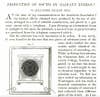
Alexander Graham Bell: July 1881
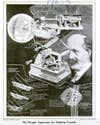
During the summer of 1881, we published an article by the father of the telephone himself: Alexander Graham Bell. The eminent Scottish inventor, who unveiled his telephone just five years earlier, told us about the challenges of producing a clear sound across all devices. Selenium, which had initially yielded the clearest sound when hit with a beam of light, was not reliable. While experimenting, Bell found that two pieces of selenium rarely produced the same quality of sound, even when those two pieces came from the same stick. His cousin, Chichester Bell, suggested that Bell’s selenium samples was contaminated with other chemicals. Another possible solution came from Professor W.G. Adams, who demonstrated “that tellurium, like selenium, has its electrical resistance affected by the light.” When the Bells attempted to build cells using tellurium (pictured on the left) instead of selenium, they found that the substance was a little too sensitive to light. Instead of becoming discouraged, however, they decided to experiment with alloys of tellurium and selenium. Read the full story in Production of Sound by Radiant Energy
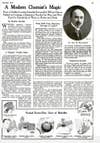
Leo Baekeland: January 1923
While the name “Leo Baekeland” might not be as ubiquitous as “Bell” or “Einstein,” this Belgian-American chemist’s legacy can be found in practically every home today. Bakelite, the first plastic derived from a synthetic polymer, was an manufacturer’s dream come true: it was hard, insoluble, and inexpensive. It was also the first plastic that became malleable after exposure to heat. Baekeland filed a patent for Bakelite in 1907, and thus, the Age of Plastics was born. In his profile of Dr. Baekeland, writer Boyden Sparkes admitted to feeling a little starstruck by the man’s genius. “Sometimes the reams and labor of many men, throughout years of research, go into the perfection of a single invention,” wrote Boyden. “More often, a lucky accident is the source of a new scientific principle or device. But occasionally, a single miracle worker accomplishes in a few months of intense, well-directed effort, the solution of a ‘hopeless’ problem in invention.” Read the full story in A Modern Chemist’s Magic
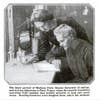
Marie Curie: April 1924
Marie Curie, possibly the greatest female scientist who ever lived, featured prominently in our articles on atoms. By 1924, Curie had already won two Nobel prizes for her studies on radioactivity and for her discovery of radium polonium. As if those accomplishments weren’t significant enough, Curie also impressed us with her prototype for a machine that would permit researchers to visualize and hear atoms. Equipped with a radio loudspeaker, the machine would amplify the movements of helium atoms shot from polonium. Audiences could then use the subsequent ticking noise to count the atoms as they were dispelled. Read the full story in Science Sees, Hears, Counts Atoms
William Henry Bragg and William Lawrence Bragg: August 1921
If Marie Curie was the greatest female scientist in history, then William Henry Bragg and William Lawrence Bragg were quite possibly science’s greatest father and son duo. After all, they share the 1915 Nobel Prize in Physics for their work on X-rays and crystal structures. The younger Bragg was just a first year research student at Cambridge when he discovered that you could use X-rays to to formulate the structure of atoms on a crystal. Read the full story in The Braggs’ Apparatus for Studying Crystals
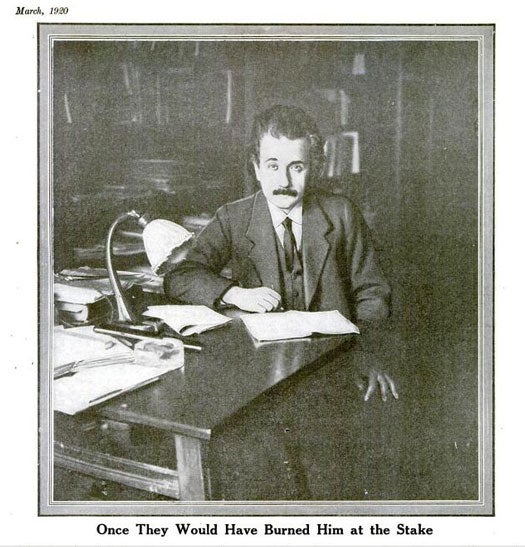
Albert Einstein: March 1920
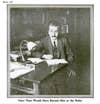
This man needs no introduction. Albert Einstein was just a year away from winning the Nobel Prize in Physics when we published this article on his newfangled theories. At the time, relativity was a controversial topic, hence the caption we bestowed beneath his picture. Like Galileo and Copernicus, Einstein championed ideas that could upset our understanding of the universe. For our readers’ sake, we put the implications of his mind-boggling theories in simple terms: Straight lines don’t exist, all motion is relative, light travels at a fixed speed, and gravity cannot exceed the velocity of light. Straight lines are components of a giant curve. If you move fast enough in a straight line, you will end up where you started. Madness! “All this seems like sheer nonsense,” we said. “And yet, Einstein’s statements have been proved to be true by experiments! You have been living in a dream world. Your conception of time and space are true only within limits.” Read the full story in Once They Would Have Burned Him at the Stake
Ernest Rutherford: February 1924
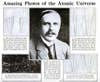
Technically, you can’t photograph an atom, but Ernest Rutherford’s visualizations of particle movements practically accomplished the same. The New Zealand-born physicist, who was awarded the Nobel Prize in Chemistry in 1908, had recently succeeded in converting nitrogen into oxygen, thus becoming the first person to purposely transmute one element from another. In 1921, three years before this article was written, Rutherford published his theory on the existence of neutrons, which was eventually proven in 1932 by future Nobel Prize winner James Chadwick. The images shown on the left were provided by Rutherford himself, who “plays with atoms as other men play with billiard balls.” The three spiky-looking images depict alpha particles colliding with an oxygen atom, a hydrogen nucleus, and a helium nucleus. The blackish image on the bottom left shows an X-ray traveling through the air, splicing electrons from atoms. For many readers, Rutherford’s photographs provided an easy way to understand how the properties of different elements affected their movements at the most basic known level. Read the full story in Amazing Photos of the Atomic Universe
Thomas Edison: January 1927
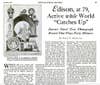
Where would the 20th century be without Thomas Edison? In spite of his age, the veteran inventor-turned-businessman showed no signs of retiring his work. In 1927, Edison unveiled a phonograph that could play for 40 minutes, about the length of time spent eating a meal. Convenient indeed, if not a little unnerving for those who couldn’t get past Edison’s eccentric genius. “Is this great man a mechanized inventing machine, stripped of ordinary human emotions for the sake of machinelike efficiency?” we asked. “Can his life be summed up by an alphabetical list of more than 1500 patents that bear his name?” No, we concluded. “He is a most human individual, and one who thoroughly enjoys life. He has a delightful fund of dry humor.” But what did it matter? Eccentric or not, sympathetic or robotic, Edison would inevitably be remembered for ushering us into the age of electricity. “[We] are on the threshold of a wonderful new age–one in which man’s hardest work will be done when he pushes a button.” Read the full story in Edison, at 79, Active While the World “Catches Up”
Guglielmo Marconi: January 1928
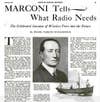
Radio pioneer Guglielmo Marconi is widely credited for developing long distance radio transmission, and even for inventing radio itself. All patent disputes and accusations of exploitation aside, Marconi possessed a vision for radio that is remarkably close to how we use it today. For example, in this article, Marconi told our writer that every ship, from cruise liners to freighters, would one day be equipped with long distance radios. In the future, radios would transmit clear signals regardless of weather and location, although he had yet to figure out why the quality of sound varies from place to place. Nor did he understand why short waves worked better on sunny days (and long waves at night). Of course, he made a couple of predictions that were a little off base. When our writer asked Marconi about the other up-and-coming technology, television, the inventor replied that it would likely remain a theater experience, rather than a commercial product for the home. Read the full story in Marconi Tells What Radio Needs
Nikola Tesla: November 1928
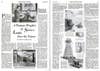
In 1928, we had the privilege of interviewing Nikola Tesla on his predictions for the future. Naturally, the experience blew our minds. “To talk with Dr. Tesla is to become acquainted with an extraordinary life packed with adventure into uncharted realms of knowledge,” we said. Tesla speculated at length on our future technology, which would include electric lights and radios in every house, ground vehicle, and airplane. Handheld electric generators would feature in camping trips. Planes and airships would conquer the skies, but, he said, that’s as high as we would be able to fly. Tesla wasn’t optimistic about every budding venture. For instance, he said that a rocket capable of traveling to the moon would impossible because no known fuel was capable of sending one into outer space. Only atomic power could generate the necessary energy for a moon landing, but the work it would take to split the atom just wouldn’t be worth it. Tesla’s thoughts about space travel led him to speak on the subject of matter. Unlike what the accepted atomic theory dictates, Tesla did not believe in the existence of electrons. Toward the end of the interview, we asked Tesla which arena of science most appealed to him. While we expected him to mention radios and airplanes, Tesla answered that rotating magnetic fields were dear to his heart. “A thousand years hence, the telephone and the motion picture camera may be obsolete, but the principle of the rotating magnetic field will remain a vital, living thing for all time to come.” Read the full story in A Famous Prophet of Science Looks Into the Future
Robert H. Goddard: December 1931
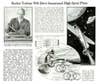
This illustration might look fantastical, but rocket scientists Robert H. Goddard was no stranger to sensationalism. In 1920, the New York Times published an editorial ridiculing Goddard’s ideas about blasting a rocket to the moon. The media attention followed Goddard for the next decade, where his reputation as a loon hindered his efforts to secure funding for projects. With help from Charles Lindbergh, Goddard received sponsorship from the wealthy Guggenheim family in 1930. Later that decade, the Navy bought Goddard’s liquid-fueled rockets to use in aircraft take-offs. The illustration on the left depicts a futuristic version of Goddard’s rocket plane. Read the full story in Rocket Turbine Will Drive Sensational High-Speed Plane