How 29 Long-Ignored Elements Could Make or Break the Clean-Energy Revolution
Depending on who you ask, these long-ignored, widely-scattered elements are either a dealbreaker or no problem at all
In December 2006, William Tahil, an energy analyst, published a paper online titled “The Trouble with Lithium.” His argument would be alarming to the many people who had placed their hopes for a cleaner, more prosperous economy on the rapid development of electric cars powered by lithium-ion batteries.
The trouble, he proposed, was that the world didn’t contain enough economically recoverable lithium to support such a switch. Moreover, the viable pockets of lithium that did exist were concentrated in just a few countries. “If the world was to swap oil for Li-Ion based battery propulsion,” he wrote, “South America would become the new Middle East. Bolivia would become far more of a focus of world attention than Saudi Arabia ever was. The USA would again become dependent on external sources of supply of a critical strategic mineral while China–home to significant lithium deposits–“would have a certain degree of self sufficiency.”
This article was adapted from Bottled Lightning: Superbatteries, Electric Cars, and the New Lithium Economy__ by senior editor Seth Fletcher, which comes out May 10 from Hill & Wang.Tahil wasn’t the most credible source. Earlier that year, he had published another paper, “Ground Zero: The Nuclear Demolition of the World Trade Centre.” In it, he argued that two nuclear reactors, buried some 260 feet below the World Trade Center, were deliberately melted down at the same moment the hijacked airliners hit the Twin Towers on September 11, 2001. Nonetheless, “peak lithium” was an irresistible story. Tesla Motors and General Motors had both recently unveiled the first electric cars of the 21st century, both of which ran on lithium-based batteries. In July 2008, the U.K. Guardian summed up the issue: “With oil supplies a continuing concern, focus is switching to lithium for electric vehicles. But debate rages about how much of it is available.”
In January 2010, I attended the second-annual Lithium Supply and Markets Conference in Las Vegas. Between panel sessions, I intercepted R. Keith Evans, a geologist who has spent more than four decades studying global lithium deposits. Tahil’s paper had drawn Evans out of retirement. “It was total bullshit,” he said.
Riding an escalator from the conference hall to the casino, he explained how Tahil inspired him to write an updated estimate of the world’s lithium supply, “An Abundance of Lithium.” This was not the first lithium scare, Evans said. He told me about an urgent conference held by the U.S. Geological Survey in 1975 to warn of an impending shortage of lithium–for use in nuclear fusion reactors. That scare inspired the first serious estimate of the Western world’s lithium supply, which in 1975 was pegged at 10.65 million metric tons. In subsequent years, geologists steadily discovered more deposits. By 2010, Evans estimated the known world supply to be some 28.4 million metric tons of lithium metal, or 150 million metric tons of lithium carbonate, the most common form in which lithium is produced and sold. In contrast, the global market for lithium that year was roughly 100,000 metric tons. An electric-car boom could double that demand within a decade, but even so, Evans said, there would be plenty of lithium.
_
Click here for a closer look at six elements that could fuel a clean-energy revolution._
By the time I met Evans, another potential resource shortage was making headlines. China, which produces 95 percent of the world’s rare-earth metals–a group of elements heavily used in the manufacture of hybrid cars, windmills and other clean-energy technologies–signaled its intent to cut back on exports, claiming that it had to reduce production in order to protect its reserves. Last September, China used its rare-earth monopoly as a weapon, suspending shipments to Japan in retaliation for the seizure of a Chinese fishing vessel. Almost immediately, U.S. Department of Energy officials were on Capitol Hill testifying before Congress about the state of American rare-earth-element supplies.
Since then, concern about the supply of elements used in clean-energy technology has only grown more acute. This February, a committee of scientists representing the American Physical Society and the Materials Research Society warned that our mineral-supply vulnerabilities extend beyond rare earths. The U.S. relies on other countries for 90 percent of its “energy-critical elements”–29 elements, including rare earths, whose intrinsic properties make them essential ingredients in thin-film solar panels, high-efficiency wind turbines, advanced electric-vehicle motors, high-capacity batteries and other clean-energy innovations. Disruptions in supply, the committee warned, could “significantly inhibit” meaningful deployment of fossil-fuel-free inventions that “could otherwise be capable of transforming the way we produce, transmit, store, or conserve energy.”
When oil is cheap and seemingly limitless, the inefficiency of the gasoline engine is acceptable. But oil is no longer cheap, and it’s not limitless.
Not all of these elements are rare, but none are as abundant as the dominant raw materials of 20th-century industry: iron, aluminum, silicon and the nine others that make up 99 percent of the Earth’s crust. Historically, only scientists working on lab-scale projects had much use for them, so geologists had little incentive to look for new sources. The consequence is a severe lack of knowledge about the prevalence, availability and cost-effectiveness of energy-critical elements. This lack of knowledge breeds anxiety. In August 2010, for instance, the libertarian magazine Reason ran the headline “Forget peak oil. What about peak lithium, peak neodymium, and peak phosphorus?” In the case of lithium, the panic has begun to subside as we’ve learned more about the element’s abundance. But will the same be true of the other 28 energy-critical elements? And what can the state of lithium supplies tell us about the rest of them?
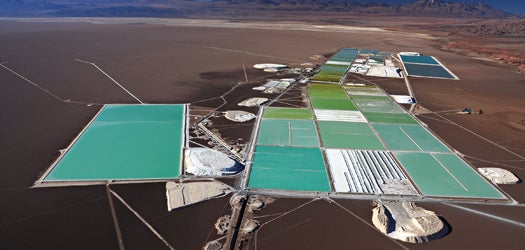
![Chile's Salar de Atacama [center] is the driest place on Earth, yet a large body of mineral-rich brine sits just beneath its surface. The water flows from the nearby Andes, leaching minerals from the mountains' volcanic rock on its course downward. To harvest lithium and potassium, engineers pump the brine into evaporation ponds.](https://www.popsci.com/uploads/2019/03/18/K4OQRE7XWHEVJ2RKFTPP2ON6SU.jpg?auto=webp&optimize=high&width=100)
The Lithium Bowl
To understand why a group of obscure elements suddenly commands such attention, consider the competition between gas-powered and electric cars. The internal combustion engine is an intrinsically inefficient machine. The average gas-powered car converts only 12.6 percent of gasoline’s energy into work. But the extravagant energy density of oil makes up for an engine’s inadequacies. Every gallon of gasoline contains 33,000 watt-hours of energy. Even 12.6 percent of that is enough to propel a several-thousand-pound car 30-some miles on the highway. And when oil is cheap and seemingly limitless—as it was for most of the 20th century—such inefficiency is acceptable.
Oil is no longer cheap, however, and it’s certainly not limitless. We have entered what Hampshire College professor Michael Klare calls the “age of tough oil,” in which the easily extractable deposits have been depleted, sending us drilling for oil miles beneath the surface of the ocean. Meanwhile, the growing Indian and Chinese middle classes appear poised to double the number of cars on the planet by 2050, to as many as two billion automobiles.
If they are going to replace gas-powered cars, electric vehicles need the best possible batteries, and today those batteries are based on lithium. Lithium is the third-lightest element on the periodic table, well suited to lightweight energy storage. Because of its extreme reactivity, it can form the basis for more-energy-dense batteries than just about any other element. The rechargeable lithium battery has already helped transform portable electronics, enabling the shift from the 30-ounce Motorola DynaTAC (commonly known as the Michael-Douglas-in-Wall Street phone) to the 4.8-ounce iPhone 4. Now automakers are betting that lithium could be equally transformative for transportation.
But lithium and the batteries based on it are only part of a larger system. Exploiting every milliwatt-hour of electricity stored in that battery requires the most efficient electric motors possible–and the magnets within those motors call for rare-earth elements such as neodymium and dysprosium. Generating electricity from renewable sources such as wind and sun requires ultra-efficient machines as well. Naturally, the most efficient wind turbines use rare-earth-based magnets; advanced thin-film solar panels use either tellurium or indium.

Mountain Pass Mine
In each of these cases, energy is so valuable that the highest-performance materials available are worth the trouble and money, even if they require hard-to-find elements. “If you were running this electric motor off the outlet in your home, where electricity is 10 cents a kilowatt-hour, who cares that it’s a less efficient magnet?” says Gerbrand Ceder, a materials-science professor at the Massachusetts Institute of Technology and a member of the committee that produced the APS/MRS paper on mineral-supply vulnerabilities. “Instead we’re pushing a lot of applications where the use of energy is critical and the energy is very expensive.” For now, energy-critical elements aren’t necessary in household appliances. Wind turbines and electric cars, however, almost aren’t worth building without them.
Yet the cost and availability of the elements that deliver such efficiency could be a problem. To be deployed on a massive scale, the machines of the clean-energy age must be cost-competitive with today’s fossil-fuel-based systems. But clean technology can’t be cost-competitive unless it’s manufactured on a large scale, and nothing is going to get built in volume if the raw ingredients aren’t available and affordable.
Given infinite money, as the APS/MRS report notes, “there is no absolute limit on the availability of any chemical element, at least in the foreseeable future.” Theoretically, scientists can wring tiny quantities of many elements from a random bucket of dirt–it just might cost a fortune to do so. So there are two key questions about neodymium, tellurium, lithium and the 26 other energy-critical elements: How much is there? And more crucially, what will it cost to get them out of the ground?
The world’s largest lithium producer, Sociedad Química y Minera de Chile S.A. (SQM), operates in Chile’s Atacama Desert, the driest place on Earth, where the soil is so barren that NASA has used it to calibrate microbe-detecting Mars robots. Last May, I traveled to northern Chile to see the company’s operations. Andrés Yaksic, a marketing manager from SQM, met me in San Pedro de Atacama, a tourist oasis about 50 miles north of SQM’s plant. On a bright, chilly morning, we set out for the facility. The sky was a spotless cobalt blue as we drove south toward the Salar de Atacama, the salt flat that is one of the world’s most abundant sources of lithium. SQM says the Salar de Atacama contains some 40 million tons of measured, economically extractable lithium carbonate.
After about an hour on the highway, we turned right onto a gravel road through the salar. Bulldozed salt dams and white mounds the size of suburban office buildings speckled the landscape. We stopped at a small office building and put on boots, blaze-orange safety vests and hard hats. Then we walked outside to meet Álvaro Cisternas, a stout, deeply tanned operations manager who would be taking us out to the evaporation pools.
Satellite images of SQM’s facility show huge white and cerulean squares carved into cocoa-colored earth, like the world’s largest swimming facility. In these pools, brine pumped from a subsurface aquifer bakes in the quasi-Martian sun for months. Water evaporates, the brine concentrates, and in time, minerals begin to precipitate. Later, the brine designated for lithium production is piped into a dedicated series of evaporation pools, each one a deepening shade of yellow. A tanker truck then carts the final product, a solution of 6 percent lithium, to a plant three hours away on the Pacific coast. There it is processed into lithium carbonate, a white powder that looks so much like cocaine that I didn’t dare try to fly back to the U.S. with samples.
After we walked among the pools, Cisternas drove us to the top of a small mountain of salt that had been set aside as an overlook. Evaporation pools, tractors, trucks, outbuildings and hills of valuable salt stretched for what appeared to be miles, though the air there was so dry and clear and the view was so completely uninterrupted that getting a firm perspective on the operation’s size was difficult.
For now, energy-critical elements aren’t necessary in household appliances, but wind turbines and electric cars almost aren’t worth building without them.SQM extracts 31 percent of the world’s lithium supply from this salt flat each year, which is just 40,000 of the salar’s known 40 million metric tons of reserves. Earlier, Yaksic had told me that within a matter of months, operations could scale up to supply three or four times the total global demand. Now, to emphasize the company’s world-beating capacity, Cisternas and Yaksic pointed to group of pools in the distance and explained that every year SQM actually pumps some hundreds of thousands of metric tons of lithium back into the salar—lithium that has been unavoidably harvested in the pursuit of the real moneymaker. Despite being the world’s largest lithium supplier, SQM generates more revenue from “specialty plant nutrition,” potassium fertilizer for our hydrangeas and geraniums.
Among the energy-critical elements, lithium is abnormally easy to mine, at least from brine-based sources like the Salar de Atacama. Nevertheless, the situation with many other critical elements might also be less dire than is often reported. “Most of the issues, in my opinion, are a bit overblown,” says MIT’s Gerbrand Ceder. “There are enormous buffers in the system.”
The first is simply that if the price of an element goes up, people have incentive to spend more money refining that element from raw ore. “There’s a lot of mining waste that still contains a lot of metal,” Ceder explains. That waste can, in many instances, yield more metal than we’re currently getting from it. In the case of energy-critical elements, whose production typically piggybacks on the extraction of more widely used minerals, the scrap pile could be a valuable source of reserves.
Another, often overlooked buffer is simple hierarchy of demand: If the supply of an element is limited, then the industries that need it most will take it away from those that need it less. Platinum, for example, is an indispensable catalyst in the exhaust filters that car companies are required to install on their automobiles. If platinum demand goes up, that doesn’t mean car companies will use fewer catalytic converters. It means couples will exchange fewer platinum wedding rings.
Tellurium provides another example. In addition to cadmium-telluride thin-film solar panels, tellurium is used to make thermoelectric devices (which convert wasted heat into electricity) and steel alloys. If demand for tellurium goes up, it will quickly become clear who needs it most. “What you find for tellurium is that the solar industry sits way on top of the chain,” Ceder says. “The value that they get from it is so high that the steel guys are going to get screwed, and then after that the thermoelectric guys.”
![The Mountain Pass mine in sourtheastern California was the world's largest source of rare-earth elements until it closed in 2002. Now China's Bayan Obo mine [above], in Inner Mongolia, holds the title.](https://www.popsci.com/uploads/2019/03/18/4XUICMMCJFAIZC7DTSHG77DTZI.jpg?auto=webp&optimize=high&width=100)
Mining Scars
Not every expert is so assured. Jack Lifton, a co-founder of the consulting group Technology Metals Research, has argued that the economics of tellurium production don’t work and that, in the years ahead, tellurium production might actually decrease. Copper producers are responsible for nearly all the world’s tellurium, which is extracted as a by-product of the refining process. As those companies move to new and more-economical refining methods, they may no longer produce tellurium. Supply could dwindle rapidly.
Another challenge is that some energy-critical elements are genuinely rare. Tellurium is, and so is rhenium, a platinum-group element blended into superalloys to allow jet engines to operate at higher, more efficient temperatures. Rhenium is actually five times as rare as gold. That’s why five years ago, General Electric started an intensive rhenium-recycling program while simultaneously searching for an alternative superalloy, which it found within a few years. In February, the Japanese government and 100-plus Japanese companies began a similar, $1.3-billion program designed to reduce the nation’s reliance on Chinese rare earths by one third.
One obvious way to reduce reliance on a critical element is to find substitutes. Toyota and Nissan, for example, are developing rare-earth-free motors for their hybrid and electric vehicles. But substitution can be a long, expensive process. “The truth of the matter is, it’s rare that a straight replacement works,” Ceder says. “Usually you need a reengineered product.”
Ceder is trying to make the design of materials a shorter and less involved process. He uses vast banks of computers to calculate the quantum-mechanical interactions that determine the characteristics of chemical compounds. His goal is to find novel combinations of elements that produce materials more useful than what’s available today. “In 10 years we’re going to be designing materials purely computationally,” he says. “And it’s about time. I can cue up 1,000 calculations on a Friday, and they’ll be done by Monday. When we go in the lab to make something today, the hit rate is 50 percent.”
Recycling is perhaps the most obvious way to reduce reliance on energy-critical elements. As Thomas Graedel, a professor of industrial ecology at Yale University, has argued, we need to start thinking of our cities as “anthropogenic mines”–mineral deposits whose ore comes in the form of used cars, computers, batteries and the like.
Currently, U.S. recycling of energy-critical elements is minimal. In 2010 effectively no tellurium, very little lithium, and only 17 metric tons of platinum-group elements were recycled. That same year, the U.S. imported 195 metric tons of platinum-group elements alone. The APS/MRS report recommends that the federal government create a “critical materials” designation for products high in crucial elements and use cash deposits to encourage consumers to recycle them.
If platinum demand goes up, that doesn’t mean car companies will use fewer catalytic converters. It means couples will exchange fewer platinum wedding rings.Even if we better manage our supply of energy-critical elements, at some point we will need new mines. In the past few years, mining companies have announced plans for rare-earth mines in Australia, Brazil, Canada, India, Kazakhstan and Vietnam. New and established lithium producers are developing techniques to extract the mineral from hard-rock ores in Australia and elsewhere. Meanwhile, investors and politicians are pressing for something that has long been taboo: opening mines for energy-critical elements in the U.S.
The U.S. sits on at least 13 million metric tons of rare-earth deposits, four million tons of lithium, and significant deposits of other energy-critical elements. Few of those deposits are being mined, however, largely because of strict permitting processes and environmental regulations. Such constraints typically result in a delay of seven or more years between the exploration of a mine and its actual exploitation.
Even then, the need to secure North American sources of critical elements must be balanced with an appreciation of the destruction that mining involves. This balance could be particularly difficult to achieve with rare-earth minerals, whose extraction almost always dredges up the low-level radioactive materials uranium and thorium. Leakage of lightly radioactive water helped lead to the 2002 closure of the Mountain Pass mine in southeastern California, which was once the world’s largest source of rare-earth elements. Still, Molycorp, the Colorado-based company that owns Mountain Pass, is redesigning and rebuilding the mine’s on-site refinery. The company has plans to reopen Mountain Pass this year and quickly begin producing 20,000 tons of rare-earth oxides annually.
Lithium extraction doesn’t involve toxic waste and radioactive slag, but the environmental impact of a mine is always contentious. The day after the conference in Las Vegas, I flew to northern Nevada with a group of investors and mining executives to visit the proposed Western Lithium mine, one of America’s largest and most advanced energy-critical-element projects. In a shed behind the rented ranch house that serves as the company’s field headquarters, where plywood tables were covered with core samples from the mine site, I talked to Western Lithium’s CEO, Jay Chmelauskas, who talked about the clean-energy revolution like a man who had just found God. His last project was the undeniably less virtuous task of overseeing the construction of one of the largest open-pit gold mines in China. “Now I wake up every day, and I’m saving the world,” he said.
We put on rubber boots and weatherproof jackets, loaded into 4x4s, and drove toward a low mountain range about 12 miles to the west. This was pronghorn antelope country, desert bighorn sheep territory. After about 20 minutes, we turned off the paved highway onto a dirt lane, drove to the top of a sagebrush-covered hill, and stopped at a gash that backhoes had dug some 15 feet into the earth. We walked down into the trench. My boots bounced on the damp, liver-hued clay; it was like walking on a giant sheet of Play-Doh. Western Lithium’s latest figures show that this clay sponge contains the equivalent of at least 1.5 million metric tons of lithium carbonate, enough to satisfy current world demand for more than 12 years.
In two to five years, the ground beneath our feet would be an open pit mine. If that one isn’t enough, four more clay deposits to the north can be opened up. Earlier I had asked Chmelauskas what the environmental impact of a mine like this would be. Mining lithium from clay may be less damaging than many other extractive industries, but it is never impact-free. With energy-critical elements, as with gold, silver, coal, oil or anything else we take out of the ground, there will always be tradeoffs. “I mean, we’re going to put a big hole in the side of that mountain,” Chmelauskas said. “But you have to weigh the net costs.”
This article was adapted from Bottled Lightning: Superbatteries, Electric Cars, and the New Lithium Economy_ by Seth Fletcher, out now from Hill and Wang. You can also check out Seth’s other posts about lithium technology here on PopSci, or follow Bottled Lightning on Facebook, or follow Seth on Twitter. So many options!_
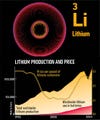
Lithium
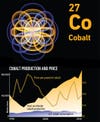
Cobalt
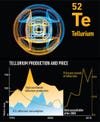
Tellurium
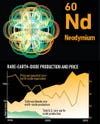
Neodymium
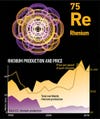
Rhenium
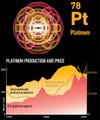
Platinum