Baby Born From 20-Year-Old Frozen Embryo
A New York woman has set a new record
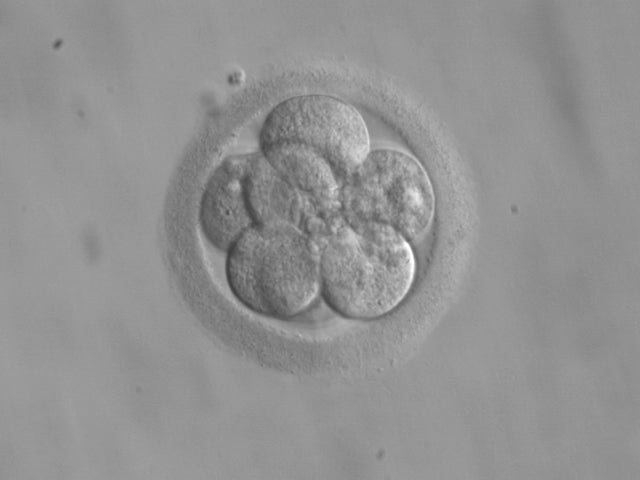
Cryopreservation was once the domain of sci-fi novels and B-rate movies. (Think Encino Man.) But it’s increasingly real, as the recent birth of a healthy boy from a frozen embryo created 20 years earlier shows.
The birth, which is reported in a study in the online edition of the journal Fertility and Sterility, sets a record. Until now, no embryo frozen for this long has resulted in a live birth.
The 42-year-old mother of the boy, who is not named in the study, began trying to get pregnant using IVF ten years ago. At the time, she and her husband received embryos from a heterosexual couple who had themselves undergone IVF.
That couple had anonymously donated their leftover embryos after the woman successfully gave birth. Thing was, they did so in 1990 – meaning that the boy just born to the woman in the study has a sibling out there somewhere who was conceived at the same time but is 20 years older.
Frozen embryos are something of a new ethical frontier in IVF — one that was not foreseen back in 1978, when Nobel Prize in Physiology recipient Robert Edwards and colleague Patrick Steptoe announced the birth of Louise Brown, the world’s first test-tube baby. Because of improved fertility drugs and lab techniques, the average IVF cycle now yields more embryos than it once did. Many of those end up in the freezer, where they keep remarkably well.
But the ethical and practical implications of keeping potential humans on ice are now becoming abundantly clear. Increasingly, divorced couples fight over frozen embryos. And the preservation of genetic material – embryos, eggs, and sperm — created by biological parents who may be well beyond their reproductive years gives others pause. In 2007, a mother froze eggs for use by her daughter, then seven years old, who was born with a condition that could make her infertile. If the daughter someday uses the embryos, she will give birth to her half-brother or half-sister.
And then there is the time lapse between conception and birth in this latest news item. Previously, the record-holder for longest time in the freezer was a baby born from an embryo that had been frozen for 13 years.
Mara Hvistendahl is writing Unnatural Selection, a book on reproductive technology, sex selection, and gender imbalance.