‘Sniff Detector’ Lets Those Lacking Mobility Drive a Wheelchair With Their Noses
Israeli researchers have sniffed out what could become a way to give paraplegics and those suffering from “locked-in” syndrome a...
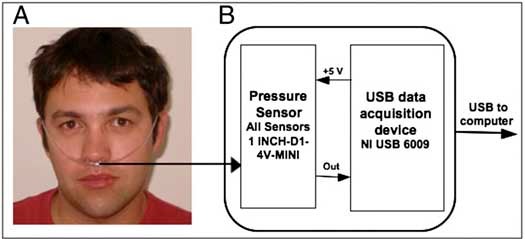
Israeli researchers have sniffed out what could become a way to give paraplegics and those suffering from “locked-in” syndrome a means to communicate with the outside world and even drive a wheelchair using their noses. Using a device that converts nasal pressure into electrical signals, the team has successfully enabled locked-in patients to write messages independent of stimulus and allowed paraplegics to effectively navigate an electric wheelchair.
The “sniff controller,” as it is known, is worn externally via a rubber tube not unlike the ones often used in hospitals for patients who need oxygen. The nasal device is not universal, as about a quarter of all people in a healthy control group were found to have insufficient volitional control over their soft palate, the part of your nasal passageway that lets you regulate the strength of your sniffs. But for those with sufficient soft palate control, the sniff controller gave test subjects a new degree of freedom.
The researchers started with a group of 36 healthy individuals on whom they tested the response time and precision with which humans can control their nasal pressure on a video game system that also measured their ability to with a mouse and a joystick. The team found that nasal control was just as reliable as mouse and joystick proficiency in those subject deemed to have good volitional control of their soft palates.
Encouraged, the team moved on to three patients suffering from “locked-in” syndrome, which allowed them to communicate using only their blinking eyes. Two of the three quickly learned to use a letter-choosing and word completion program that allowed them to initiate communication and expression (the third subject didn’t take to the controller, though its unclear if the issue is soft palate-related or due to some other influence).
The team also created an interface for controlling an electric wheelchair using the sniff detector (two successive sniffs in = forward, two successive sniffs out = backward, etc.) and tested it on ten healthy patients. Again, they found that after a bit of practice the control group could easily navigate the wheelchair, so they put a man paralyzed from the neck down in the driver’s seat. To their amazement, they found that after just 15 minutes a paraplegic can become quite skilled at navigating a wheelchair using the sniff detector.
Obviously these tests were conducted on a small group and further study and refinement is needed. But for those suffering from ailments that have denied them their mobility or their capacity to communicate, the sniff controller could provide a means for operating all kinds of devices that could improve quality of life.