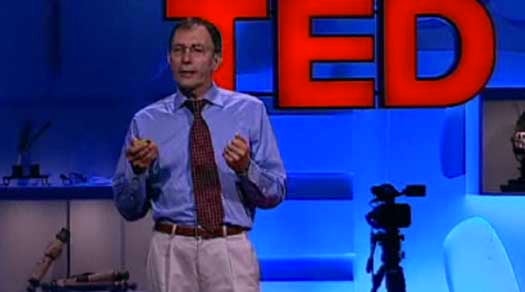
Yesterday, everyone got excited (PopSci included) at the idea, drawn from Kepler scientist Dimitar Sasselov's TED talk, that the Kepler planet-hunting mission had turned up 140 new "Earth-like" planets.
In a blog post today, Sasselov clarifies that that wasn't exactly what he meant. "At this time we have found only planet candidates . . . Planet candidates are just that: 'candidates.'" Meaning that while the odds of finding Earth-like planets remain strong -- and PopSci remains optimistic -- confirmation is, despite yesterday's hopes, still pending, as to whether the sightings are a) actually planets and b) actually Earth-like.
138 years of Popular Science at your fingertips.
Each issue has been completely reimagined for your iPad. See our amazing new vision for magazines that goes far beyond the printed page
Stay up to date on the latest news of the future of science and technology from your iPhone or Android phone with full articles, images and offline viewing
Featuring every article from the magazine and website, plus links from around the Web. Also see our PopSci DIY feed
Science is reinventing play, from extreme sports to gamification to ridiculous roller coasters to the playgrounds of tomorrow, and this issue is chock full of fun. Also, on a less fun note: Did global warming destroy my hometown?
how predictable. Should've known that the media would've changed 'earth-sized' planets to 'earth-like' planets. By that definition, we should be calling venus 'earth-like'
It is "earth-like" in that it's in the habitable zone (I believe) and is a rocky planet. It just has runaway greenhouse effect and is thus uninhabitable.
It's still a big deal because any exo-planets found up to this point have been gas giants. It sounds like the 140 candidate planets are rocky planets in what they think the habitable zone for the type of star they are orbiting would be.
I know I'm fighting with the browncoats.
If you listen to his presentation, he does use the word "Earth-like," but makes no mention of what actually classifies a planet to be considered "Earth-like."
It seems like this excitement is all about bodies that are comparable in size to Earth. He clearly states that no work has been done yet to determine their chemical composition or atmospheric conditions.
As an individual interested in technological and sciencetific advancement, I allow myself to be joyously optimistic. On the other hand, I feel that scientists should refrain from exaggerating discoveries. They should be at most cautiously optimistic.
To be fair, he never did claim that they were Class M.
To be honest,Dimitar Sasselov, jumps the gun and made this unilateral announcement without the knowledge of his colleagues/partners. Clearly an ethical infringement. A retraction now meant that he has been butt kicked by his co-finders.
Cooperation with American scientists, with huge funding budgets, carries the risk of dealing with self-centered opportunists who runs off with the discovers.
Even if there are 100's of millions of Earth-like planets in our galaxy these publications always suggest "We may not be alone" but always leave a major issue out. We still haven't ironed out the possibilities of complicated life evolving on planets that wobble on their axis. Life on these planets would have to differ greatly from Earths. Earth has the perfect proportioned moon to offset it's wobble, and the formation of our unique moon was a metaphorical crapshoot. If it is a general rule that life needs a somewhat stable climate to fuel evolution then Humanity may be a rare gem indeed. Talks of terraforming always seem to neglect how to stabilize an axis as well. So even if we find a planet that could potentially be very near to Earths conditions we may also have to account it's moons.