Multiple Myeloma By putting aside their competitive interests, two drug makers have discovered a cancer drug combo that was effective in 100 percent of patients during initial testing. KGH

The American Society of Clinical Oncology wrapped its annual conference this week, going through the usual motions of presenting a lot of drugs that offer some added quality or extension of life to those suffering from a variety of as-yet incurable diseases. But buried deep in an AP story are a couple of promising headlines that seems worthy of more thorough review, including one treatment study where 100 percent of patients saw their cancer diminished by half.

First of all, it seems pharmaceutical companies are moving away from the more cost-effective one-size-fits-all approach to drug development and embracing the long tail of cancer treatments, engineering drugs that only work for a small percentage of patients but that work very effectively within that group.

Pfizer announced that one such drug it’s pushing into late-stage testing is targeted for just 4% of lung cancer patients. But more than 90% of that tiny cohort responded to the drug in initial tests, and 9 out of ten is getting pretty close to the ideal ten out of ten. By gearing drugs toward more boutique treatments rather than broad umbrella pharmaceuticals that try to work for everyone it seems cancer researchers are making some headway. But how can we close the gap on that remaining ten percent?

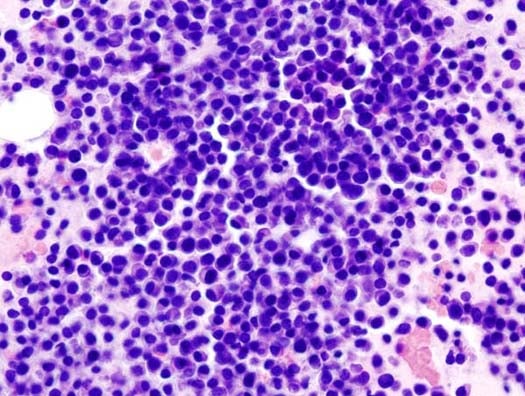
Ask Takeda Pharmaceutical and Celgene, two drug makers who put aside their competitive interests to test a novel combination of their treatments. In a test of 66 patients with the blood disease multiple myeloma, a full 100 percent of the subjects saw their cancer reduced by half. Needless to say, a 100 percent response to a cancer drug (or in this case, a drug cocktail) is more or less unheard of. Moreover, this combination never would’ve been tried if two competing companies hadn’t sat down and put their heads together.

Are there more potentially effective drug combos out there separated by walls of competitive interest and proprietary information? Who’s to say, but it seems like with the vast amount of money and research being pumped into cancer drug development, the odds are pretty good. And if researchers can start pushing more of their response numbers toward 100 percent, we can more easily start talking about oncology’s favorite four-letter word: cure.

[Yahoo News]

7 Comments

While I realize profit breeds invention, isn’t there a way to combine the ideas of innovation and social responsibility into a working economic model? I imagine a central store of information that can be ‘leased’ out to other companies in an effort to combine multiple research streams in a way mentioned in this article, with a percentage of profits from the final product relayed back to the original company. I may be wildly optimistic in this idea but I also know necessity breeds invention, sometimes dramatic, as well.

polymath, what you're think of is patent licensing and royalties. It'd done in many industries. Patents publish inventions/ideas and at the same time grant rights to produce for sale and lease to the assignee.

100%.... wow... thought this would only be possible with nanobots.

Oh, that is nice! Very, very nice!

See? Collaboration IS a good thing!

love the spam losers! its on every story. Who the even pays any attention to that?!? popsci needs a better message board moderator.
ANYWAY: this is great news. I have great fears about dying of cancer. I pray that by the time I get cancer it is just a simple visit to the doctor to get my cacner identified, prescribed a few drugs or nanobots and I am fine soon afterwords. Only to get in motorcycle accident on my super fast electric TT atuobike and die.

This is exactly why we need to get rid of the patent system as it stands. There are a ton of different ways we could rework the patent sytem to really expand the research potential of our scientists. One good thing would be to make researchers immune to patent restrictions until after their research is done and a viable product can be made using the combination of patents. Then let them battle out the pricing amongst their idiots I mean business people. Speedy research could cure cancer, stop companies like BP from destroying the world, and make similar stories to this daily events instead of rare and noteworthy.

Yes, something should be done to better circulate research. Once this is accomplished, the discoveries will increase exponentially!!!


July 2013: The Future Of Flight

The incredible innovations, like drone swarms and perpetual flight, bringing aviation into the world of tomorrow. Plus: today's greatest sci-fi writers predict the future, the science behind the summer's biggest blockbusters, a Doctor Who-themed DIY 'bot, the organs you can do without, and much more.


Online Content Director: Suzanne LaBarre | Email
Senior Editor: Paul Adams | Email
Associate Editor: Dan Nosowitz | Email
Assistant Editor: Colin Lecher | Email
Assistant Editor: Rose Pastore | Email

Contributing Writers:

Kelsey D. Atherton | Email
Francie Diep | Email
Shaunacy Ferro | Email

circ-top-header.gif
circ-cover.gif