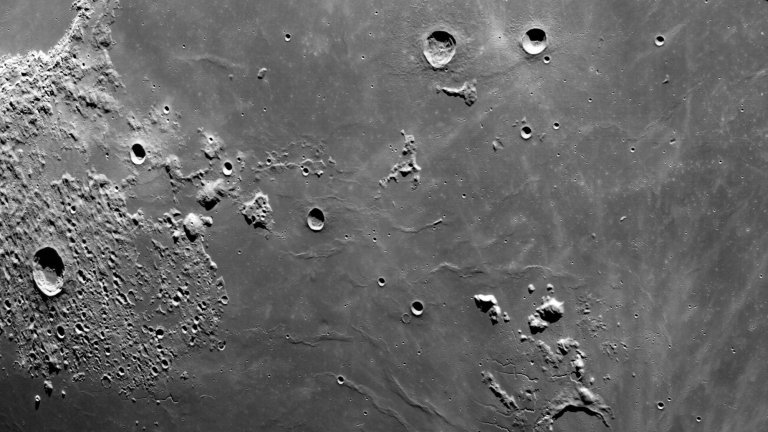
Collision Course It would take a moon-sized object to move the moon. NASA/JPL-Caltech

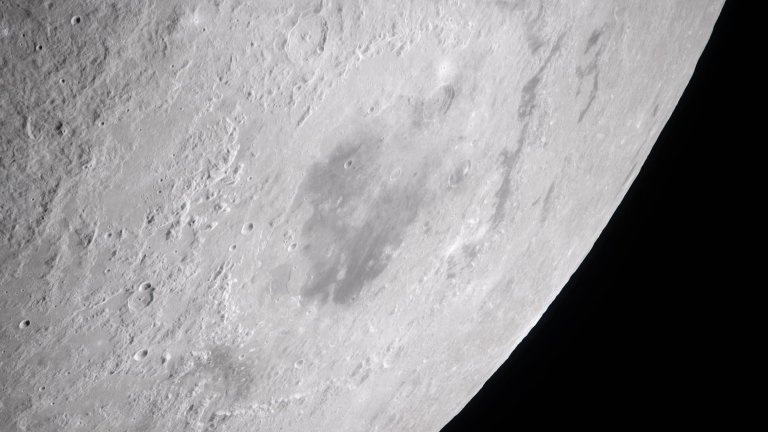
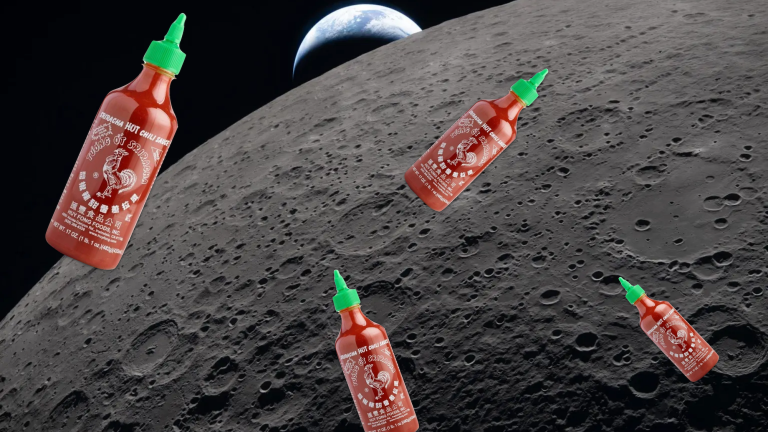
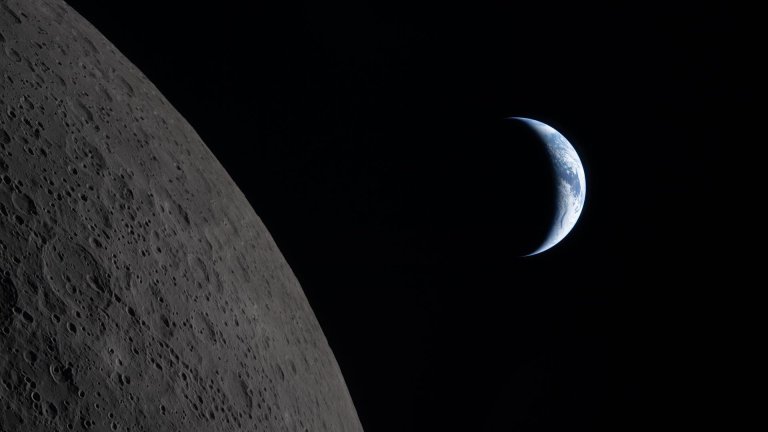
“If an asteroid hits the moon, it will just get another crater,” says Gareth Wynn-Williams, an astronomer at the University of Hawaii. It would take a moon-size object to move the moon, says Clark Chapman, a planetary scientist at the Southwest Research Institute, and most likely the moon wouldn’t survive. Hitting it with a much larger, denser object would be like whacking an egg with a golf club.

But let’s say that the moon and the thing hitting it will react like solid billiard balls. None of the known asteroids larger than 60 miles in diameter orbit anywhere near the moon. OK, how about if the largest known asteroid, Ceres—which at 600 miles across is roughly the size of California and Nevada combined—did manage to slip out of its place in the asteroid belt and set out on a collision course for the moon?

Hardly a budge, Wynn-Williams says. It’s the equivalent of a four-year-old trying to knock over an NFL lineman. The moon orbits the Earth at some 0.635 miles per second. This orbital momentum is so great that it would overwhelm the impact force of a collision and just continue zinging around the planet.

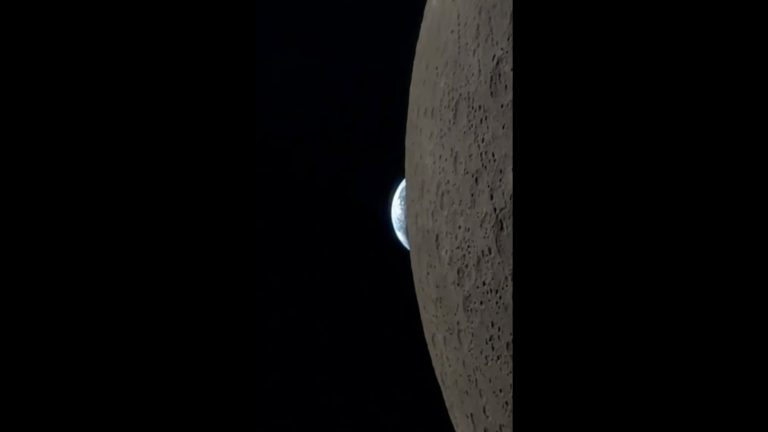
By now it should be clear that the moon is staying put, but what could send it toward Earth? At minimum, you’d need an object of the same size and density as the moon to hit it at the same speed, and in the opposite direction of its orbit. This could stop the moon in its tracks, and it would fall onto Earth. Even if the collision only pushed the moon into a lower or less-circular orbit, that doesn’t mean we would escape unscathed, though: If its new orbit halved its current distance from the Earth, ocean tides would get about eight times as big, Wynn-Williams says. “A lot of New Yorkers would get very wet.”

9 Comments

I believe that there are hyperbolic orbits that the moon could be pushed into where the moon could hit the earth after being hit away from the earth.

Let's put us some knowledge here. All Newtonian (i.e. conic section) orbits with the same total energy have the same semi-major axis, inasmuch as this is defined for non-bound (parabolic, hyperbolic) orbits. This is dynamics 101. If the moon is treated as a point particle, there are events which could alter its orbital energy to move it onto an Earth-intersecting trajectory. But it is not a point particle. It's a big lump of rock. The Moon currently orbits well outside the Hill sphere of the Earth, which is good news for anyone wishing to operate a satellite. If the Moon were to approach significantly closer to the Earth, this state of affairs would no longer obtain. When the Moon enters the Roche lobe of the system, tidal forces overwhelm the mechanical strength of lunar material, and rip it to pieces. Earth joins Jupiter, Saturn et al as a ringed planet. Perhaps random perturbations drive some of the chunks onto Earth-intersecting trajectories, to general consternation, but de-orbiting the Moon in toto is not physically possible.

You should insert a decimal point in front of the 600 miles per second for the moons orbital speed. The actual orbital speed is .635 miles per second but more importantly the speed of the moon within our solar system is 67,062 miles per hour
or 18.6 miles per second which is of course the same as earth. The speed stated above would be 2.1 million miles per hour which would mean that we wouldn't, in the near future, be able to even land on the moon nor would the moon be in an earth orbit of even still in our solar system.

Astronaut Mike Collins said that when they were on their way to the moon, there were so many spacecraft coming to earth that it looked like rush hour on New York's 5th Avenue. If this is the case then the aliens, with their anti-gravity technology, will deflect any asteroid that endangers us. So it is nothing to worry about.

That is nice , but as I believe God is the creator and the Quran tells that Sun and moon continue in an orbit to their destiny:
"Allah is He who raised heavens without pillars that you can see; Then He established Himself on the throne; And He subjected the sun and the moon (to his law); each one runs its course for a term appointed."

finally , All things bow down to Allah

Ah, what a nice cute little religious quote. But like most quotes from holy books and prophesies in general it is so vague that it could be interpreted to mean anything you want it to mean. Are the sun and the moon intended to orbit peacefully until whenever? Or do they have appointed terms that might end in collisions? How long are the appointed terms? Have they run out already? What about the Earth? Why isn't its orbit mentioned? Could that imply something ominous?

Here we go again... Insinuating religion (One person's view, but it must be the right one. Right?) into a scientific discussion again. Tell you what. Don't crash our discussion. We won't crash your bible study. M'Kay?

I have quotes for you too.

"Religion is regarded by the common people as true; by the wise as false, and by politicians as useful." -Lucius Annaeus Seneca (4 BCE - 65CE)

"This would be the best of all possible worlds, if there were no religion in it." -Thomas Jefferson

"The Bible is not my book, nor Christianity my profession."
-Abraham Lincoln

A religious troll on a science website, can't they come up with something a little more novel?

I really hope ahmad dabour is joking... but from the user name, I don't think he is. I'm sorry but religious banter on this website makes you sound ignorant and frankly, uneducated and stupid. Take your religious views to the appropriate place because most of the people here have no time or interest to care.


June 2013: American Energy Independence

Five amazing, clean technologies that will set us free, in this month's energy-focused issue. Also: how to build a better bomb detector, the robotic toys that are raising your children, a human catapult, the world's smallest arcade, and much more.


Online Content Director: Suzanne LaBarre | Email
Senior Editor: Paul Adams | Email
Associate Editor: Dan Nosowitz | Email
Assistant Editor: Colin Lecher | Email
Assistant Editor: Rose Pastore | Email

Contributing Writers:
Rebecca Boyle | Email
Kelsey D. Atherton | Email
Francie Diep | Email
Shaunacy Ferro | Email

circ-top-header.gif
circ-cover.gif