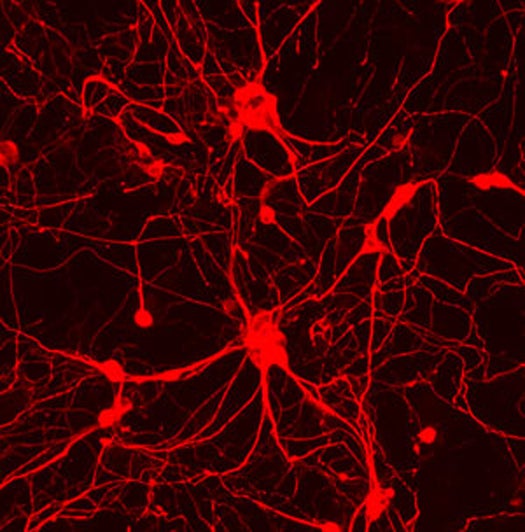
For the first time ever, scientists have induced skin cells to transform directly into neurons. Previously, for mature cells to change type, scientists had to first transform the skin cells back into stem cells, and then grow the stem cells into a different adult cell type. By cutting out the middle step and speeding up the process, this new technique drastically increases the feasibility of using cell reprogramming to treat diseases like Alzheimer's disease and ALS.
Writing in the journal Nature, Stanford University researchers described how they induced the change by inserting only three genes into cultured skin cells. Once those three genes activated, the skin cells converted into fully functioning nerve cells that even formed synapse connections with the other converted nerve cells.
By speeding up the creation of nerve cells, this advance circumvents the controversy and difficulty of experimenting on harvest stem cells. Rather than using embryo-derived stem cells, scientists can now just create any cell type they want from whatever cells they have on hand.
This discovery also alters how scientists think of stem cells. Before, scientists thought of stem cells as fundamentally different, and far more plastic, than fully mature cells. By showing that a mature cell can convert into another type of adult cell with only a few gene changes, scientists may have to re-conceptualize stem cells as just another cell type.
But while this development is certainly impressive, it does not solve any of the problems associated with utilizing cell transformation as an actual therapy. It lowers the complexity and challenge of creating new cells, but scientists and doctors still haven't solved the riddle of how to deploy these newly crafted cells in a manner that actually cures a disease.
Five amazing, clean technologies that will set us free, in this month's energy-focused issue. Also: how to build a better bomb detector, the robotic toys that are raising your children, a human catapult, the world's smallest arcade, and much more.


Online Content Director: Suzanne LaBarre | Email
Senior Editor: Paul Adams | Email
Associate Editor: Dan Nosowitz | Email
Assistant Editor: Colin Lecher | Email
Assistant Editor: Rose Pastore | Email
Contributing Writers:
Kelsey D. Atherton | Email
Francie Diep | Email
Shaunacy Ferro | Email
I need to start collecting the skin I scrape off my body to grow brains for my cyborg army.
For people with a neurodegenerative disease this is amazing news.
If they can streamline the process you may be able to convert a skin graft into a treatment for Parkinsons or ALS or maybe even Alzheimers.
Also as someone with a spinal injury I am excited to see if this can be used to assist people that have nerve damage through trauma. At the least it should make nerve tissue experimentation easier.
I would also like to see if this reduces the likelihood of developing tumors that can be associated with some stem cell experiments ?
that's amazing and you could make a lot of brain cells because most house hold dust is dead skin cells each second you shead 1000 skin cells but they may be talking about live skin cells not dead.
Wow. Enough said.
Kudos to Dr. Wernig and his folks at Stanford! This is impressive work.
Just think how much farther along (and w/ fewer ethical horrors) they could be if they would have concentrated on adult stem cell research to begin with.
Wow. Thats. .amazing. I'm pretty excited about majoring in Biochemistry.
The question is how do you convert Herpes cells back to foreskin cells?
This is truly remarkable....I'm worried about is how long it will take this procedure to actually be used in the general public....I read aobut things like this very often. However I have yet to see someone cured of cancer because of some nanoparticle treatment that attacks only the cancer cells. It seems like all we do is hear about stuff like this. I never see it in practice. We need to start saving lives and improving lives with this stuff..I'm also worried about how expensive this procedure would be once it was made available....There's no use in having things like this if they are only available to the richest in society or if your insurance company just happens to cover it.
For people with a neurodegenerative disease this is amazing news.If they can streamline the process you may be able to convert a skin graft into a treatment for Parkinsons or ALS or maybe even Alzheimers.
http://www.cirurgia-plastica.com/aumento-peniano/