The geological time scale, with its familiar Cretaceous, Cambrian, and Eocene periods, works great as a calendar for the history of the Earth. Indeed, the different periods only cover the 3.8 billion years of life on Earth, with everything before that time lumped into one nondescript eon called the Hadean. But for some geologists, that lack of specificity simply won't work any more.
Frustrated by referring to Hadean-era events with vague phrases like "around the time of Moon formation" or "shortly after Earth cooled", four scientists, including two from NASA, have chopped up the Hadean into distinct geologic periods, and even extended the time scale back to the formation of the solar system, with a new eon called the "Chaotian."
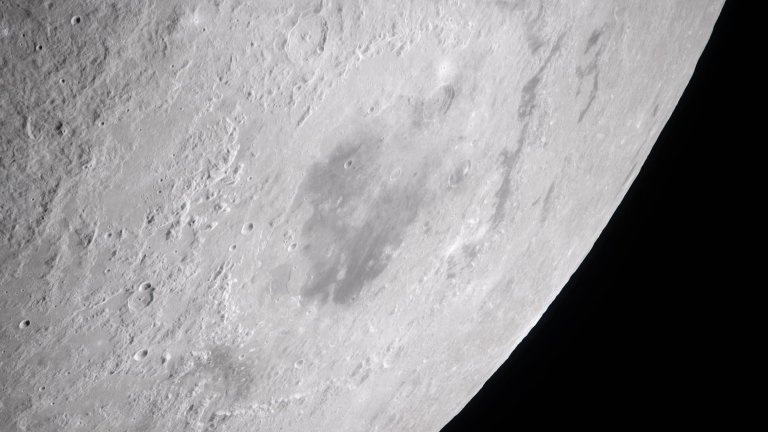
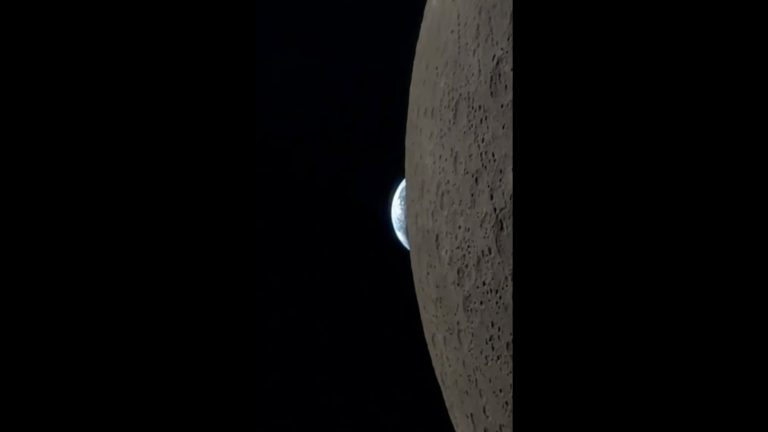
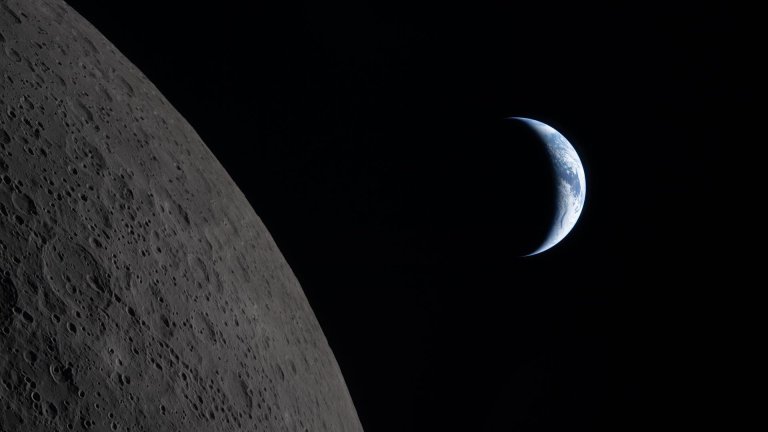
Under the new scheme, the Hadean Eon begins when Tellus, the proto-Earth, gets smacked into by Theia, a proto-planet absorbed into the Earth. This impact caused the formation of the Moon, and marks the beginning of Earth at its current size. Everything coming before that event takes place in the Chaotian.
During the Chaotian, the planets coalesce out of a giant disk of hot dust, cool, and form the solar system we know today. The Chaotian is also broken down into bombastic-sounding periods like the Hyperitian and the Titanomachean.
If the names seem a little out there, it's because they're drawn from classic Greek and Latin literature. Since no scientist can avoid naming something after Greek myths, the geologists drew the names from Hesiod's Theogony, Aeschylus's Prometheus Bound, and Thamyris's Titanomachia. Which is to say, NERDS!
The scientists hope that the new time scale will enable geologists studying the early history of the planet to write more accurate papers. For the rest of us, just be happy that there's a period of our history literally named "Clash Of The Titans."

138 years of Popular Science at your fingertips.
Each issue has been completely reimagined for your iPad. See our amazing new vision for magazines that goes far beyond the printed page
Stay up to date on the latest news of the future of science and technology from your iPhone or Android phone with full articles, images and offline viewing
Featuring every article from the magazine and website, plus links from around the Web. Also see our PopSci DIY feed
Science is reinventing play, from extreme sports to gamification to ridiculous roller coasters to the playgrounds of tomorrow, and this issue is chock full of fun. Also, on a less fun note: Did global warming destroy my hometown?
Why is the early Mesohadean called "Canadian"? It would be weird to learn that during the Canadian, the rocks were such and such. I mean, I'm as Canadian as possible (under the circumstances) but it seems a bit odd to me.
"Under the new scheme, the Hadean Eon begins when Tellus, the proto-Earth, gets smacked into by Theia, a proto-planet absorbed into the Earth. This impact caused the formation of the Moon, and marks the beginning of Earth at its current size. Everything coming before that event takes place in the Chaotian."
I favor this scenario over one as remote as some Planet size moon the size of Mars stuck in a Lagrangian point before breaking loose.
The Mars size Planet that hit earth was Mars, and Mars didn't hit earth it only glazed it, it was Mars large moon that actually struck earth.
Here is the reason for my insanity.
Mars highly elliptical orbit during the formation of our solar system causes the Earth that is moving at apx. 30 km/s to glaze Mars moving apx. 24 km/s as they orbit the sun resulting in the 10,600 km long by 8,500 km wide crater on Mars northern hemisphere. Mars moon impacts Earth at apx. 6 km/s (30km/s - 24 km/s) as a result some of the mass from Mars northern hemisphere plus the mass of the Martian moon that slammed into Earth added to the Earth's mass with some of the impacted debris eventually forming Earth's Moon.
Note the velocity of the impact between earth and the Mars Moon may have been even greater because the relative orbital velocity of Mars and Earth changes as it orbits the sun. That makes it around the same theatrically velocity as Theia's.
See
www.picasaweb.google.com/shineinnovations/Miscellaneous#5392938259952653314
The problem with your theory is we are steady in our orbit around the sun, so the question you should answer would be how would we get close enough to mars for it's moon to smack into earth.
what, there was a Canadian Era, you're telling me that's Greek/Latin, i think there was a Canadian patriot involved in the naming process, that devilish bugger
lol you called scientists nerds on a science website
So either that chart, or the headline is wrong. Seems like the headline should say Chaotian EON...Era is apparently subset of Eon.
I agree, I have never heard of the Canadian Era. That's a riot even if it is just a coincidence.
from Kent, OH
I didn't know that Canada was a country...:P
huh
I'm getting a bit annoyed where anybody with a decent education or ability to program or is automatically referred to as a geek or a nerd by this magazine. Its like being in high school still. Time to grow up. I think these people deserve more respect