The brief period of radio silence during the switchover makes it possible to listen for pulsars and other space entities that are otherwise drowned out
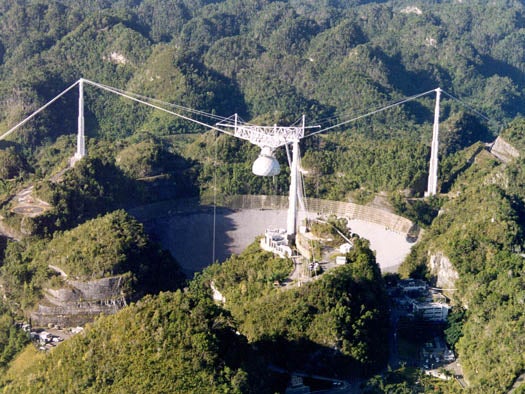
No HBO. That Would Cost Extra The Arecibo radio telescope courtesy of NASA

While most of the world looked forward to the switch from analog to digital TV for the sharper picture and clearer sound, astronomers around the US anticipated the changeover period for a totally different reason: clarity. In the brief period between the removal of analog television signals and the assignment of those frequencies to other devices like cell phones, astronomers will get their first look at a time in the universe that has been obscured from telescopes since Wally and the Beav roamed the airwaves.

Since the days of Philo Farnsworth, radio waves have carried television signals at the frequency of 700 to 800 megahertz. The density and power of those television signals drowned out any radiation from distant stars of the same wavelength.

But now, with the television signals turned off for the switch to digital, astronomers have added a special receiver to the Arecibo radio telescope that enables searches at these previously obscured wavelengths. In particular, astronomers hope to find pulsars, super-dense stars that emit radio waves at regular intervals.

Those astronomers better step on it, though, as cellphone companies have already taken over most of the wavelength space between 700 and 800 megahertz. Before long, the signals from those distant stars will once again fade away behind the noise of human traffic, with the signals from entire galaxies failing to break through the barrage of texts and app store downloads.

[via New Scientist]

5 Comments

Maybe we can get some people in Congress that know the importance of radio waves and we can have better laws on restricting there uses.

Thus the reason we need to build another Arecibo on the far side of the Moon. More than likely, if there are any aliens out there they are probably using the same frequencies as us... but we can't hear them because we're pumping out too much noise.

@sirknala i was thinking that how about we go to the moon and make a SETI site there so that we can listen to outer space easier. Now when will we make a moon colony

Moon advertising will probably come first if the corporate beast has it's way.

yep

Popular Tags

Regular Features

  • The Doctor Is In with Isadora Botwinick | Weird and wild stories of the human body, health and disease
  • Sex Files with Susannah F. Locke | A broad view of new research and ideas in the sexiest of the hard sciences
  • Science Confirms the Obvious with Laura Allen | The research that makes us say "duh"


Download Our iPhone App

Stay up to date on the latest news of the future of science and technology from your iPhone with full articles, images and offline viewing


Follow Us On Twitter

Featuring every article from the magazine and website, plus links from around the Web. Also see our PopSci DIY feed


Become a Fan On Facebook

Share links with friends, comment on stories and more


December 2009: Best of What's New

In our December issue, Popular Science names the 100 best innovations of the year: bombproof wallpaper, self-parking cars, the fastest helicopter, and 97 more. Plus inventor profiles and videos.

Check out the best of what's new here.

Popular Science Photo Pool


Share your photos in the Pop Sci pool at www.flickr.com!
tags_sprite.png
POP_embeddedForm_cover_May09.jpg