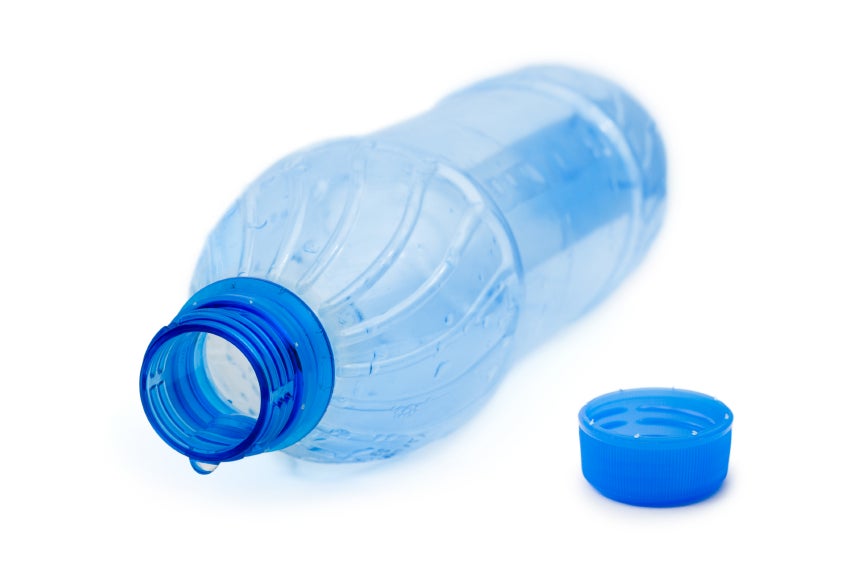
Plastic. It’s the spring in your tennis shoes, the sheath on your burrito, the skin of your air mattress . . . And, unfortunately, it could also be the hormone disruptor in your endocrine system. This is just one potential danger highlighted in the most recent issue of the journal Environmental Research, which includes a special section showcasing six new studies of the effects of plastics and plastic ingredients on the body and the earth.
The culprits—some of which have already been circulating in the news recently—are phthalates, which can disrupt testosterone, Bisphenol-A, which mimics estrogen, and PBDE’s (Polybrominated diphenyl ethers), a class of flame retardants, which interfere with thyroid hormone.
The six studies look at everything from the concentration of plastics in the ocean, to the similarities in the way humans and rodents respond to phthalates. Two articles give some evidence that fetal exposure to Phthalates might affect human male genital development the same way it does developing rat—shortening the distance between the genitals and the anus, while others look at the effect of some of these chemicals on the rodent brain.
So far there is less evidence that these plastics harm adult humans, but much more that they could be harmful for fetuses, infants and children. Canada banned the use of Bisphenol-A in baby bottles earlier this year, and while the United States has not banned the substance, the FDA has recognized it as being of “some concern” to developing children. Phthalates, used to soften PVC plastic are restricted in some states. And PBDE’s have been banned in California and several other states.
This research reiterates that plastics are all over us—filling the Pacific Ocean, and lingering in the blood of ordinary people, and remind that the door has not been closed on assessing and revealing the potential dangers of these compounds, which have become so ubiquitous on this earth.
Via PhysOrg
138 years of Popular Science at your fingertips.
Each issue has been completely reimagined for your iPad. See our amazing new vision for magazines that goes far beyond the printed page
Stay up to date on the latest news of the future of science and technology from your iPhone or Android phone with full articles, images and offline viewing
Featuring every article from the magazine and website, plus links from around the Web. Also see our PopSci DIY feed
Science is reinventing play, from extreme sports to gamification to ridiculous roller coasters to the playgrounds of tomorrow, and this issue is chock full of fun. Also, on a less fun note: Did global warming destroy my hometown?
This type of research is where I want to spend my tax dollars. We need to be more careful of what is allowed in our food, water and air.
This article is helpful in the fact that it brings these hazards to everyone's attention. However, it is practically irrelevant and just causes worry because it does not tell us how to avoid these problems. If people read this now without knowing how to avoid it, then later on (when they discover how to avoid the danger of phthalates, BPA, and PBDE's) it will be useless. Then the majority of society (or those that have read this) will use their ignorance as bliss because if they have not been affected seriously by these conditions as of now, then they probably will not care. This is the wrong mentality because this is a serious issue. Information like this should not be released until a way to avoid the danger or counter-act it has been approved.
Anyways, I suggest that you just use a tin or aluminum container to drink out of, or even better, a glass jar. These come in portable forms just like your trendy BPA bottles (by the way, don't drink pop. It's horrible for you too). All of these are safe alternatives and help, in atleast one way, of avoiding this "plastic age". By the way, use paper bags, recycle, eat well, exercise, and work hard. Ride a bike to work every now and then. I understand that everybody has different genes, but this obesity epidemic will kill the majority of the population before this plastic issue does. You do not have to be rail thin to be healthy, stop reading cosmo and crap like that. It's all subjective, take a stand for yourself.
If it is not one thing killing us it's another, right?
<3
bver2 wrote a long story. but i agree with that person. about everything. about being obese. kids these days should not be fat. and u know who's to blame their parents (exept if they have that disese where the gain wait and the can't help it). but back on topic. we should be worned about how to avoid this.
WHOO HOO
Seriously? You're going to tell me I should be worried about this based on six studies, none of which actually demonstrated a statistically significant problem? In other words, after six studies no one really knows if it's a problem or not. All you've given us is innuendo and some anecdotes about Canada banning a substance used in the production of some plastics and the FDA taking a look at it. Could we have some cold hard facts please? Statistics? Or at the very least, a disclaimer like "This conjecture-filled article is short on facts, but we'd like you to know that we're worried and we think you should share our anxiety."
I agree with the three R's, that is Reuse, Reduce and Recycyle.
But why do these plastic containers still continue to be used by manufacturers of consumables like food and drink? If it would be enforced that each and every container should be a different safer one then all will be well for us including the manufacturer, as the cost (if higher) would probably be absorbed by us - the consumers.
But if push should come to shove, wherein a new "container" would be developed that would push the prices of these products to a higher level than what we are accustomed to, would majority of the consumers still patronize the product?
Unfortunately, most consumer's preferences are not geared toward sacrificing price in behalf of saving the environment or a "potential" threat that has not been proven to be completely true. Majority of consumers still take into account the price of the item/s not because they are being self-destructive or they hate the environment, it's maybe because they have no choice but to spend on the cheaper alternatives.
Until there comes a time that certain containers are produced that are environmentally friendly, non-harmful for us and are CHEAPER or has a cost that is roughly EQUAL to what is being used right now, until then, this "status quo" will be acceptable by most people.
The way I see it, is it's all about costs and stuff like that aside from other "intangibles". But, I believe that science and technology would soon "remedy" this problem and when that time comes.... like the song goes "oh...what a wonderful world...."
What have we done.....we should have stuck to glass.
Just use rubber on other objects.......
its so sad :'(
The article is rather populistic. I really would prefere more substance as this IS a science magazine after all.