Could its unusual behavior herald a new ice age?

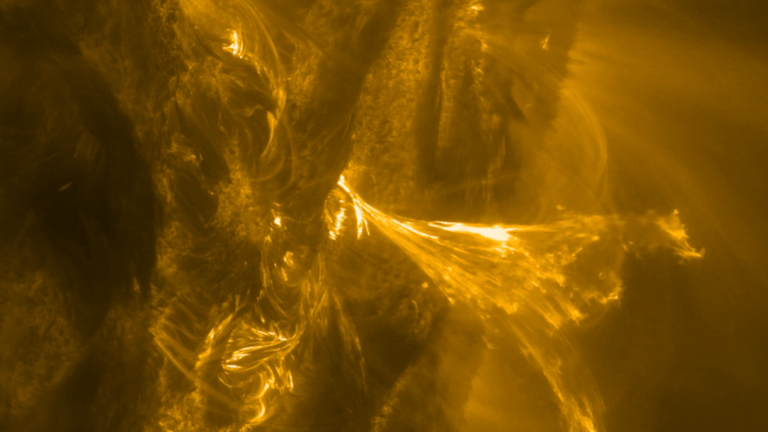
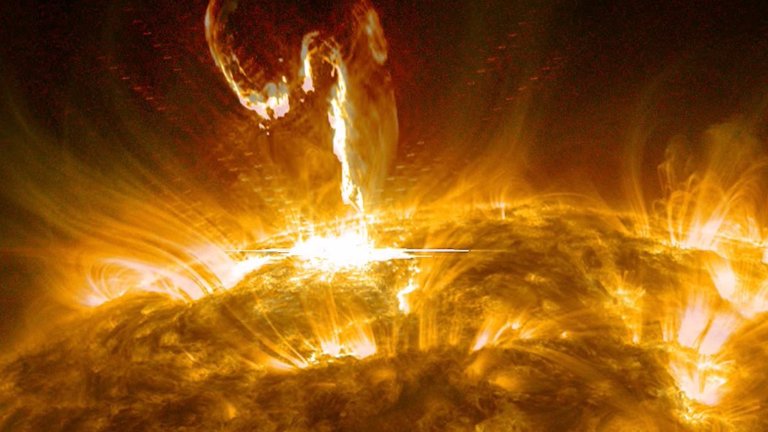
The First Cycle 24 Sunspot NOAA

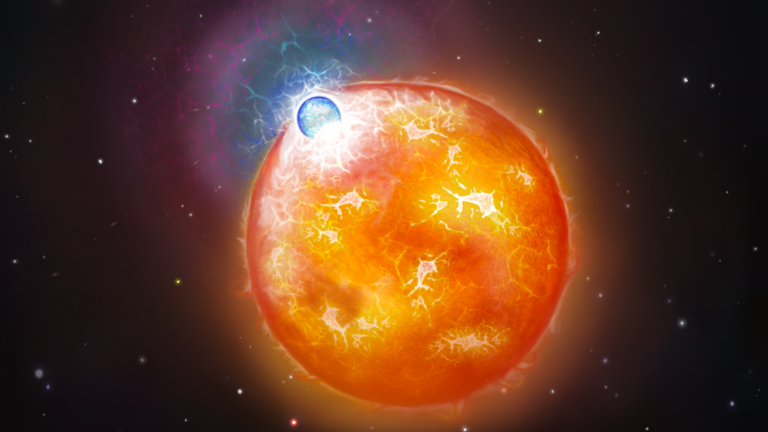
For about 50 years from roughly 1650 to 1700, the Sun took a break from its typical sunspot activity. That phase of solar rest coincided with what we now refer to as "The Little Ice Age" -- a period of cooling on the Earth that resulted in bitterly cold winters, particularly in Europe and North America. Scientists attribute the Little Ice Age to two main causes: increased volcanic activity and reduced solar activity.

Could it happen again? And are we headed there now?

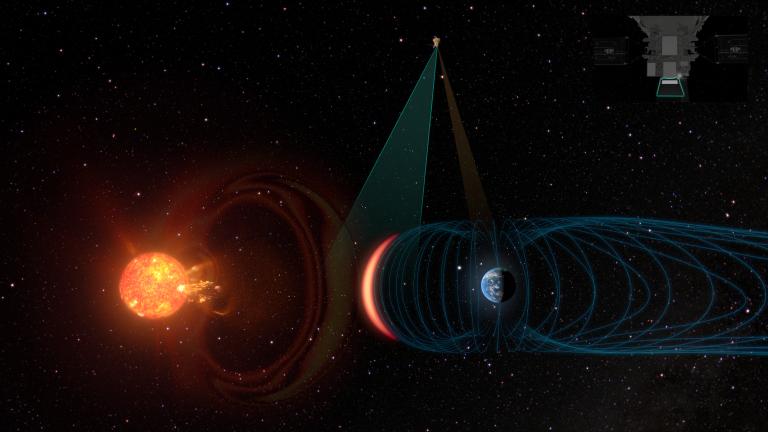
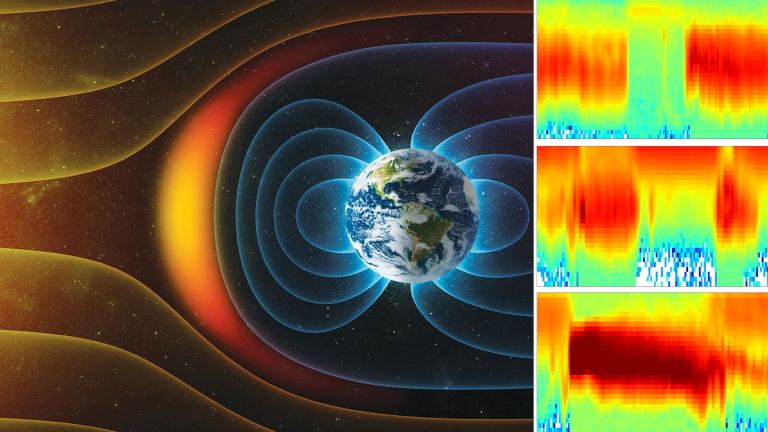
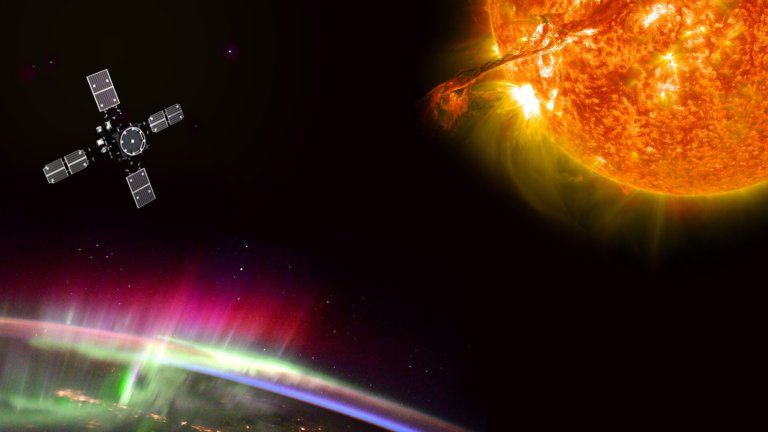
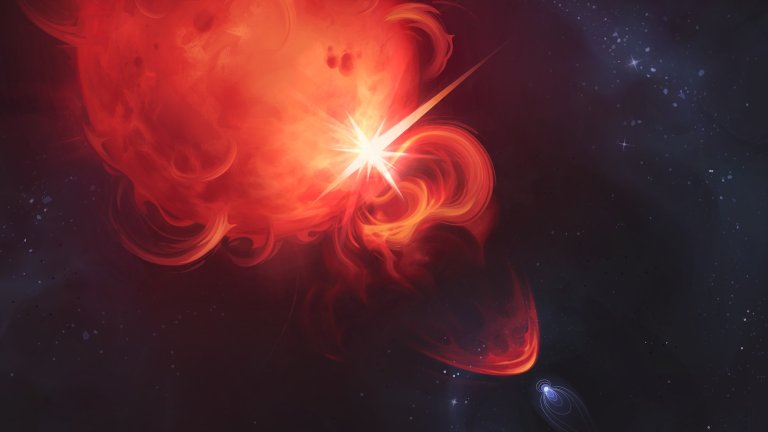
The term "solar activity" refers collectively to sunspots, solar flares, and solar eruptions. Together, these phenomena make up the "space weather" that alters interactions between Earth and its atmosphere, causing potential disruptions to satellites, communications systems, and power grids. Varying levels of solar activity also cause significant changes in atmospheric circulation patterns, which can affect the weather and climate on Earth.

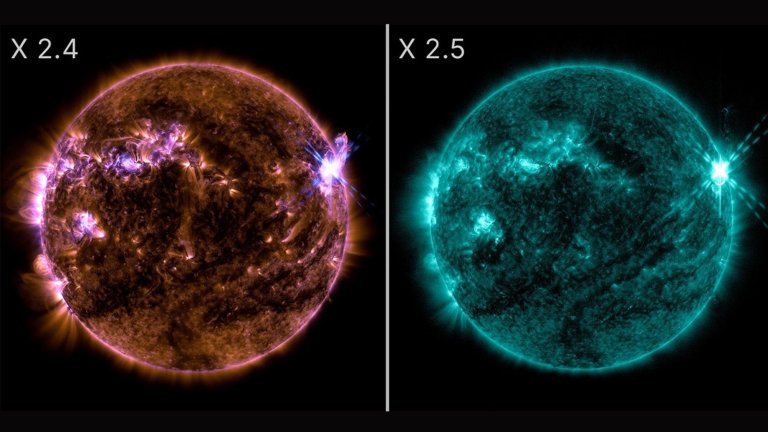
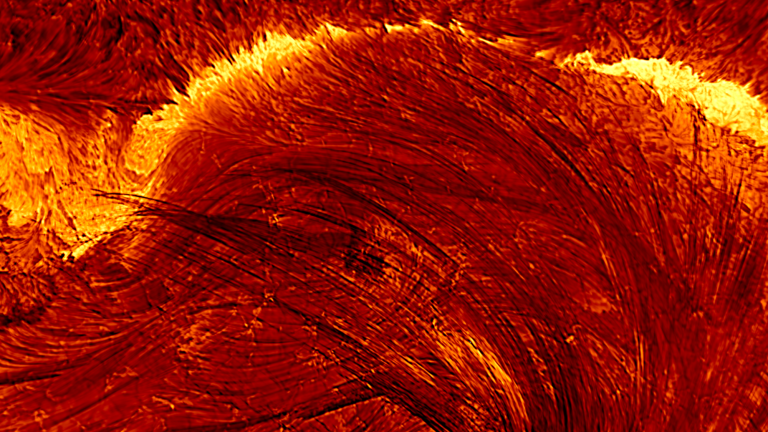
Solar cycles, which last an average of 11 years, are driven by the number, size, and placement of sunspots -- cooler, darker spots on the Sun's surface where intense magnetic activity occurs -- on the Sun's surface. Each cycle is marked by a solar minimum and a solar maximum, meaning the approximate time in the cycle when the least and greatest amounts of solar activity occurred. During the solar minimum, sunspot activity diminishes, and during the maximum greater numbers of sunspots appear. As one cycle winds down and another begins, sunspots from both cycles can be seen simultaneously.

By late 2007, Solar Cycle 23, which began in 1996, was decaying to low activity levels, and NOAA forecasters predicted that Solar Cycle 24 would begin in March 2008, plus or minus six months. Indeed, the new cycle's first sunspot appeared in January 2008 -- its high-latitude location a clear sign that it was part of the new solar cycle. But in the months that followed, there was a marked decrease in sunspot activity, spawning questions about whether we could be headed into another little ice age.

"Everything we're seeing now we've seen the Sun do before, and it still went on to produce a normal solar cycle," said Doug Biesecker, physicist at NOAA's Space Weather Prediction Center in Boulder, Colorado.

After a nine-month lull in solar activity, a batch of five sunspots appeared beginning on October 31, 2008, four of which belonged to the new cycle. And according to Biesecker, so far this year, two sunspots appeared for a total of four days -- one was a Cycle 23 sunspot and one a Cycle 24. "You always get lots of days with no sunspots, and at solar minimum you almost always see sunspots from the new cycle at the same time you're still seeing sunspots from the old cycle. This overlap phase can be just a few months, but it can be as long as two years," he said.

Biesecker says that the longer Cycle 23 drags out, the more we will hear about how the Sun is going quiet. "If you go back to the early 1950s, that solar minimum was very similar to the one we're going through right now," he said. "But it was followed by the largest solar cycle on record. So just because the Sun is quieter than it's been in awhile doesn't really tell us where it's going to be in the future."

Tom Woods, Associate Director for Technical Divisions at the Laboratory for Atmospheric and Space Physics (LASP), concurs. "Typically during a solar minimum you will have one or two months with no sunspots, so what we saw in 2008 is typical of most solar cycles," he said.

But Woods points out that there are other indications, aside from sunspot activity, that Cycle 24 may be different. First, the magnetic field at the Sun's poles is about 40 percent lower than it normally is at solar minimum. "If you look at the last time the polar field was that weak, it goes back to the early 1800s during a time called the Dalton Minimum, when we had a low solar activity cycle," he said. The Dalton Minimum lasted from about 1790 to 1830 and coincided with a period of lower-than-average global temperatures.

In addition, Woods says that the solar wind speed is currently lower than normal. But does this mean there will be a big change in the solar cycle? "We don't really know, but we're waiting and watching," he said. "This new cycle could be anomalously low or it could be normal."

Although Cycle 23's 12-year length (it began in 1996) isn't outside the normal range, it might help explain why Cycle 24's activity level is low. Biesecker points out that, based on the previous 22 solar cycles, researchers now know that the longer the previous cycle, the lower the next cycle will be in terms of activity. "So we're definitely edging into that territory now," he said.

According to Woods, even a smaller solar cycle could induce some cooling on Earth. "Not enough to offset the greenhouse gas global warming effect," he said, "but enough to potentially slow it down for a few years." The solar cycle's effect on global temperatures is only about 1/10 of a degree, whereas the greenhouse effect over the past 30 years has been about a full one degree change, Woods said.

Even so, Woods says it's unlikely that we're headed into a "Little Ice Age" scenario. "It's probably unlikely that we will go into a phase where we don't have any sunspot activity for 50 years. We can't eliminate the possibility, but I would say the probability is not high," he said.

"For that to happen, we would have to see no pickup in the Cycle 24 sunspots, but we're seeing a reasonable amount of new activity," said Biesecker. "There is no model we're aware of that can predict that we're going into an ice age -- it's an actual physical limitation of our current understanding."

Want to read more articles on the military, aviation, and space? Subscribe to Popular Science and enter to win $5,000!

24 Comments

The impacts of the sun's weather are far reaching; I was in the Quebec blackout of 1989, that was supposedly caused by the suns weather and I remember how amazed I was that such a 'weak' force could have such a large effect.

The sun affects us in ways we do not fully understand.

Fabulous article.

The sun. Worship it.

It's the only one we have...

Woomsye, you can worship me, I MAY send you $5 for this, sun will certainly not.

DarkFx

from Winnipeg, Manitoba

Ever seen the movie "Sunshine"?

Mike Cook

from Kent, WA

The Maunder Minimum effect can mean big cooling for the Earth, a process that already is underway. Despite what you read in the newspapers, according to the Intergovernmental Panel on Climate Change temperatures in the USA have declined steadily since 1998. Our average temp is down 1.5 degree F., which effectively wipes out the warming signal seen in the late 20th century.

Dr. Henrik Svensmark is the genius who established the strong correlation between sunspot activity and Europe's climate, as well as suggesting a model for why it happens. Don't expect him to get a Nobel Prize any time soon because global warming zealots have way too much at stake not to circle their wagons, destroy any critics pre-emptively, and generally keep up their campaign of misinformation and distorted reasoning.

Looks like we better hurry up and pollute more to counteract the effects of the global cooling cycle.

It amazes and distresses me that our government scientists continue to state that there is nothing unusual with the Cycle 23/Cycle 24 transition.

At present, Cycle 23 is one of the longest on record, second only to Cycle 4 at the start of the Dalton Minimum. The Dalton Minimum was one of the coldest periods in the last 200+ years and a repeat would be most unwelcome.

So, are the US government scientists just whistling past the graveyard, or do they really believe that everything is normal, or is there some political agenda?

In any case, the situation is certainly worrisome. Let's talk in 6 months.

solarcycle24.com for some great science on the sun. SOHO site very interesting too. The Sun has a much larger impact on the earth than AGW experts admit.

Y2K and AGW are equal

I find this article to be a bit misleading, although judging by the comments it is not succeeding in that respect.

There has been no 'batch' of sunspots. There have been five individual sunspots, and that includes the two mentioned for this year, spread out over time since 10/31. They have been pathetically meager in size and duration.

I have a little trouble when someone tries to suggest that the sun has been 'more active' than, say, the Maunder minimum. Looking at some of the sunspots over the last year, I don't think the technology of the 1645-1715 period would have ever detected them. Thus, modern numbers look higher in comparison. (The same thing is true of hurricanes. If not for satellite observation, some of the storms in the last few years would have gone virtually unnoticed before the 1960s, and thus not counted in the average number of hurricanes from 1940-1960).

The article also leads you to believe that forecasters were only three months off on the start of Cycle 24. The original prediction was by NASA and predicted the cycle to start late 2006, missing it by at least two full years. NOAA revised the estimate when it proved to be wrong. I think it's fairly safe to say that the sun has entered into a phase so far out of the norm that NASA's and NOAA's models can not predict solar activity with any accuracy.

Finally, several studies have shown that the sun has been more active since 1940 than any period over the last thousands of years. Any effect of this on the earth's climate has been discounted because the sun's radiance has not greatly changed. Does anyone else feel this gives short-shrift to all the other associated solar weather phonomena, and the potential effects they may be having on our climate?

Mike Cook

from Kent, WA

Well, jtom, Henrik Svensmark over in Belgium has proposed (I hope I am getting this right because it is complicated)that the actual mechanism behind high sunspot activity equating to a warmer Earth has to do with high energy ions being able to actually penetrate our atmosphere and by the cloud chamber effect form high altitude clouds that cool the Earth with alacrity.

Svensmark's hypothesis is that maximal sunspots mean minimal solar wind that tends to deform the Earth's magnetosphere, so the magnetosphere stays fat and protects us from cosmic and solar high speed particles. Minimal sunspots means the solar wind is more intense and tends to blow our magnetosphere away from our planet, letting us be exposed to more cloud-creating (and cancer-causing)alpha and beta particles and such.

All this effect should be quite detectable. I hope NASA is not systematically downplaying such info.

I agree about hurricances and other "extreme weather events". Since mobile tv reporters run out of ambulances to chase and have to revert to weather stories every single little event gets a great big megaphone to announce it to the world, frequently with exaggeration for ratings.

The Government Scientist speaks. Madman2001, of 22 numbered solar cycles, 3 are still longer than Cycle 23 is. The length of Cycle 23 will be open to debate for a long time, because there is some controversy over whether May, 1996 or September, 1996 is the start. This gives us right now a Cycle 23 length of either a little more than, or a little less than, 12 years. To be consistent across history, one should choose May, 1996. Cycles 4, 6, and 9 are all longer than 12.4 years.

When I said that Cycle 23 was the 2nd longest in our records, I was measuring cycle length minimum-to-minimum. Moreover, you assume, DBiesecker, that Cycle 23 has ended and that the latest sunspot, 1011, was not part of Cycle 23 (its polarity suggests it was).

But let's go with your data. Here we find that 2 out of the 3 cycles longer than Cycle 23 were part of the Dalton Minimum. Isn't this ominous?

I also was in the Quebec blackout in 1989. I was 18 years old delivering newspapers on the MacDonald Campus of McGill University. Needless to say, due to the blackout, it was VERY dark. The Northern Lights were incredible that night.

But more spooky was the effect this solar storm had on the car we were using... The electric door locks were locking and unlocking by themselves. At first, I thought it was the friend I was with playing a joke on me... Then I saw him walk out from between 2 building about 500 feet away.

Now remember... There were no keyless entry systems back then. So he wasn't using a remote.

billdale

from Los Angeles, CA

The combined effects of human activities... i.e., pollution and greenhouse gases... and that of unusual sunspot activity, may counteract each other to result in a relatively normal temperature range, as well as reinforcing each other regarding UV exposure, so that we may have a spike in skin cancer, cataracts, and certain changes in wildlife such as frogs and insects.

I suspect (and hope) that gasoline vehicles will wane in use soon, replaced by electric vehicles that will have more neutral environmental effects. But the excessive carbon dioxide levels in the oceans may linger for dozens of years or more, and the melting of polar ice may never be reversed unless this lack of sunspot activity gives us something of a reprieve. If we do have a period of lower temps for 50 years or so, it may allow enough ice and snow to cover darker underlying rock that no further intervention will be necessary. Without a blanket of snow and ice to reflect solar radiation back into space, we could possibly have runaway greenhouse heating.

The dying of ancient giant coral reefs is another matter. It is unknown if it is due to small changes in temperature, increases in ultraviolet radiation, changes in seawater acidity, or some other unknown effect; I am hoping that the reef die-off is reversed by this solar minimum.

Mike Cook: calling anyone a "global warming zealot" because they are concerned with effects that can easily be measured and that may be caused by our own mismanagement tells us that you cannot be objective in your comments. If we are doing anything that is causing massive damage to our ecosystem, we need to do anything we can to understand and correct it.

Tom Woods readily admits that "There is no model we're aware of that can predict that we're going into an ice age -- it's an actual physical limitation of our current understanding." And that seems reasonable to me.

But one of his other quotes states that a smaller solar cycle is "Not enough to offset the greenhouse gas global warming effect". Really? No physical limitations of our current understanding could possibly be in play regarding global warming theory? The climate models being tossed around for the last 2 decades have largely been shown to be bad science at best and fraudulent at worst.

Mike Cook, go right on calling them zealots. They're more like church members than people of science.

Mike Cook

from Kent, WA

Well, I may not keep on name-calling. It just distresses me when I hear people with two or three college degrees say that what really convinced them of global warming being caused by man was the picture of the lonely polar bear on a small iceberg in The New York Times.

Oh dear! Polar bears have been verified as swimming up to 200 miles without coming to shore, but they do probably clamber up on available icebergs to rest and they probably have been doing that for thousands of years. How one photo of an animal doing something it is well equipped to do and has been doing forever could make up an "educated" person's mind on a highly technical and extraordinarily complex subject just boggles my mind!

Also, never, ever believe any story about climate in the driveby media that has the word "penguin" in it.

To those who still think man has the power to influence the climate, please consider this:

Compared to the entire history of the Earth, the atmosphere today is CO2 impoverished. Seldom in earth's 4-5 billion year history has atmospheric CO2 levels been as low as today. Over eons, carbon dioxide has been dissolved in the oceans and precipitated out as carbonates. The level of CO2, with or without man, does not remain constant. It's either going to go up, or it's going to go down, primarily based on ocean temps.

As far as global warming: Water vapor contributes to 95% of the Earth's greenhouse gas effect. 99.999% of it is natural. Of the remaining 5% components, anthropogenic carbon dioxide contributes 3.207% (that's 3.201% of the 5%). If you do the math, that means our (Man's) input of carbon dioxide contributes 0.16% to the Earth's greenhouse gases. Considering natural variability (volcanoes, natural out-gassing, water solubility affected by changing temps of El Ninos and El Ninas, natural forest fires, solar changes, orbital mechanics, etc.) do you really think we are changing the climate?

Secondly, the question becomes how much CO2 is required to change the climate. The late Ordivician period was an ice age despite having CO2 levels of about 4000 ppm, more than ten times the amount today. Clearly, whatever impact CO2 may have on temps, it is overwhelmed by other climate forcing phenomena.

As far as the biggest threat to mankind: it is not global warming. If we are hit with a significant ice age, there will be a die-off of some plants due to the cold, and less CO2 will be taken out of the air. BUT, and this is a big but, colder oceans will absorb significantly greater amounts of CO2 than the warmish waters we have today, and remember, today we are at an impoverished level of CO2. If we see significant cooling, and the net result is a 200ppm reduction of the atmospheric CO2 level, we will be in a world of hurt. We now stand at about 387ppm, give or take. IF THE LEVEL FALLS BELOW 200ppm PLANTS CANNOT PHOTOSYNTHESIZE. This is well known. If CO2 remains at a low level, the plant will die. If plants die, what do you think happens to the animal kingdom?

Don't think the CO2 levels can get that low? Remember, at one time they were at around 960000 ppm.

BTW, the optimum level of atmospheric CO2 for plants is about 1000 ppm. Who has the wisdom to decide what the 'correct' level is for the earth, and who really believes man has the power to keep it at that level?

Please don't let politicians grab power and destroy what little is left of the economy on the pretense that they have to play God to save us from ourselves.

You also forgot about one thing btw mike cook. That all these eco-tards actually think that electric cars are clean and gasoline is dirty.

Have any of them ever see a coal power plant? If so they wouldnt be bragging about how their electric is so much cleaner.

billdale

from Los Angeles, CA

.
Reddwhite:

That's absurd. At one time there were plenty of electrical grids that relied on coal for their primary input, but that is changing daily: any new coal-burning plants are far cleaner-burning, and the emissions from any large, stationary power plant can be controlled far better than any small, mobile vehicle that has hundreds of moving parts, has to operate at a wide range of speeds and loads, and only gets inspected for pollution output every couple of years.

In many states, such as here in California, we burn no coal at all for power. Like most states, the power plants we have planned will use renewable energy, mainly solar and wind. We are gearing up to install solar on hundreds of thousands of new housing and commercial properties.

If you have a problem with electric vehicles, you better get over it: there's no way gasoline transportation is sustainable. The economic collapse caused the price of gas to drop to about $1. a gallon near the first of the year, yet even though gasoline consumption has continued to drop, the price has already more than doubled since then-- I'll wager that regardless of what happens to the economy or any other factor, that OPEC's greed and stranglehold on supplies will drive the cost of gas back up to more than $4. a gallon by the end of the year.

The cost of electricity for EVs will never be as volatile as the cost of gasoline, since there are many competing sources of electric power, including home-installed solar panels. Billions is spent yearly on solar panel research that has already reduced their cost significantly, and they will continue to drop in price as production increases. Many EV owners already have solar panels at home to help charge their cars, and I expect the increasing sales of EVs will encourage more solar panel use.

There is a huge grass-roots movement of private individuals that are converting their cars to electric power. Despite the fact that I have a Phoenix Motorcar EV on order, I am still converting one of my BMWs to full battery electric power, and it is almost finished. Its performance will exceed what it was when it used gasoline, and will be far cheaper to operate and maintain. I have enjoyed doing the conversion so much that I will continue doing so with my other cars and cars of friends and family.

I know dozens of other people that are converting their vehicles as well, and each one of them is inspiring their families and friends to do likewise. None of them wants to continue to pay blood money to the same people that financed the 9/11 terrorists... I assume it does not bother you that the money you spend for gas goes to countries that have openly professed their hatred for us, and that want to see us annihilated. I do not want to enrich my enemies.

If you are so irrational as to dislike electric vehicles, consider that even if you want to continue to drive with gasoline for the rest of your life you should hope that EVs become a greater and greater share of the vehicles driven since the more they are used, the less demand for gasoline and the less pressure there will be for the cost of oil to rise.

I would have to acknowledge the fact that the Earth has been around for 4.5 billion years and the world is quite durable. However, only in recent history (~1 billion yrs?) has the Earth (and our solar system entire) really begun to take its current form. This means that the Earth has fully differentiated (i.e. somewhat resembled its current form of a solid crust, a mantle, and a liquid core). This facilitates life and ensures that we keep our magnetic field, trapping in our atmosphere and blocking us from harmful cosmic radiation.

This seemingly perfect cocktail for life as we know it is actually quite delicate. If humanity can survive its own devices and freak, dark-side scientists hell-bent on raining doom upon the world, time will still eventually doom the Earth. Jupiter may not always be able to repel large NEOs from the inner solar system (assuming we don't have the technology to repel them ourselves by then). The sun will definitely run out of fuel (albeit millions, perhaps billions of years in the future). Once the Earth fully cools and its core is no longer molten, we will lose our magnetic field, and that ultra-important sheath that prevents our faces from being melted off by intense stellar radiation. We will eventually encounter interstellar dust clouds many light years across.

I believe the answer to the indefinite continued existence of humanity lies in the discovery of habitable star systems and finding a way to get to them- presumably by folding space-time and "jumping" to another point in the universe. We would have to find a way to transport all people and perhaps colonize multiple systems. We would need the technology to terraform planets and somehow create and maintain atmospheres and magnetic fields. We would need to establish diverse flora and fauna populations. What we need is the time between now and one of these life-ending events to actually develop this advanced technology. The future of humanity may mean, in the long-run, that we are reduced back to nomadic ways as we were in the beginning- except this time we're jumping from star to star, every few million years.

Please disregard above- wrong topic. Rated "Not Helpful" by myself =)

Well on 02-12/13-2009 we had a cycle 23 sunspot... So the cycle continues longer....

hey im here to ask all of the c02 not to go below 200ppm... please? i like oxygen and photosynthesis so dont leave me

lol someone else go insane and ask the c02 to stay here too

Kraez

from stamford , ct

I may be a bit off topic here but were there not relations between the ice age and the reversing of the worlds polar magnetic field, which they had found in our history of sediment layers in the ground we walk on? Sorry, i am tired and have not enough time to search more on where i remember this from. just wanted to get it down to see if anyone else could relate.

o.O; i think i just confused myself even....

Well, here we are 7 months later and Cycle 24 still shows no signs of kicking in. There are a few sunspecks, one of which ended a run of 51 spotless days, 4th on the all-time (historical) list for spotless day runs.

Unfortunately our Minimums, such as the Dalton and the Maunder Minimums, coincide with long periods of chilly temperatures. Let's hope we aren't running up to another Little Ice Age.


Download Our iPhone App

Stay up to date on the latest news of the future of science and technology from your iPhone with full articles, images and offline viewing


Follow Us On Twitter

Featuring every article from the magazine and website, plus links from around the Web. Also see our PopSci DIY feed


Become a Fan On Facebook

Share links with friends, comment on stories and more


December 2009: Best of What's New

In our December issue, Popular Science names the 100 best innovations of the year: bombproof wallpaper, self-parking cars, the fastest helicopter, and 97 more. Plus inventor profiles and videos.

Check out the best of what's new here.

Popular Science Photo Pool


Share your photos in the Pop Sci pool at www.flickr.com!
tags_sprite.png
POP_embeddedForm_cover_May09.jpg