What makes an eco-friendly meal? It's a question that has caused many heated arguments. Some say vegetarian, or even vegan, meals are the best way to lead a green lifestyle, since the livestock industry causes a plethora of environmental problems, from massive-scale deforestation to air and water pollution. Others argue that the large-scale production of corn and soy (a popular substitute for meat products) are just as bad for the environment.
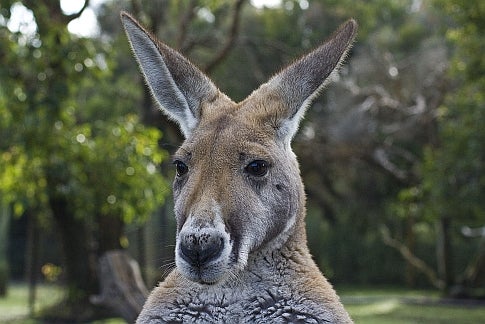
In Australia, the debate has taken an interesting turn. Professor Ross Garnaut, a government adviser on climate change, is urging his fellow Aussies to serve kangaroo meat in place of beef or lamb, because the marsupials produce negligible amounts of environmentally damaging methane gas. On the other hand, cattle and sheep, according to Garnaut's 620-page study, produce a considerable amount of methane gas through belching and flatulence, and are among the millions of livestock responsible for approximately 67 percent of agricultural greenhouse gas emissions. In order to help the environment, he proposes that Australia, which is one of the world's largest per-capita producers of greenhouse gas emissions, should decrease its cattle and sheep populations by seven million and 36 million respectively, and increase its kangaroo numbers from 34 million to 240 million by 2020. The study cites other benefits, too: kangaroo meat is low in fat and high in protein levels, and the animals survive better in times of drought.
The plan may sound good in theory -- after all kangaroos were a prime source of meat for much of Australia's 60,000-year human history, Garnaut points out -- but whether Australians will play along is another matter. Although 58 percent of Australians have eaten kangaroo (a seven-percent increase from a decade ago), eating marsupial meat is still controversial and makes many squirm because of the kangaroos' elevated status in Australia -- they're even on the country's coat of arms. And the head of the Northern Territory Cattlemen's Association calls Garnaut's proposal "ridiculous," arguing that kangaroos are not the answer to the greenhouse emission problem and that replacing livestock with them would cause more harm than good when it comes to land management and jobs.


Comments
Please find a cheap and cost effective way to harvest the methane gas and other greenhouse gases then put them to good use instead. Belching or flatulence cannot be helped and I assume that us humans have or own fair amout of belching that contributes to methane gas buildup as well.
10 out of 20 people found this comment helpfulSome facilities are harvesting methane from sources such
as bovines, land fills, and other waste. These are a start,
but not widely used, yet.
Flatulence produces methane, but belching most likely
5 out of 6 people found this comment helpfulreleases carbon dioxide (say after drinking a carbonated
beverage) or air (say from eating too fast), not methane.
lnwolf41
2 out of 9 people found this comment helpfulI'm sure the 8 billion + people on earth have nothing to do with methane, but put that all aside. How about everyone on earth start eating RED MEAT we cut the number of cattle till their exstict then start on the sheep and goats.
Then go after all the termites since they produce a fair amount of methane. Baring all that, why not launch fuel air bombs up into the upper atmospere and burn all the methane gas, reducing the green house effect.
Yes its all to the exstreme but Man has the ability to find a solution, but how much it cost is always going to stop us from finding and implementing it.
Hey dont we also produce methane gas?
3 out of 8 people found this comment helpfulForget about flatulence and belching. If you want to reduce the effect of of agriculture on the environment, find a way to deal with the millions of pounds of feces produced each year. That contributes huge amounts of methane to the atmosphere (which is a better heat trapping gas than CO2) and it would be a lot easier to manage than attempting to catch flatulence.
1 out of 2 people found this comment helpfulWhat I meant by harvesting these "harmful" gases from the air is by using a machine that "freezes" these gases and liquifies them then stores them in tanks. (Each specific gas has a certain freezing point as far as I know). I knew somebody in the past that works for a company that does this.
Most of the gases that they "harvest" are being used by hospitals and other establishments that have a use for special gases that they are able to harvest from the air around us.
Imagine if they use many of those machines to harvest "methane gas" out of the atmosphere, there might come a time that we could use all these methane gas for energy.
But will this prove to be more cost-effective in the long run? I really dunno, but with technological advances it sure would be economically feasible and viable in the near future.
1 out of 2 people found this comment helpfulHey if we were to freeze the gas how do we not freeze the other gases and where would we store it?
-THE KID
1 out of 2 people found this comment helpfulHey Kid,
I appreciate you asking things like that. My memory is sketchy regarding what this person who shared this info told me, but like I said there are companies that extract gases by freezing them and putting them in storage tanks or some other storage "mediums".
All I know is that each type of gas has a certain freezing point so one just has to know the correct temperature. If it so happens that the correct temperature freezes the other gases as well and you come up with a "sludge" that includes other gases, then you might heat this sludge up to a certain temperature that the unwanted gas "evaporates" leaving you with the gas that you wanted to harvest in the first place.
But like I said, doing this in a grand scale would be so expensive as it would require alot of power, storage mediums and other stuff. But with technological advances with the power that will be used and other improvements, like I said, one day this could prove to be economically viable and feasible.
Will there come a day that cows and other cattle will have a "population control" in place because of this? But we have so much need for them and we could always turn a "problem" into an "opportunity".
1 out of 2 people found this comment helpfulNo I do not agree with Professor Rose Garnaut with his plan to serve kangaroo to solve Australia’s green house gas issue. I know that these professors can think of a better plan. As said in the article Kangaroos have climbed in social popularity over the years, and many Australians would not agree to go along with this professor’s plan. Also I believe if they attempt to increase the Kangaroo population from 34 million to 240 million, there will be an overload of Kangaroo, and Australia will not be able to get the numbers down, which will cause an even bigger issue. Generally, this idea will not be successful.
1 out of 2 people found this comment helpfulDang,
0 out of 1 people found this comment helpfulI came here lookiing for a good Kangaroo Stew recipe...