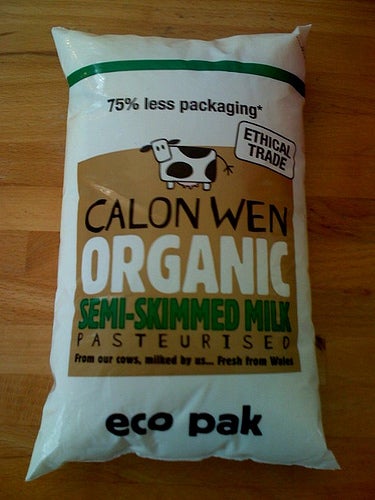
Small acts of eco-kindness can make people more likely to cheat and steal.
In a recent paper by a pair of researchers at the University of Toronto, entitled "Do Green Products Make Us Better People?" the answer seems to be, eh, not completely. Although you may have done Mother Earth a favor, your unconscious might sway you to be less ethical with your fellow man.
When study participants were allowed to buy green products, they were more likely to cheat and lie in a subsequent task than those who chose among conventional products. (Apparently, it seems that they either consciously or unconsciously used the good deed to excuse for subsequent unethical behavior. The study didn't specifically ask them why they did what they did.) In a different study group, people simply asked to evaluate (but not buy) green products ended up being more altruistic in another task, probably because the green products primed them as a symbol of goodness.
So what's the lesson here? Look—don't touch—the organic bananas or you might end up cheating at poker that night? Probably not. Although I might keep a keen eye on your neighbor the day he installs those solar panels.
You can access the paper for free here.
[Via Predictably Irrational at MIT Tech Review]
Five amazing, clean technologies that will set us free, in this month's energy-focused issue. Also: how to build a better bomb detector, the robotic toys that are raising your children, a human catapult, the world's smallest arcade, and much more.


Online Content Director: Suzanne LaBarre | Email
Senior Editor: Paul Adams | Email
Associate Editor: Dan Nosowitz | Email
Assistant Editor: Colin Lecher | Email
Assistant Editor: Rose Pastore | Email
Contributing Writers:
Rebecca Boyle | Email
Kelsey D. Atherton | Email
Francie Diep | Email
Shaunacy Ferro | Email
As a Canadian, I'm disappointed by the ham-fisted attempt at making fun of the noble Canadian dialect. No Canuck worth his or her Tim-Bits would say "the answer seems to be, eh, not completely."
We'd say "the answer seems to be not completely, eh?" The "eh?" (and it's followed by a question mark about as often as "q" is by "u") comes at the end. By hey, you probably shouldn't trust me since this article claims that I'm a liar...
One thing did make me smile though; there's nothing more popular than milk in a bag, eh?
@vankrugermeer: "eh" was not a reference to the Canadian dialect. Imagine the person saying "the answer seems to be," then pausing and shrugging shoulders saying "eh," pausing briefly again and then saying "not completely." Most often, when I do see references to Canadian dialect with what it appears you think it is, it is typically spelled "ay". Two different sounds. He meant no offense to you or any of the Canadian people.
Correction:*She* meant no offense.
I'm a Canadian, and I sure wasn't insulted!
The misunderstanding is semantic; Americans use 'eh' differently than us Canadians. http://en.wikipedia.org/wiki/Eh
This article is hilarious. So, whole foods shoppers are more likely to steal? ;) ... online http://hintcafe.com dating
so if the MIT boys and girls are being good and givin us the info....and this data in e form, not paper...
So does buying the "green" products make them that way, or are people that tend to buy "green" products naturally prone to cheat and steal? What would make people that buy "green" products different from everyone else? Raw data alone does not answer the real question.