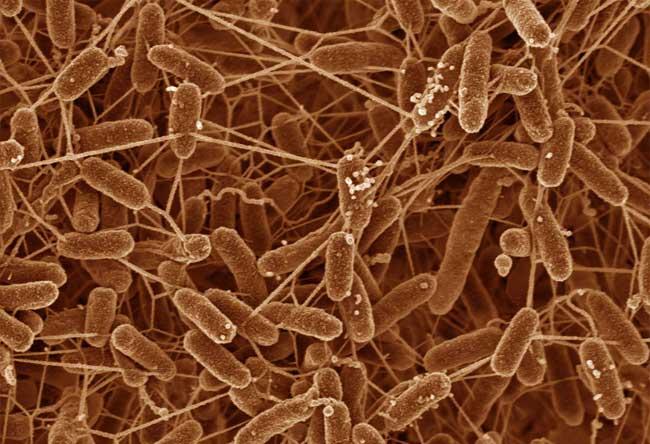
Geobacter, a microbe that generates electricity when placed in mud and wastewater, has been evolved into a far more productive strain, as part of a new University of Massachusetts breakthrough that has researchers thinking of new fuel cell designs.
Science Daily says that Geobacter is about 3-5 nanometers in diameter, which is about 20,000 times finer than a human hair. Geobacter is known for its ability to transfer electrons, which enables it to "extract" energy from biomass.
Since the evolution of the strain, facilitated by the U. Mass team, the organism is now eight times more efficient on the conservative end, and produces enough energy to start planning product development around Geobacter.
The evolution took place when the research team grew the microbe on graphite anodes, fed it acetate, then shocked it with a 400-millivolt current, which forced it into transferring more electrons than normal. Five months later, the species was working eight times more efficiently.
Researchers say that Geobacter could be good not only for microbial fuel cells, but also for treating home wastewater while providing local power, as well as powering mobile devices.
[via Science Daily via Slashdot]
Stay up to date on the latest news of the future of science and technology from your iPhone with full articles, images and offline viewing
Featuring every article from the magazine and website, plus links from around the Web. Also see our PopSci DIY feed
Share links with friends, comment on stories and more
In our December issue, Popular Science names the 100 best innovations of the year: bombproof wallpaper, self-parking cars, the fastest helicopter, and 97 more. Plus inventor profiles and videos.
Check out the best of what's new here.
wow. imagine charging your phone on the go with water. now thats cool. and it makes you wonder how effiecent the bacteria can be.
Imagine charging the phone from toilet water.
If the output from the bacteria increased by a factor of 8 then maybe they can squeeze even more juice, electricity, out of them. Still don't know how many watts/Kilogram these micro-biological critters will produce, if its anywhere near Lithium batteries then wow, we can use them to run our electric cars. In order to fill up we would have to either raid the toilets at all the gas stations or stop at the local sewage dump.
Another way to fill up would be to dig some dirt and mix it with water and off you go driving away in your mud car...
Another thought.
I bet they are some people already planning already to install a toilet in the trunk of a bio-electric car that are made from these battery. All one has to do to fill up with fuel is stop and use the bathroom, what a site to see, or what a site you don't want to see...
like they always say.
every flush
has its power source.