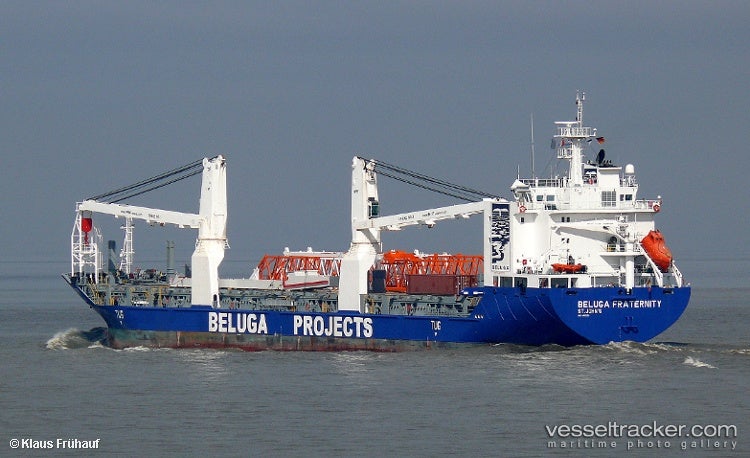
It's an auspicious first, but not necessarily a positive one: Rising ocean temperatures and melting sea ice have, over the last few years, made the fabled northern sea route between Western Europe and Russia/Asia a reality, and a German vessel is going to be the first ship to make an attempted passage this summer.
The route has been sought by many, most notable Sir Hugh Willoughby, a 16th-century English explorer who died with his crew while seeking passage to Asia. Along with the Northwest Passage, which links the Atlantic and Pacific via the Canadian Arctic, the route is now navigable thanks to retreating ice packs.
Still, a ship with ice-breaking capabilities is needed. The 12,700 ton Beluga is designed for a mix of ice and open waters, and will set off from the Siberian port of Novyy bound for Antwerp or Rotterdam, conditions permitting. It will be the first time an international commercial ship has successfully navigated the route.
The incredible innovations, like drone swarms and perpetual flight, bringing aviation into the world of tomorrow. Plus: today's greatest sci-fi writers predict the future, the science behind the summer's biggest blockbusters, a Doctor Who-themed DIY 'bot, the organs you can do without, and much more.


Online Content Director: Suzanne LaBarre | Email
Senior Editor: Paul Adams | Email
Associate Editor: Dan Nosowitz | Email
Assistant Editor: Colin Lecher | Email
Assistant Editor: Rose Pastore | Email
Contributing Writers:
Kelsey D. Atherton | Email
Francie Diep | Email
Shaunacy Ferro | Email
And people say "global warming" is bad. Tell that to Russia.
It looks like the northern countries will benefit in the short-run (arctic resources, longer growing season, etc) from global warming but suffer like the rest of us in the long-run.
Ok, so my last comment didn't post. WACK!
Anywhoo, what I was saying is that this is not something to celebrate, it is actually something to fear.
www.1800recycling.com
This post seems to have knowledge of the future. It states that it WILL be successful. Unless you are holding out on a time machine from us, that should clearly state "WOULD".
Warm periods on earth have historically benefited life on the planet. It's those ice ages that have tended to reduce diversity. In any case, the north pole has been ice free within historic times and will likely not remain ice free for long. Despite what you might like to believe, I regret to inform you that this isn't the end of the world.
Sure... it's not the warmer weather we (those concerned about global warming) are worried about as much as it is the troubles caused by rising sea levels, dilution of ocean salt levels and consequently the disruption of ocean currents... all this will lead to more random and hostile climate conditions. Think weather worse than huricane katrina over LA or Salt Lake city... desert like droughts in places no one would have ever expected. The heat waves and cold spells will be just as crippling as well. And that's just the begining, if you conider the economic impact and casualty.
Think of it as a natural negative feedback mechanism. The earth is getting ready to cleanse itself.
Some iteresting time lie ahead. :-)
Humanity has survived through global climate change before, and it will survive through it again.
Humanity will survive, but that doesn't mean all of us will.