Innovation of the Year Winner Nanosolar Ships Its First Low-Cost Solar Panels

A solar plant covering a German landfill will receive the first order
Powersheet_blog
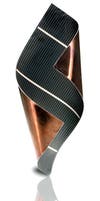
After years of development, Nanosolar has announced today that they have shipped their first batch of inexpensive solar panels to the site of their first real-world deployment, a megawatt solar plant being built on the surface of a landfill in eastern Germany.

Nanosolar's innovative process for "printing" thin, inexpensive solar panels has attracted several high-profile investors, including Google's co-founders Larry Page and Sergey Brin. By simplifying the manufacturing process and eliminating pricey silicon, many see the new process as the breakthrough needed to drive cheap solar power into the mainstream (many including we here at PopSci—the Powersheet received our "Innovation of the Year" award in this year's Best of What's New).

The first production panels to roll off the assembly line are getting special attention—one's being exhibited at Nanosolar HQ, another is heading for the Tech Museum in San Jose, and a third has been put up for auction on eBay. The current going rate for a piece of green tech history is $1,095—get your bids in now!

For much more information on the Powersheet, including an animated movie detailing exactly how it works, see its entry in our Best of What's New 2007 list. —John Mahoney

(Image Credit: Brian Klutch)

12 Comments

Comments

Article Rating:
1
2
3
4
5

Cool

0 out of 1 people found this comment helpful
I found this comment
Article Rating:
1
2
3
4
5

What's the cost per kilowatt hour compared with other sources excluding any tax subsidies?

0 out of 0 people found this comment helpful
I found this comment
Article Rating:
1
2
3
4
5

They're claiming a wholesale cost of $1/watt and a retail price of $2/watt produced. Coal, in comparison, is about $2.10/watt. While the price of the panels comes way down with their process the cost of the rectifier unit isn't affected so this becomes the major cost.

Also, they've been noticiably reticent about publishing spec sheets for their product. Originally they claimed 12%-15% efficiency but they're not talking right now. Commerically available silicon-based solar cells are rated at 18% - 20% efficient. They do give a 25 year warranty which is pretty good in this industry.

1 out of 1 people found this comment helpful
I found this comment
Article Rating:
1
2
3
4
5

How can you compare coal and these panels? The panels you buy once and produce for 25 yrs (apparently)

I guess I don't get where you are coming from.

Also the inverters have continuously dropped in price over the years. They can only drop further as more are produced.

Even if the retail is at 2.00 a watt, that still cuts about 1/2 the cost of a typical install.

0 out of 0 people found this comment helpful
I found this comment
Article Rating:
1
2
3
4
5

"How can you compare coal and these panels? The panels you buy once and produce for 25 yrs (apparently"

ASW, it's not the cost of the FUEL -- you have to take into account the cost of the whole SYSTEM. The initial capital outlay of plant and equipment is depreciated over time per the rules of accounting.

In other words, a solar-power plant is so fantastically more expensive up-front than a coal-burning plant, that even though sunlight is free and coal isn't, solar is more expensive when you allocate all those costs. Hence the challenge of solar equipment is to get cheaper and/or more productive (Of course CO2 carries externality costs, but that's beside the point when you get your monthly bill).

1 out of 1 people found this comment helpful
I found this comment
Article Rating:
1
2
3
4
5

Rectifier? Solar cells ARE dc devices. You mean inverter. But maybe Edison will win out after all - and we'll all have DC appliances in our homes, running from lithium batteries charged by solar cells. And we won't be living on a grid anymore. With the advent of modern "brushless motor" systems that run just fine from a DC source, the advantages of Tesla's AC system will be history.

0 out of 0 people found this comment helpful
I found this comment
Article Rating:
1
2
3
4
5

DC has it's own drawbacks, larger wire gages and with copper going up for it's own reason, it'll soon be as expensive as silver which is a better conductor anyway.

It'd be cheaper to go with an inverter close to the source and convert back to DC at the unit, plus any extra can put fed into the net and generate income to offset the cost.

Everything, power wise, has to have a comparison source, and coal is a good one because of the number of coal fired power plants in the US. Shows you in real dollars today what the difference is so that payback times can be figured out.

0 out of 0 people found this comment helpful
I found this comment
Article Rating:
1
2
3
4
5

DC systems typically have larger wire gages because they typically have lower voltages. So for the same amount of power or work it requires higher amperage which requires heavier gage wire. You can lower the amperage but still keep the same power by increasing the DC voltage.
All systems have conversion losses, sometimes as much as 40%. It is not always cheaper to invert it and convert it back, especially if the source is close (100 ft) to the load. Kevin has some good ideas. If there are no long transmission distances you can avoid the conversion and transmission losses and just keep it DC and use it locally. The grid is still useful as a backup, bank and sharing system.

0 out of 0 people found this comment helpful
I found this comment
Article Rating:
1
2
3
4
5

Quote: "Solar cells ARE dc devices. You mean inverter. But maybe Edison will win out after all - and we'll all have DC appliances in our homes, running from lithium batteries charged by solar cells. And we won't be living on a grid anymore. With the advent of modern "brushless motor" systems that run just fine from a DC source, the advantages of Tesla's AC system will be history."

Electronics and a lot of gadgets are already DC internally. We waste a lot of efficiency in converting up and down and up and down just to get from the source to the end device.

0 out of 0 people found this comment helpful
I found this comment
Article Rating:
1
2
3
4
5

Does anybody know if these panels are already available in the market or is to early to buy them?

0 out of 0 people found this comment helpful
I found this comment
Page 1 of 2 12next ›last »


Share your photos in the Pop Sci pool at www.flickr.com!
Current theme: Technology You Love

Subscribe for 2 free issues!

may2008_cover.jpg