The GlideCycle: First Production Run Next Month
Making riding a bike easy again for people who are physcially impaired is all about innovative design
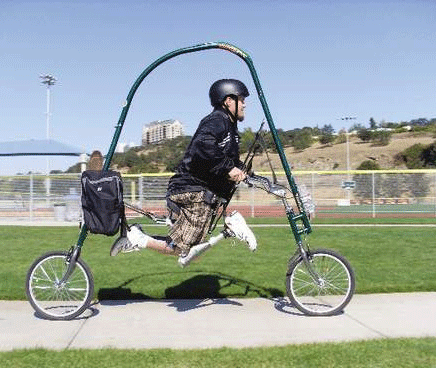
For lower body amputees, the expression “as easy as riding a bike,” is an unfortunate idiom. But when saddled into the GlideCycle, amputees, and others with physical impairments, might make those pedaling traditional bikes look like they’re the ones working hard.
With no pedals to pedal, the glide cycle avoids the most striking complication, for the disabled, associated with operating a standard bike. Riders instead push themselves along with one foot (more like a skateboard), while the arched structure helps the riders maintain balance (a tricycle version, GlideTrike, is also available). The traditional fixed bicycle seat has also been replaced by a complicated suspension saddle, which promises to remove pressure from between the often sensitive crotch area (perineum), and instead distribute it through the pelvic region. The saddle, combined with the inherent flexibility of the structure, provides a bit of spring for each stride the rider makes. The GlideCycle uses a more traditional bicycle mechanism for steering.
While we’re yet to ride the GlideCycle, the sensation described in testimonials and the motion observed in the videos (see the GlideCycle website for great footage) supports the inclusion of the word ‘glide’ in the product name. Like running down sand dunes, one simple push provides a brief moment of weightlessness, while the seat and frame ensure the impact on landing is negligible. One rider described it as akin to “running on the moon” (speculation, we assume). Downhill gliding appears more similar to riding a traditional bike.
The creators also recommend the GlideCycle as a low-load bearing method for rehabilitation or chronic joint pain, but it seems most revolutionary for the amputee market. The creators concede that the device has a learning curve, but claim that most people grasp the basic movements within 20 minutes. Making tighter turns and moving uphill require a bit more time in the saddle.
The GlideCycle breaks down into pieces, so you won’t need an airport hanger to store it. It is apparently light enough to be carried as a backpack. The first prototype was sold just one year ago, with 40 sold to date. An initial production run will be delivered next month, and available for $1999.