paleontology

Hello, Ardi: New Oldest Humanoid Fossil A Million Years Older Than Lucy

The new fossil indicates that our ancestors were less chimplike than heretofore thought

This morning, scientists revealed an analysis of a female skeleton that seems to be the best example of early hominids around, about a million years older than the famous Lucy specimen that has been a prime example of early humanoids for about 40 years. New species Ardipithecus ramidus, which scientists nicknamed "Ardi," lived in the woodlands of present-day Ethiopia and had a blend of human and chimplike features.

[ Read Full Story ]

Scientist Vows To Reverse-Engineer Dinosaur From Chicken


When I was a kid, the only animal I wanted for a pet was a dinosaur. Seeing as non-avian dinosaurs had been extinct for around 65 million years, I settled for an iguana. However, new research at McGill University in Canada may finally bring me that pet dino I've been waiting 20 years for.

[ Read Full Story ]

Paleontology’s Most Famous Missing Links

Now that “Ida” is a star, a look at some other famously transitional stars of the fossil record

The phrase “missing link” first appeared in print only four years after the publication of The Origin of the Species. By the end of that year, legendary paleontologist Richard Owen published a description of the fossil Archaeopteryx, the first specimen to carry that moniker. And with that, the concept of a “missing link” embedded itself in the popular imagination.

With missing links again thrust hastily and breathlessly into the spotlight again with the History Channel's hyped-through-the-roof unveiling of Ida, "the most important find in 47 million years," a look at missing links throughout history may help put things in perspective.

[ Read Full Story ]

Flight School

A new take on pterosaurs could improve robot planes

If it looks like a duck and flies like a duck, it must take off like a duck. Paleontologists long speculated that this was the case for pterosaurs, but new research shows that the prehistoric winged lizards employed a smarter launch strategy, using all four limbs to hop, skip, and jump their way into flight, instead of pushing off with two legs and flapping their wings as most birds do.

[ Read Full Story ]

What Did Early Americans Eat?

Old tools provide new evidence

Doug Bamforth had taken calls like this one before. He studies early American plains dwellers, and his employer, the University of Colorado at Boulder, regularly sends him locals who think they've found something. He's often skeptical. Besides, it was also the middle of May. The semester was over, and he was about to leave town. But the caller, a bio-tech mogul named Patrick Mahaffy, kept insisting, and the next day Bamforth took a ten-minute walk from his office to the site. What he saw astonished him: right there, in urban Boulder, no fewer than eighty-three stone tools were spread out on a patio table.

The initial discovery, dozens of ancient tools buried in someone's yard, was surprising enough, but other surprises would follow. The tools first offered a look at when and where their owners had lived, and then, a few months later, unprecedented evidence of what they had eaten.

[ Read Full Story ]

SciKu: A Rare Internet Fossil in the Making

A new day, a new paleontological discovery, a new SciKu (and a video)

We bet that SciKu, the delicate science poetry that belongs to everyone, will last and last. As did, apparently, a 300-million-year-old brain found inside a rock in northeast Kansas:

Fish brain turned to stone
Alas! Fossilization:
It's not just for bone

[ Read Full Story ]
READ MORE ABOUT > , , , ,

The 300-Million-Year-Old Brain

Tomographic analysis of a fossilized fish reveals the oldest brain fossil yet

This iniopterygian fossil, discovered in Kansas, is an extinct relative of modern chimaeras, a distant relative of sharks and rays. Iniopterygians have unusual features, including large skulls and eye sockets, rows of shark-like teeth, clubbed tails, and fins tipped with spikes and hooks. Previously, only flattened fossils of this relatively small fish -- which averages around six inches in length -- were known to exist. The new finding, the first three-dimensional iniopterygian fossil, is remarkable for having the oldest fossilized brain ever found.

[ Read Full Story ]
READ MORE ABOUT > , , , ,

High-Energy Physics Probes Ancient Fossils

Thanks to particle accelerators, paleontologists can now don the best X-ray specs in the world

Lately, paleontologists have been choosing odd bedfellows to study rare, precious fossils: particle physicists. At the annual meeting of the American Association for the Advancement of Science this weekend, several researchers reported on how synchrotron particle accelerators—the world’s most powerful X-ray machines—are revealing new details about biological relics such as amber-trapped Cretaceous bugs, the celebrated bird-dinosaur Archaeopteryx, and what appears to be the world’s only fossilized brain.

[ Read Full Story ]
READ MORE ABOUT > , , ,

Largest Snake on Earth Uncovered

Holy reticulated snake spine! A fossil reveals a 2,500 pound prehistoric python (along with some surprising facts about global temperature)

Sliding Easy: An artists conception of the snake in its natural habitat, 60 million years ago.  Jason Bourque/University of Florida

Any character in a B-list film would yelp "Snake? Snaaaake!" upon spotting a specimen stretching longer than a school bus – and now scientists have uncovered the remains of such a beast.

A research team found the vertebrae of the 43-foot long snake down the Cerrejon Coal Mine in northern Colombia. Their report appears in Nature this week, and gives a conservative estimate that the snake weighed 2,500 pounds when it lived 60 million years ago.

[ Read Full Story ]
READ MORE ABOUT > , , ,

Rapid Dino Extinction Theory Gains New Support

A recent fossil discovery gives renewed credence to a theory of massive and swift extinction

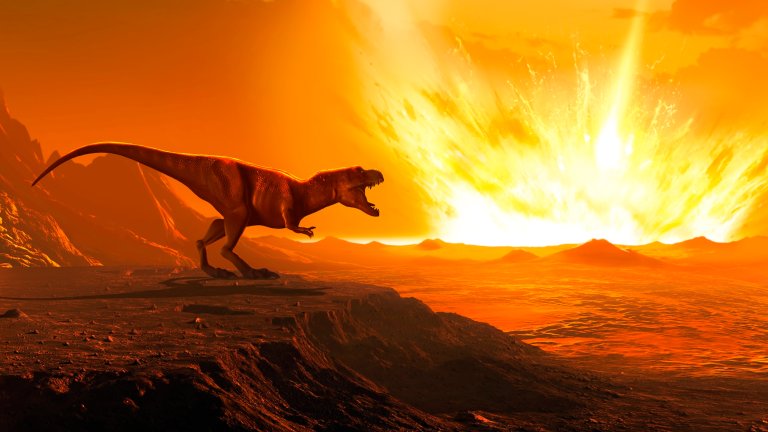
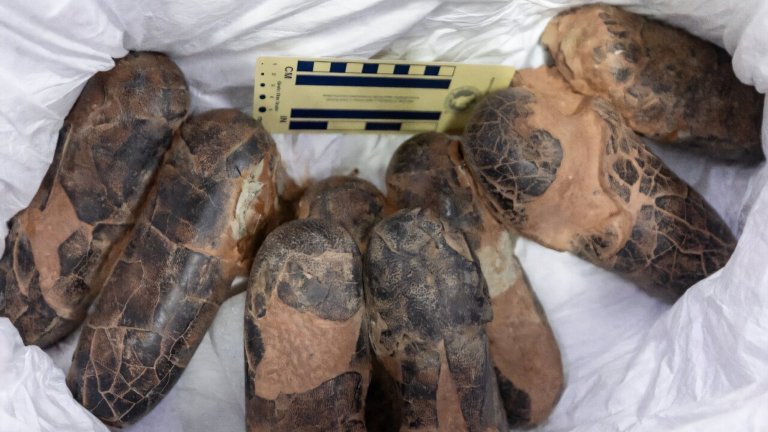
New evidence suggests the reign of the dinosaurs ended not with a whimper, but with a bang. Already, previous geological evidence of an apocalyptic meteor impact in what is now Mexico had led some paleontologists to believe in a massive extinction event. Now, the discovery of fossilized dinosaurs and eggshells in northeastern Russia supports the theory of a rapid extinction some 66 million years ago.

[ Read Full Story ]
READ MORE ABOUT > , ,
Page 1 of 2 12next ›last »


Download Our iPhone App

Stay up to date on the latest news of the future of science and technology from your iPhone with full articles, images and offline viewing


Follow Us On Twitter

Featuring every article from the magazine and website, plus links from around the Web. Also see our PopSci DIY feed


Become a Fan On Facebook

Share links with friends, comment on stories and more


December 2009: Best of What's New

In our December issue, Popular Science names the 100 best innovations of the year: bombproof wallpaper, self-parking cars, the fastest helicopter, and 97 more. Plus inventor profiles and videos.

Check out the best of what's new here.

Popular Science Photo Pool


Share your photos in the Pop Sci pool at www.flickr.com!
tags_sprite.png
POP_embeddedForm_cover_May09.jpg