Plug-In Road Tripping
Prefer driving to flying? What to expect from the newest fleet of electric cars and plug-ins on those long hauls
The idea of electric-car travel invariably spawns jokes about extension cords the length of Texas. Meager ranges, multi-hour charging and a lack of highway electrical outlets mean that most consumers still consider pure-electric vehicles a fantasy. But when it comes to plug-in hybrids, there’s no fooling: Today’s technology can handle treks to Disney World, not just runs to the store.
When the juice runs low on the Chevrolet Volt and the Fisker Karma, two plug-ins due out by next year, their small gasoline engines fire up to generate more electricity and dramatically extend driving range. The result is family-friendly cars that can double the range of all-electric cars and can cruise from sea to shining sea and refuel in minutes. If you’re determined to ditch gasoline completely or just need an urban runabout, the Tesla Roadster may be the ticket. But if your summer plans include suitcases and scenic overlooks, only the hybrids will eliminate the “range anxiety” that makes Americans leery of buying and banking on purely electric cars.
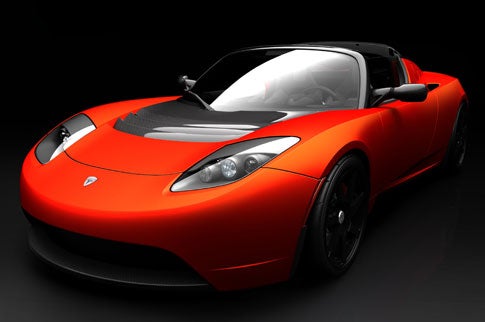
Tesla Roadster
The Ride: An all-electric two-seater powered by lithium-ion batteries. Range: 244 miles in combined city/highway driving. Fully charges in less than 3.5 hours on 220-volt outlets.
Performance: 0–60 mph in 3.9 seconds;185 kilowatts, 248 horsepower
Road-trip-worthy? If your vacation takes place on a racetrack, sure. Otherwise, most Teslas will stray as far from home as a pedigreed cat.
Chevrolet Volt
Chevrolet Volt
The Ride: A plug-in hybrid that seats four; runs on an electric motor powered by lithium-ion batteries, plus a 1.4-liter, four-cylinder gasoline engine. Cost: $40,000.
Range: 40 miles; gas engine extends range to 300 miles. Charges in eight hours on household current, less than three hours on 220-volt outlets.
Performance: 0–60 mph in nine seconds; 110 kilowatts, 150 horsepower
Road-trip-worthy? Drive your Chevy to the levee and all points beyond.

Fisker Karma
Fisker Karma
The Ride: This year, former Aston Martin designer Henrik Fisker delivers an $88,000 plug-in hybrid, four-person sedan that runs on dual electric motors powered by lithium-ion batteries, plus a 2.0-liter turbocharged four-cylinder engine.
Range: 50 miles on electricity alone; gas engine extends its range to 300 miles. Charges in 5.5 hours on 220-volt current.
Performance: 0–60 mph in 5.8 seconds; 300 kilowatts, 408 horsepower
Road-trip-worthy? The Fisker is ready to dazzle valets, and its speed ensures that you won’t be late for check-in. The downside is electric motors that hog trunk space.